Eva Jordan in conversation with publisher @janefspencer @EyriePress


Eva in conversation with Jane Spencer


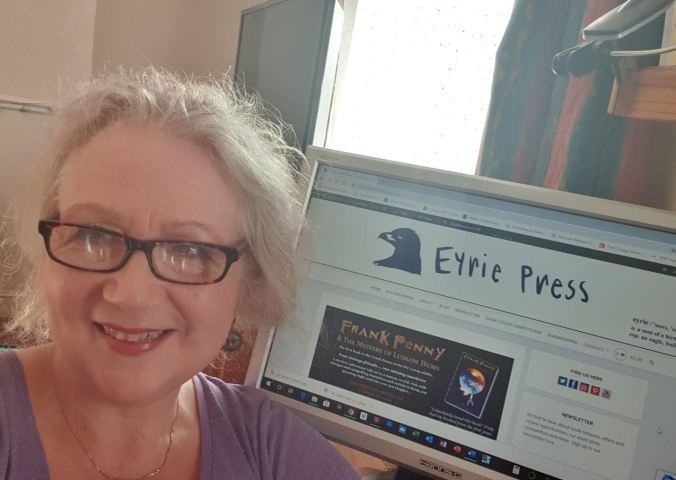
Earlier this month I reviewed the wonderfully illustrated children’s story The Hospital Hoppities (see my review here), published by Eyrie Press. So, I thought I’d take the opportunity to have a chat with Jane Spencer, the publisher and managing director behind the local press who published this lovely children’s story. 


Hoppities-5


  1. Hi Jane, can you tell our readers a little bit about yourself and about Eyrie Press?


Hi Eva. I’m an editor and proofreader living in March, Cambridgeshire. I home educated my four children and realised there weren’t many books that featured home educating families, at least not in a positive way, so I decided to address that and publish some! I set up Eyrie Press as a social enterprise and then broadened its horizons to publish books that take a non-tokenistic approach to featuring other communities underrepresented in fiction, or books by writers from East Anglia. We also run local writing and publishing workshops from time to time and have an annual short story competition exclusively for East Anglian writers.


  1. The Hospital Hoppities is such a lovely, beautifully illustrated book and is the perfect companion for small children that have to spend time in hospital. How and why did Eyrie Press get involved with its publication?


Charlotte, the author, submitted it to us and it was such a lovely idea that we knew straight away we wanted to publish it. As a story which aims to make families in hospital feel ‘seen’ in children’s literature, and which empowers its main character with a helping role rather than a dependent one, it very much ticked our boxes! We put out a call on Facebook for an illustrator and were delighted to find Anjalee, who did an amazing job of bringing the story to life. We could hardly believe this was the first book she’d illustrated!


  1. And finally, for all those budding writers out there, I understand you are open for submissions. What, ideally, is Eyrie Press looking for?


Going forward, we’re focusing on well-crafted novels and novellas in the genres of contemporary, historical and speculative fiction. We’d really like submissions that are by writers from East Anglia (which we define as Cambridgeshire, Peterborough Norfolk, Suffolk and Lincolnshire), or which feature underrepresented communities. There are more details on our website www.eyriepress.co.uk and you can get some hints as to what I like in a submission by reading the Q&A I did over at The Book Stewards blog! www.thebookstewards.com/qa-with-jane-spencer-of-eyrie-press

Jane Spencer

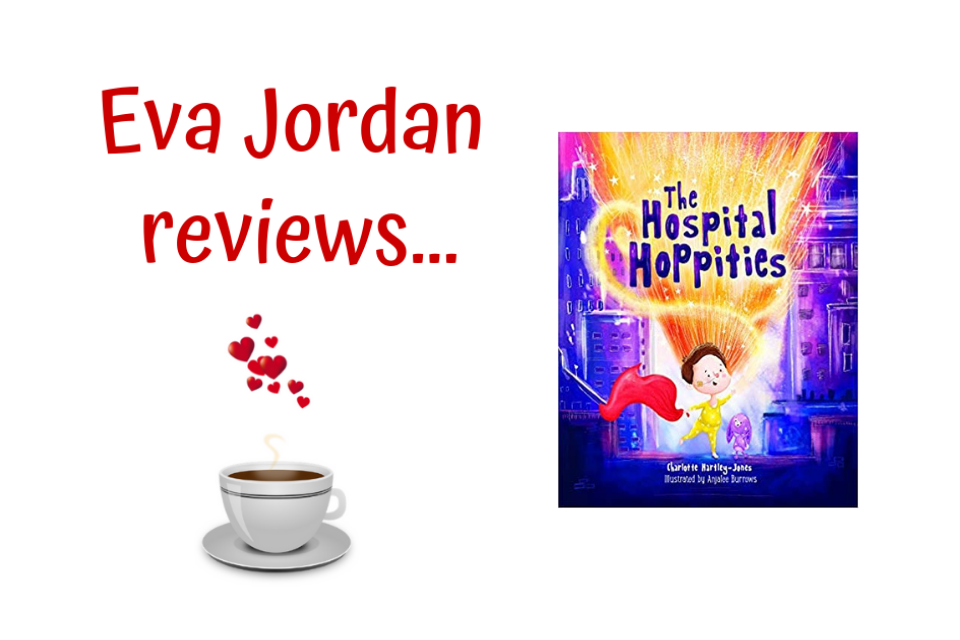
Eva Jordan reviews… The Hospital Hoppities by Charlotte Hartley-Jones Illustrated by Anjalee Burrows @anjaleebee Published by @EyriePress

My book review this month is something a little different for me. The Hospital Hoppities is a beautifully illustrated children’s story aimed at younger children that have to spend extended periods of time in hospital, the idea being to make their stay a little less scary and a lot more fun.

Ollie, a little boy waiting for his operation, is bored. His wise old grandmother tells him about the Hospital Hoppities: small, furry rabbits, with big eyes, shimmering fur and log floppy ears. They are, according to Ollie’s grandmother, magic rabbits that live in hospitals. “They look after the children and help the hospital be a happier place, but they don’t like to be seen”, so most of the time they make themselves invisible. They do this by thumping their back paw. However, one-day Ollie spots a Hospital Hoppity in the drawer of his hospital bedside cabinet. Somehow he has got his paw stuck. Ollie helps the Hoppity release his paw but when he taps it to make himself invisible, it doesn’t work. The Hospital Hoppity then asks Ollie for help, and between them they fly around the wards of the hospital carrying out good deeds.

Charlotte Hartley-Jones, the author of this delightful story, is a trained clinical psychologist and writer. She was inspired to write this story after her own first-hand experience of life on a hospital ward with a son with a chronic medical condition. She was keen to write something children could relate to, especially those that spend a lot of time in hospital, by taking some of the fear out of the experience. Therefore, although the story itself doesn’t focus on individual health conditions, the beautiful illustrations by Anjalee Burrows, a digital illustrator, do show medical equipment like heart monitors, drip stands and hospital staff wearing stethoscopes and scrubs, helping to ‘normalise’ such things. The storyline also empowers Ollie, the main character, by giving him a helping role, instead of a dependent one.

The Hospital Hoppities is a wonderfully magical, beautifully illustrated story that is both entertaining and comforting, especially for small children that have to spend time in hospital. It also makes the perfect companion for children visiting siblings and loved ones in hospital, helping to ‘normalise’ what can sometimes be a very daunting experience.

Hardcover: 32 pages

Publisher: Eyrie Press (30 Jun. 2019)

Hope Springs Eternal

“Hope is being able to see that there is light despite all of the darkness”

– Desmond Tutu
0-10

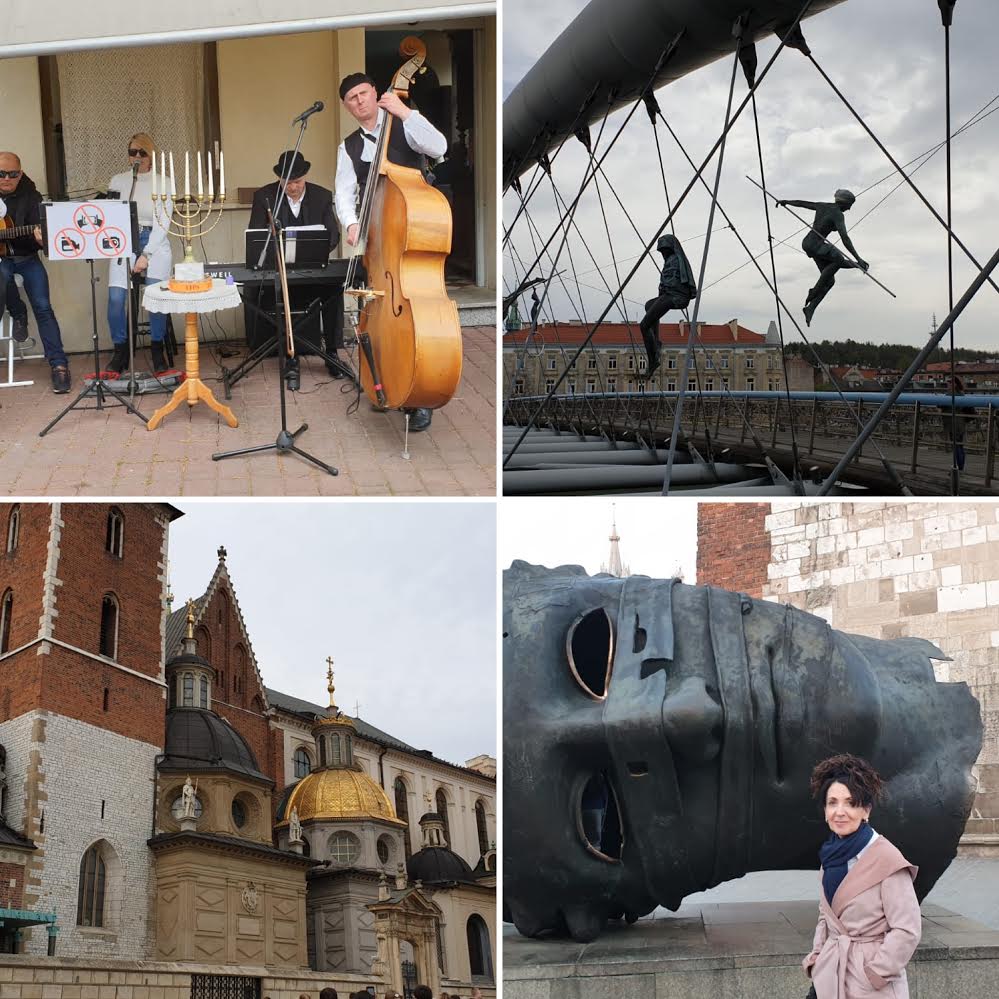
Back in April this year I was lucky enough to visit the beautiful city of Krakow in Poland. If you’ve never been I highly recommend it. Dating back to the 7th century it is one of Poland’s oldest cities, rich in history and culture. It is also one of the few eastern European cities to escape bombing during World War II, which is why many of the streets and architecture remain exactly as they were before the war. In 1939, during the Nazi occupation of Poland, the Third Reich began rounding up all Jewish residents and confining them to overcrowded ghettos before later deporting them to concentration camps. Which was another reason for my visit to Krakow—I wanted to visit the nearby infamous Auschwitz-Birkenau camp and pay my respects to the many innocent men, women and children that had been imprisoned and, in most cases, murdered there.

First stop was the Auschwitz camp where we entered via the notorious iron gates and emblazoned words “Arbeit Macht Frei” ­­­­­­­(Work Sets You Free). My biggest fear at this point was that people would attempt to take selfies––thankfully no one did, with those taking photos (myself included) doing so quietly and discreetly. Walking through the gates I noticed the old lookout towers and surrounding, once electrified, barbed wire fencing, which made me shiver, despite the warm weather. Our guide then led us to various rooms in numbered buildings known as blocks, which had once housed prisoners, some of which now contain physical reminders of those murdered. It was heart breaking to witness the hills of human hair, shoes, hairbrushes, clothes, and toothbrushes displayed behind glass panels. Equally appalling were the standing chambers, suffocation chambers, starvation chambers and the firing wall of notorious Block 11—otherwise known as the punishment chamber.

0-4

Our next stop (10 mins drive away) was Birkenau (which reportedly held over 90,000 prisoners in 1944) also known as Auschwitz II. Built to keep up with mass European arrests taking place it evolved into a network of camps where most prisoners were exterminated, often in gas chambers, or used as slave labour, while other prisoners were subjected to barbaric medical experiments led by Josef Mengele. Our guide took us inside what was once one of the women’s barracks. These were brick buildings often housing up to 700 people, sometimes more, containing three-tier wooden bunks (sleeping up to six or seven people to each bunk), shoddily built, lacking any real heating or sanitation facilities. Our guide then led us alongside the same train tracks that had transported prisoners from Poland and other parts of Europe via overcrowded cattle trucks into the camp. We then walked the same route to the “shower blocks” that on arrival, most of the elderly men and women, and women with young children believed they were going to, with the promise of a hot meal and a bed afterwards. History tells us otherwise though, and we now know they were in fact marched straight to their deaths via the gas chambers, their bodies then burned in the nearby crematorium.

0-2

As our tour ended, I took stock for a moment and looked up, feeling the heat of the sun on my face. I wondered how the prisoners of the camp must have felt on the days the sun shined for them, if they found the energy to notice or enjoy it—even for a few seconds? I concluded that what I found most difficult to believe about Auschwitz-Birkenau, and the many other camps like it, was that its mass extermination of ordinary people took place very recently, less than eighty years ago to be exact. And it wasn’t just Jews that were targeted, many non-jewish artists, writers, journalists, teachers, politicians, Romas, communists, homosexuals, and mentally and physically disabled people met their death––anyone basically, deemed unfit for Nazi Germany. Sadly though (although perhaps not on the scale of the Holocaust), our history books are littered with accounts of genocide, both before and since World War II.

However, there have been many inspiring accounts of survival since those terrible events took place. Stories about people that never gave up hope, who went on to live full lives, many of whom married and had families of their own. Ten years ago I was privileged enough to meet Eva Clarke, one of the Holocaust’s youngest known survivors. After spending time in Auschwitz, her mother, Anka, gave birth to Eva on a wooden cart in the shadow of the prison gates of Mauthausen Concentration Camp in Austria in April 1945. Eva explained how her mother once told her that before her incarceration she would never have predicted being able to withstand such an experience, but when it happened, and for no real logical reason, she just assumed she would survive, attributing a bit of luck and the overwhelming love for her unborn child as one of her greatest motivators to keep going.

So, as long as there is good in the world, and love, there is always, I believe, hope.