Write Your First Novel – In A Month!


machine-writing-1035292_960_720

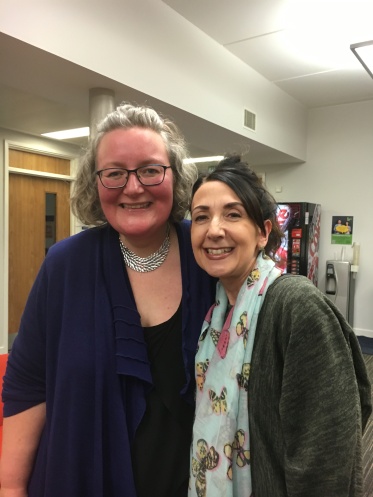
A couple of months ago I had the pleasure of attending an author event to hear crime writer, Elizabeth Haynes, talk about her writing career. I also had the honour of meeting and chatting with Elizabeth afterwards, who proved to be both lovely and very gracious with her time. After then going home and devouring her current novel, Never Alone (a great read and one I’d highly recommend if you like crime thrillers) which I read and reviewed last month (and you can read again here), I decided to write a post about the event, and pass on some of Elizabeth’s writerly wisdom

Elizabeth, a former police intelligence analyst, hasn’t always been an author but, like me, she did always aspire to be such, one-day. Her first novel, Into The Darkest Corner was published in 2011 and won Amazon’s Book of the Year and Amazon’s Rising Star Award. During the course of the evening the author discussed her previous career and where she gets her ideas and inspiration from to write her novels. The idea of Never Alone came to Elizabeth when she was thinking of moving house and found herself spending far too much time browsing through the houses of various property websites. She came across a grey stone house nestling in a remote country hillside providing the inspiration for the house in the novel, Four Winds Farm, which plays a pivotal role in the setting of Never Alone.

The author also discussed, despite juggling a family and a full time job, how she eventually came to write her first novel. She became, and continues to be, a participant in the National Novel Writing Month, otherwise referred to as NaNoWriMo – an annual challenge to write 50,000 words in the month of November (approximately 1667 words a day, or roughly four sides of typed A4 paper). So, this is my challenge to all you would be writers out there, you have a couple months to prepare yourself before the start of November and possibly the start of your first novel. It may mean getting up a couple of hours earlier every day, or going to bed a couple of hours later each night. It may also mean you let the housework slide for a couple of weeks, get someone else to do the cooking, walk the dog, whatever – but it is only for one month.

However, Elizabeth did also point out that 50,000 words is not a novel (most novels are anything from 60,000 to 100,000 words, much more in some cases), but what you will have is the bare bones of a novel, a good start and something you can build on. Why not take a look at the official NaNoWriMo website nanowrimo.org and sign up now. You’ll find lots of help and inspiration, including pep talks and the chance to meet other authors online and in person. Good luck if you take part and please let me know how you get on!
Elizabeth Haynes

Me and Elizabeth Haynes!

Writing – The School of Hard Knocks.


“Hardships often prepare ordinary people for an extraordinary destiny.”

                                                                                   – C S Lewis

absorbed-2409314__340

“Writing – ain’t for the faint hearted.” Who said that? Oh yes, of course, me! And if you think it is, I suggest you give up now. It often involves long, solitary hours tapping away at a keyboard, in front of a computer screen, where emotions are apt to swing violently from belief your work is the next big thing to the worse piece of writing on the planet – ever. Then there are the edits and the rewrites and that’s long before you start submitting your work. And once you do, there’s every possibility it will be rejected. But if you are lucky enough to get a publisher, or indeed as many brilliant writers now do, successfully self-publish, you’re still putting your work ‘out there’ for public scrutiny. Reviews are vital to a writer and sometimes they’ll be great, at others, brutal. So without doubt, the one thing you open yourself up to, as a writer, is rejection and criticism. In fact, that’s probably a given for most things in life, especially those that catapult you, one way or another, into the public arena, which of course writing most definitely does.

However, how can you become known as a writer unless you take a chance? Luckily, reading is subjective. There will always be those (hopefully!) who love your work and sadly those who don’t. Never let rejection or bad reviews sway you from pursuing your writing dream though. Rejection is a strong test of character. Nonetheless, I do accept there will be days when it’s not always possible to remain so philosophical. So, for all the writers and would be writers reading this and suffering a crisis of confidence, here is a list of famous writers whose novels were initially rejected.

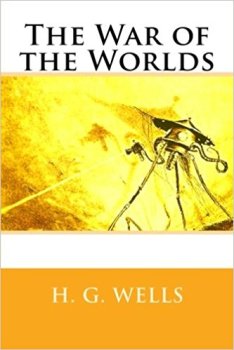
  • A publisher rejects H.G. Wells The War Of The Worlds, describing it as “an endless nightmare.” Eventually published in 1898, it has been in print ever since.

41t5FlQEplL._SX331_BO1,204,203,200_

  • Louisa May Alcott is told to “stick to teaching.” She doesn’t give up on her dream to become a published writer and later Little Women goes on to sell millions. Some 140 years later it is still in print.

31Ior5+qNCL._SX304_BO1,204,203,200_

  • Agatha Christie experiences 5 years of continual rejection before landing a publishing deal. Her book sales are now in excess of £2 billion.

41WctdQZYhL._SX259_BO1,204,203,200_

  • In 1968 Ursula K. Le Guin receives a letter from an editor suggesting her book, The Left Hand of Darkness is “Hopelessly bogged down and unreadable.” It goes on to become one of her many best-sellers, regularly voted as the second best fantasy novel of all time, next to The Lord of the Rings.
  • Stephen King was told, “We are not interested in science fiction which deals with negative utopias. They do not sell.” Carrie sold over one million copies in the first year alone.
  • Initially rejected by 16 literary agencies and 12 publishers, the modest print run of 5000 copies for John Grisham’s, A Time To Kill,  quickly sells out and goes on to become a best seller. He now has combined sales of 250 million.

513Dzz-wfWL._SX322_BO1,204,203,200_

  • The Christopher Little Literary Agency takes on a new client. Her novel is rejected by 12 publishers. Eventually picked up by an editor at Bloomsbury, the company agree to publish but tell the writer to get a day job as she has little chance of making money from children’s books. Yet Harry Potter and the Philosopher’s Stone by J.K. Rowling generates a series of such books, setting records as the fastest-selling books in history, with combined sales of £450 million.
  • Small publishers in San Francisco, Macadam/Cage, fall in love with and agree to publish a debut novel sent to them. Prior to this, 25 literary agents rejected it. Translated into 33 languages and adapted as a movie, Audrey Niffenegger’s, The Time Traveller’s Wife sells 7 million copies.
  • Only selling 800 copies on its limited first release, the author finds a new publisher and Paulo Coelho’s, The Alchemist, sells 75 million.


Boadicea – The Warrior Queen

moon-625450_960_720

Illustration courtesy of Pixabay

The Warrior Queen

During recent research for my second novel, due for release in autumn this year, I found myself gathering some interesting facts about Boadicea, or as she is recently referred to, Boudicca. On-going debate as to the correct pronunciation of her name still continues, my children having been taught at school that the latter was correct, and I the former. I personally prefer Boadicea so from hereon in will refer to her as such. And no, just for the record, in case anyone is wondering, I haven’t switched genre to write about historical fiction for my second novel. Like my debut, my second novel is also a work of contemporary fiction, I just happened to come across Boadicea in my search for inspirational women of history. Boadicea demonstrated strength of character and endurance at a time of great adversity, both for herself and her daughters, as well as the people of her kingdom. History teaches us that all did not end well for Boadicea but she did not take her humiliation lying down. And, more importantly, she reminds us that once upon a time, before the Roman invasion of Britain, women were part of a social structure that encouraged equal rights.

Not much is known of Boadicea’s early life and her birth date is not recorded but general consensus suggests she was born into a royal house as a member of the Iceni tribe, based in the area now known as Norfolk. Manda Scott’s modern novel’s based on Boadicea’s life suggest it likely she was brought up in a largely peaceful environment where both sexes would have taken similar rolls in the running of the lives of the Iceni tribe, including mastering the skills necessary to defend themselves. This way of life was then threatened after the Roman invasion of Britain around 43CE. Boadicea and her husband Prasutagus, King of the Iceni, found ownership of their land and wealth threatened. A deal was struck and Prastuagus was allowed to remain in control of his land and money, but only with the status of ‘Client King.’ However, Prasutagus drew up a will leaving half of everything to his wife Boadicea, and their daughters, and the other half to the Roman Emperor. This did not sit well with the Romans because women in Roman society had no rights of ownership or inheritance. After the death of Prastuagus in 60CE the Romans refused to honour his will and Boadicea’s attempts to claim her rights were viciously denied. She was whipped, her estates confiscated, and her two daughters raped. The Romans may have left us with a rich legacy of innovation and invention including straight roads, sewers and sanitation, hot baths and bound books, but they also destroyed a social structure that had been so important to the women of the tribes of Britain, namely equality.

During Victorian times a memorial of Boadicea was commissioned and still stands today. Somewhat overshadowed by the London Eye on the opposite bank of the Thames, she can be found on the north-east corner of Westminster Bridge. Next time you are visiting London why not take a look at the statue of the ‘Warrior Queen.’ Driving her carriage, arms aloft, defiantly holding a spear with her daughters standing behind her, she looks very formidable. She also serves as a reminder that there was a time in bygone history when men and women in Britain had equal rights to property, power and inheritance. This does leave me wondering what recent historical relations between British men and women would have been like had we inherited the sexual politics of the Celtic tribes rather than those preferred by the Romans.


International Women’s Day 2017 – #BeBoldForChange

man-2013447_960_720

Today, Wednesday 8th March is International Women’s Day 2017. With its humble beginnings going as far back as 1911, International Women’s Day is regarded by most as a way to celebrate the economic, social and political achievements of women. And, although the world has made great strides toward gender equality, especially during the last several decades, major disparities between men and women still exist. Women from all walks of life still face disadvantages. Around the world women will earn on average only 60 to 75 per cent of men’s wages and are 65 per cent more likely to work in informal, and often unpaid, work. And for some this still appears to be perfectly acceptable, the idea of gender parity preposterous, proven several days ago during a discussion with members of the European Parliament. Politicians were debating the pay gap when Polish nationalist MEP Janusz Korwin-Mikke shared his thoughts on the subject. He stated that,

“Of course, women must earn less than men, because they are weaker, they are smaller, they are less intelligent. They must earn less, that’s all.”

This is shocking to say the least and until this conscious and unconscious bias is challenged and completely eradicated, women still have some way to go before they can truly observe a gender balanced society.

However, although there is still some way to go, women in more developed countries, in general, have come a long way. Sadly this is not the case for those living in countries still developing. Activists for women in developing countries tend to focus on more basic issues like combating violence against women and providing equal access to vaccines, basic healthcare, and primary education.businesswoman-453487_960_720

Therefore, as both a woman and mother of daughters, I feel compelled to acknowledge such an important day. I hope this post will help draw attention to some of the ongoing issues still experienced by women and eventually lead to a change in attitudes that find us living in a more gender-inclusive world. Unfortunately, the World Economic Forum predicts that the gender gap won’t close entirely until 2186 and I for one don’t believe this is acceptable. I implore anyone who wishes to help bring about change to mark this day. It doesn’t necessarily have to be anything big or grand, we all live busy lives but even the smallest gesture or acknowledgement can make a difference. You may even be rather surprised as to who takes note – like I was last year.

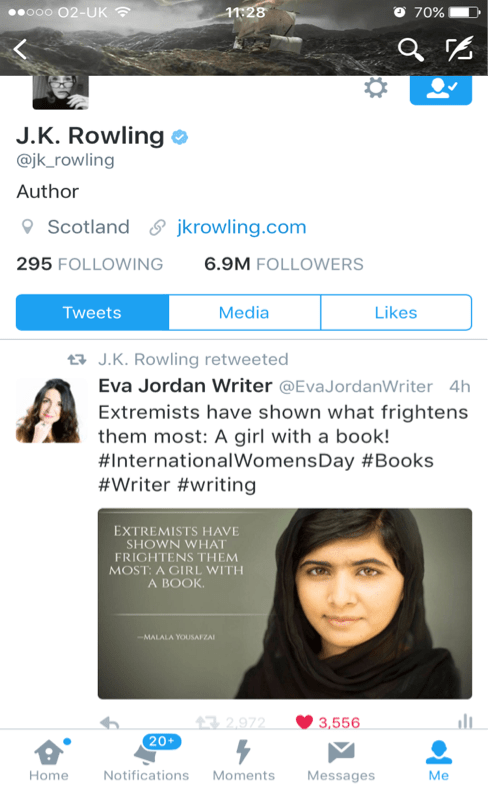
To mark IWD in 2016 I posted a tweet on my Twitter account of a quote by Malala Yousafzai:

“Extremists have shown what frightens them most: A girl with a book.”

Malala was shot in the neck and head by the Taliban in October 2012 in the Swat Valley of Pakistan. She was attacked because she advocated a girl’s right to an education; an idea that the Taliban fervently opposed. Malala was only 14-years-old at the time and amazingly, Malala survived. The extraordinary thing about my story though is how quickly my tweet was retweeted. I’d like to say it was all down to me for posting such a poignant message but the brilliant truth is it was mostly due to J.K. Rowling – and yes I do mean the writer! J.K Rowling retweeted my tweet and thanks to her that particular tweet now has 8,363 likes and has had 6,159 retweets, which only goes to show that sometimes even the smallest contribution or support towards change can have a far greater reach than you’d ever imagined.  

J K Rowling

If you do tweet some words of inspiration today, don’t forget to use the hashtag campaign theme #BeBoldForChange and if you’d like some more information about IWD you can take a look at their website here.

If you’d like to take a look at the video footage of Janusz Korwin-Mikke you can visit the BBC News (World) Twitter account here where you can also see the brilliant response to his statement by the Spanish Socialist member Iratxe Garcia Perez – go girl!

team-spirit-437512_960_720


Love Is In The Air!

love-560783__340

Love Is In The Air!

Celebrated on 14th February each year, the cynics among us could be forgiven for viewing upcoming Valentine’s Day in its current incarnation as a colossal commercial venture seized upon by big businesses to drive huge sales.

Flowers – red roses are by far the most popular, with estimates of around 110 million sold 2-3 days leading up to February 14th.

rose-2019689__340

Chocolates – more than 35 million heart-shaped boxes of chocolate will be sold.

valentines-day-2040960__340

Jewellery – estimates suggest us Brits alone will spend 58 million on jewellery.

heart-257458__340

Cards – then, of course, there are Valentines Cards where an estimated one billion will be sent worldwide making Valentine’s Day the second largest seasonal card-sending celebration after Christmas.

heart-2006059__340

However, the writer and romantic in me prefer to believe there is more to it than that. So, straight from the heart, and in the true spirit of love and romance, here are a few declarations of love taken from several famous love letters.

Zelda Fitzgerald to F Scott Fitzgerald

Darling – I love these velvet nights. I’ve never been able to decide … whether I love you most in the eternal classic half-lights where it blends with day or in the full religious fan-fare of mid-night or perhaps in the lux of noon.

Vita Sackville-West to Virginia Woolf

I am reduced to a thing that wants Virginia. I composed a beautiful letter to you in the sleepless nightmare hours of the night, and it has all gone: I just miss you, in a quite simple desperate human way.

Katherine Mansfield to John Middleton Murry

My darling,

Do not imagine, because you find these lines in your private book that I have been trespassing. You know I have not – and where else shall I leave a love letter? For I long to write you a love letter tonight. You are all about me – I seem to breathe you – hear you – feel you in me and of me … 

John Keats to Fanny Brawne

My love has made me selfish. I cannot exist without you — I am forgetful of everything but seeing you again — my Life seems to stop there — I see no further.

Johnny Cash to June Carter Cash

We get old and get used to each other. We think alike. We read each other’s minds. We know what the other one wants without asking. Sometimes we irritate each other a little bit. Maybe sometimes take each other for granted.

But once in a while, like today, I meditate on it and realize how lucky I am to share my life with the greatest woman I ever met.

The Straw Bear Festival

straw-bear-1

As we already approach the third week of the new year the bad news is we’re still in deepest mid-winter in the UK and it’s cold enough to freeze the proverbial ‘you know what’s’ off a brass monkey. However,the shortest day of winter, December 21st, has already passed us by so from hereon in, nights are getting shorter and days longer and more importantly for me, thanks to the small Cambridgeshire town I live in, mid January also offers a welcome injection of colour and merriment in the form of the annual Straw Bear Festival. This weekend has seen the sleepy little town of Whittlesey come alive with visitors and townsfolk alike partaking in some good spirited drinking, street dancing and general good cheer as it celebrates its 38th Straw Bear Festival. Undoubtedly one of my favourite times of the year, it is this annual festival that provided the inspiration behind my own interpretation of such an event in my debut novel, 183 Times A Year, which takes place in the fictitious town of Great Tosson. And, just for your enjoyment, I include an extract below as well as a few photo’s I took this weekend. 

“My self-indulgent melancholy is temporarily hindered as I push my way through swarms of people gathered along every street. Our small and usually quiet town is bustling and bursting at the seams. An infestation of locals and visitors alike follow the bear made of straw – enthusiastically entertained by an entourage of storytellers and street acts. Musicians provide a melodic din across an eclectic sound of instruments. Bagpipes, Harmonicas, Maudolin’s and Hurdy Gurdy’s intertwine with the heartbeat of base and side drums to well known songs such as the The Curly Headed Ploughboy and the Old Drove Road.

Flamboyant costumes of the Morris, Molly, Rapper and Long Sword dancers inject a welcome relief of colour into the drab and dreary backdrop. Technicolor tatter-coats dazzle the eye, as do some of the more eccentric waistcoats, rosettes and neckerchiefs. Others sport flashing, neon armbands and some wear straw hats while others show off black bowlers or top hats. Women predominately fashion layered, ankle length skirts that rustle with every twist and turn whilst men prefer knee-length breeches. White handkerchiefs are waved ceremoniously and whoops and cries of varying voice are thrown up and caught on the wind. There is rhythmic clash of metal from the Long Swords complimenting the hollow collision of clay pipe wielding Morris dancers.

I look across a flock of faces and pick out Dad’s. I continue to push my way through the throng of good spirits, hoping some of it may actually rub off. Enticing smells of mulled wine and roasting hog hangs heavy amongst the atmosphere of pagan abandonment. Joyous escape from fuel bills, job losses and pay cuts. A brief but hedonistic trip into carnival and Mardi Gras.”

Copyright © Eva Jordan 2015

If you’d like to know more about this wonderful festival or the history behind it, click here.

A brief history of our favourite Christmas traditions

christmas-baubles

Well, here we are, December is already upon us, and for those who celebrate it but have failed to notice, Christmas is well and truly on its way. Traditionally popular for gift buying, December is the month Christmas shopping begins in earnest. It is also a time for other traditions; the trimming of trees, the hanging of lights, the writing of Christmas cards, letters to Santa, turkey and mince pies, absurdly silly knitwear and mistletoe and woe in soapland.

Therefore, as a writer and lover of history, I thought it would be interesting to explore some of our Christmas traditions and where they originate.

Medieval times brought us the Holly and the Ivy. The tradition of decorating the home with evergreens is an ancient one stretching back to pagan times. Evergreens were valued for their ability to retain life in the middle of winter and holly, traditionally thought to be masculine and ivy, feminine, were believed to bring stability to the home.

holly-and-ivy

Elizabethan times brought us sugar and spice and all things nice. ‘Eat, drink and be merry’ epitomised Christmas in Elizabethan England. Spectacle was of great importance and those households that could afford it, would indulge in a Christmas feast concluding in a banqueting course of sweet and colourful delicacies. Beautifully decorated sweetmeats were accompanied by hot drinks including ‘lambswool’ – made from hot ale, cider or sherry, apples and spices, which, when hot, would explode to create a ‘wooly’ top.

xmas-punch

Victorian times brought us the Christmas tree and the Christmas cracker. The image of a glittering tree, it’s branches illuminated by twinkling lights and decorations, is one of the most powerful and recognisable images of a ‘traditional’ Christmas. The introduction of such is said to be credited to Prince Albert, Queen Victoria’s husband – both great advocates of Christmas – however, he simply popularised an already existing custom originally introduced to England much earlier.

christmas-background

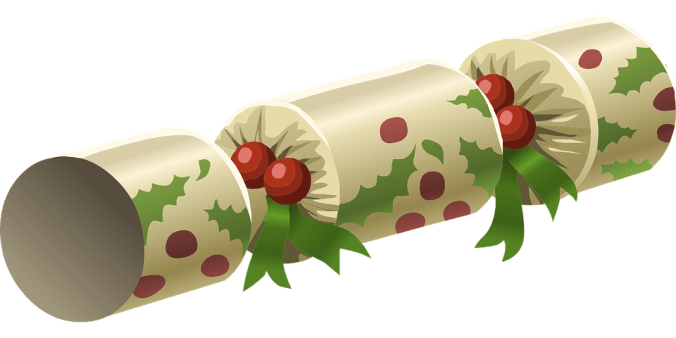
The story of the Christmas cracker is down to one man’s ingenuity; Tom Smith, a confectioner’s apprentice working in London in the early 19th century. After a trip to Paris in 1840, he admired the French sugared almond bon-bons wrapped in coloured tissue paper, and introduced them to London. Some years later, after watching logs crackle on a fire, he imagined a bon-bon with a bang. Adding a strip of paper – infused with chemicals which, when rubbed, created enough friction to produce a noise – inside a coloured paper wrapper containing mottoes and poems, the Christmas cracker was invented.

christmas-cracker

Mothers & teenage Daughters: the amusing facts and figures

Mothers & teenage Daughters:
the amusing facts and figures

mother-daughter

Photo courtesy of Pixabay Free Images

Originally posted in the November 2016 issue of The Fens – A FREE lifestyle magazine with the heart and soul of the fens (for more information see here) – here are some amusing facts about mothers and teenage daughters.

As both a mother and stepmother of teenage daughters, I had plenty of inspiration to draw from at home when writing my debut novel, 183 Times A Year – a humorous observation of contemporary family life. However, like most writers, I also carried out a great deal of research. These are just some of the interesting and amusing facts I discovered about mothers and their teenage daughters.

About teen girls and power

It is suggested that the mother-daughter relationship is so powerful it affects everything from a woman’s health to her self-esteem. Dr Christiane Northrup, author of the book Mother-Daughter Wisdom (Hay House), says, “The mother-daughter relationship is the most powerful bond in the world, for better or for worse. It sets the stage for all other relationships.”

Their need to separate

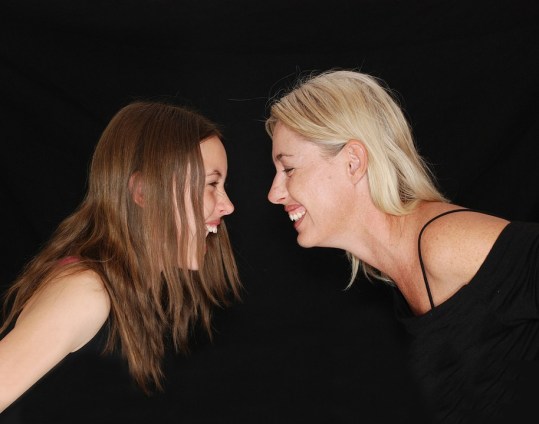
While most 5-year-old girls love their mothers with an unshakeable conviction, it’s often a different story by the time they reach their teens. The once-adored mother who rarely put a foot wrong is suddenly always doing or saying embarrassing things. Teenage daughters often feel torn between wanting to remain close to their mothers and wanting to separate.

The facts and figures

According to a survey posted in The Telegraph in May 2013 studying the relationship between teenage daughters and their mothers, the Facebook/Tweeting, selfie-taking, music and mobile phone obsessed teenage girl will, during a year:

  • Cry over boys 123 times
  • Slam 164 doors
  • Have 257 fights with brothers and sisters
  • Fall out with their friends 127 times despite spending 274 hours on the phone to them.
  • Guess what they do 183 times a year!

Hang on in there!

It is estimated that by the time a woman reaches the age of 23, she finally starts to acknowledge and appreciate everything her mother did for her. Most daughters are grateful for their mother’s guidance throughout the tough times, even though they failed to realise it at the time. 

Read My Latest Musings & Writing Tips

typewriter


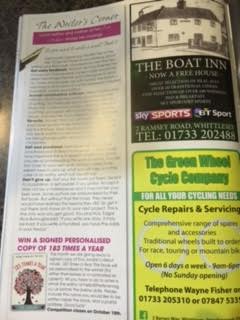
You can now read my latest writing tips and book review in the current edition of The Fens – a FREE lifestyle magazine with the heart and soul of the Fens.

the-fens-oct-1

This month, continuing on from last month, I offer another 5 tips to those of you thinking about writing your first novel:

the-fens-oct-2

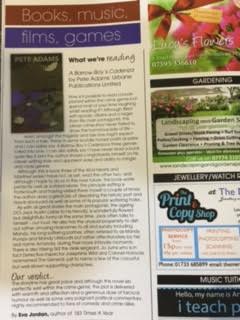
And this month’s book review is for the wonderfully witty crime caper, A Barrow Boy’s Cadenza, by the equally witty author, Pete Adams.

the-fens-oct-3

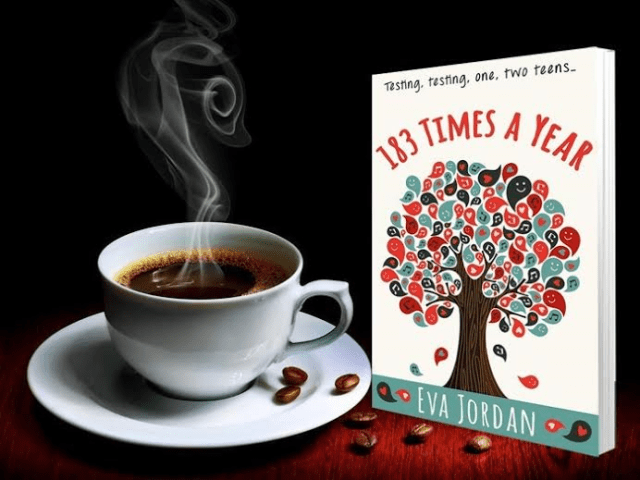
Also, if you turn to page 16 you’ll see there’s a chance to win a signed, personalised copy of 183 Times A Year – offer ends 10th October!

183-times-coffee

So – what are you waiting for? Grab your copy and enter NOW! Good luck.

If you are interested in reading recent editions of The Fens simply click here to take a look.

Another Wonderful Book Review and Shed Loads of Heart!

children-happy

After a not so brilliant start to my day this morning I was more than chuffed and cheered up tremendously when I read this recent lovely review of 183 Times A Year by writer Beverley Harvey.

Thank you, Beverley!

Book Review: 183 Times a Year 

Eva Jordan’s debut novel 183 Times a Year is the story of beleaguered mum Lizzie and angst-ridden teenage daughter Cassie’s relationship and their chaotic ‘blended’ family.

Thanks to a first person narrative by Lizzie and Cassie alternately, we get both sides of the story. There is never any confusion about who’s talking as the two protagonists have their own distinct tone of voice.

A rich supporting cast of characters speeds the action along and the goodies and baddies are clearly flagged from the outset. Other family members add depth to Lizzie and Cassie’s characters (for instance, Cassie’s empathy for her cancer-suffering Nan rescues her from being a monster), then there are friends, boyfriends and a loathsome ex-husband to contend with; all vividly drawn and believable.

It’s a book of two halves; the first is brimming with laugh-out-loud comedy – mainly due to Cassie’s utterly selfish take on the world, and her frequent malapropisms. In the second half, the book takes on a darker tone, becoming less slapstick and more thought-provoking. You’ll get no plot spoilers from me – but a shocking twist changes the direction of this novel entirely, adding layers and depth.

The complex (and often toxic) mother-daughter relationship theme will resonate with women everywhere and you don’t have to be a parent to get it; if you are child-free, just think back to your own teenage tempest. Expect a roller coaster of emotions that includes tears, laughter, anger and indignation. Above all, this book has shed-loads of heart.

*****************

You can read the original review here on Beverley’s website.