Write Your First Novel – In A Month!


machine-writing-1035292_960_720

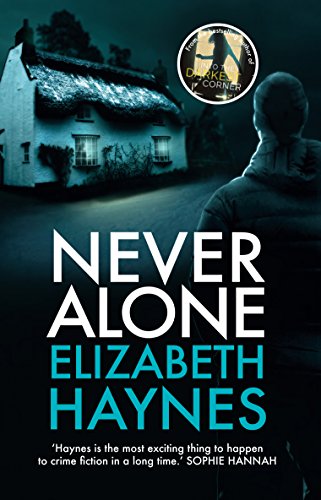
A couple of months ago I had the pleasure of attending an author event to hear crime writer, Elizabeth Haynes, talk about her writing career. I also had the honour of meeting and chatting with Elizabeth afterwards, who proved to be both lovely and very gracious with her time. After then going home and devouring her current novel, Never Alone (a great read and one I’d highly recommend if you like crime thrillers) which I read and reviewed last month (and you can read again here), I decided to write a post about the event, and pass on some of Elizabeth’s writerly wisdom

Elizabeth, a former police intelligence analyst, hasn’t always been an author but, like me, she did always aspire to be such, one-day. Her first novel, Into The Darkest Corner was published in 2011 and won Amazon’s Book of the Year and Amazon’s Rising Star Award. During the course of the evening the author discussed her previous career and where she gets her ideas and inspiration from to write her novels. The idea of Never Alone came to Elizabeth when she was thinking of moving house and found herself spending far too much time browsing through the houses of various property websites. She came across a grey stone house nestling in a remote country hillside providing the inspiration for the house in the novel, Four Winds Farm, which plays a pivotal role in the setting of Never Alone.

The author also discussed, despite juggling a family and a full time job, how she eventually came to write her first novel. She became, and continues to be, a participant in the National Novel Writing Month, otherwise referred to as NaNoWriMo – an annual challenge to write 50,000 words in the month of November (approximately 1667 words a day, or roughly four sides of typed A4 paper). So, this is my challenge to all you would be writers out there, you have a couple months to prepare yourself before the start of November and possibly the start of your first novel. It may mean getting up a couple of hours earlier every day, or going to bed a couple of hours later each night. It may also mean you let the housework slide for a couple of weeks, get someone else to do the cooking, walk the dog, whatever – but it is only for one month.

However, Elizabeth did also point out that 50,000 words is not a novel (most novels are anything from 60,000 to 100,000 words, much more in some cases), but what you will have is the bare bones of a novel, a good start and something you can build on. Why not take a look at the official NaNoWriMo website nanowrimo.org and sign up now. You’ll find lots of help and inspiration, including pep talks and the chance to meet other authors online and in person. Good luck if you take part and please let me know how you get on!
Elizabeth Haynes

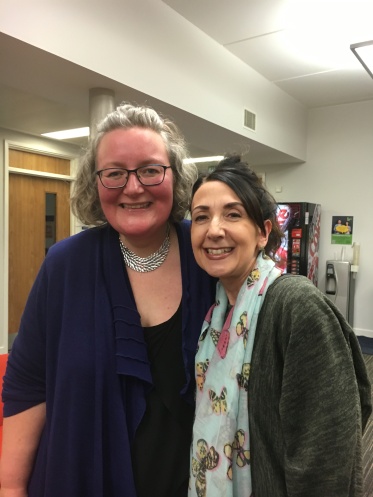
Me and Elizabeth Haynes!

Eva Jordan reviews… Never Alone by Elizabeth Haynes

Book Review510uL5rtumL

Publisher – Myriad Editions

My Review

This is the first novel I have read by crime writer Elizabeth Haynes and I can safely say it won’t be the last. Gripping, thrilling and wonderfully written, for me, it was a real page-turner.

Never Alone is a story about Sarah Carpenter, a middle-aged widow who lives with her two dogs in a remote farmhouse set in the North Yorkshire Moors. Sarah has two adult children, Kitty, her daughter, who is away at university most of the time and her son, Louis, who, although lives locally to Sarah is, for all intents and purpose, estranged from his mother. Still struggling to come to terms with the death of his father, Jim, it’s obvious Louis blames his mother for his father’s death despite the fact it was clearly an accident.

Sarah too is struggling, but her battle is more about isolation, what it means to live alone. ‘She has a house and debts, and, while she doesn’t need to worry about the children any longer, it’s a hard habit to break, worrying.’ Neither particularly happy nor unhappy she is presented as someone who, although on the surface appears to be reasonably calm and collected, is nonetheless floundering. When she first met her husband, Jim, as a young woman at university, although she didn’t love him, at first, ‘he promised to be there for her forever, and it was that permanence that attracted her. The idea that whatever lay ahead, she would have Jim.’ However, when Aiden, an old friend from university, also the ex-best friend of her deceased husband, turns up and agrees to rent the small cottage Sarah has at the back of her farmhouse, Sarah quickly realises she is not alone. And, as the story unfolds, she also realises there are worst things than being alone.

Narrated through two voices, namely Sarah and Aiden, as well as one unknown malevolent voice, it soon becomes apparent Aiden is hiding something from Sarah. The story starts off quite slow then gradually picks up pace culminating in a number of shocking twists and turns.

Easy to read, Never Alone, is a well-written psychological thriller that is as much about human relationships as it is about the human psyche. The characters are well rounded and believable and Haynes cleverly uses the weather (being snowed in), location (the isolation of the moors and the old farmhouse, Four Winds Farm) and animal instinct (the whines, low growls and body language of Sarah’s two dogs, Basil and Tess) to build atmosphere and tension that greatly add to the mounting suspense of this brilliant read. Definitely one I’d recommend.

Writing – The School of Hard Knocks.


“Hardships often prepare ordinary people for an extraordinary destiny.”

                                                                                   – C S Lewis

absorbed-2409314__340

“Writing – ain’t for the faint hearted.” Who said that? Oh yes, of course, me! And if you think it is, I suggest you give up now. It often involves long, solitary hours tapping away at a keyboard, in front of a computer screen, where emotions are apt to swing violently from belief your work is the next big thing to the worse piece of writing on the planet – ever. Then there are the edits and the rewrites and that’s long before you start submitting your work. And once you do, there’s every possibility it will be rejected. But if you are lucky enough to get a publisher, or indeed as many brilliant writers now do, successfully self-publish, you’re still putting your work ‘out there’ for public scrutiny. Reviews are vital to a writer and sometimes they’ll be great, at others, brutal. So without doubt, the one thing you open yourself up to, as a writer, is rejection and criticism. In fact, that’s probably a given for most things in life, especially those that catapult you, one way or another, into the public arena, which of course writing most definitely does.

However, how can you become known as a writer unless you take a chance? Luckily, reading is subjective. There will always be those (hopefully!) who love your work and sadly those who don’t. Never let rejection or bad reviews sway you from pursuing your writing dream though. Rejection is a strong test of character. Nonetheless, I do accept there will be days when it’s not always possible to remain so philosophical. So, for all the writers and would be writers reading this and suffering a crisis of confidence, here is a list of famous writers whose novels were initially rejected.

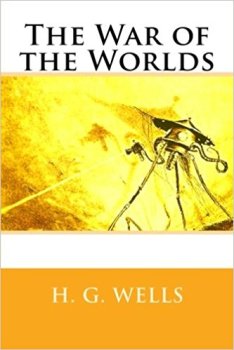
  • A publisher rejects H.G. Wells The War Of The Worlds, describing it as “an endless nightmare.” Eventually published in 1898, it has been in print ever since.

41t5FlQEplL._SX331_BO1,204,203,200_

  • Louisa May Alcott is told to “stick to teaching.” She doesn’t give up on her dream to become a published writer and later Little Women goes on to sell millions. Some 140 years later it is still in print.

31Ior5+qNCL._SX304_BO1,204,203,200_

  • Agatha Christie experiences 5 years of continual rejection before landing a publishing deal. Her book sales are now in excess of £2 billion.

41WctdQZYhL._SX259_BO1,204,203,200_

  • In 1968 Ursula K. Le Guin receives a letter from an editor suggesting her book, The Left Hand of Darkness is “Hopelessly bogged down and unreadable.” It goes on to become one of her many best-sellers, regularly voted as the second best fantasy novel of all time, next to The Lord of the Rings.
  • Stephen King was told, “We are not interested in science fiction which deals with negative utopias. They do not sell.” Carrie sold over one million copies in the first year alone.
  • Initially rejected by 16 literary agencies and 12 publishers, the modest print run of 5000 copies for John Grisham’s, A Time To Kill,  quickly sells out and goes on to become a best seller. He now has combined sales of 250 million.

513Dzz-wfWL._SX322_BO1,204,203,200_

  • The Christopher Little Literary Agency takes on a new client. Her novel is rejected by 12 publishers. Eventually picked up by an editor at Bloomsbury, the company agree to publish but tell the writer to get a day job as she has little chance of making money from children’s books. Yet Harry Potter and the Philosopher’s Stone by J.K. Rowling generates a series of such books, setting records as the fastest-selling books in history, with combined sales of £450 million.
  • Small publishers in San Francisco, Macadam/Cage, fall in love with and agree to publish a debut novel sent to them. Prior to this, 25 literary agents rejected it. Translated into 33 languages and adapted as a movie, Audrey Niffenegger’s, The Time Traveller’s Wife sells 7 million copies.
  • Only selling 800 copies on its limited first release, the author finds a new publisher and Paulo Coelho’s, The Alchemist, sells 75 million.