
The birthplace of William Shakespeare
Last weekend I went to visit the birthplace of the Bard – William Shakespeare 26 April 1564 – 23 April 1616 – English poet, playwright and actor during the English Renaissance, Elizabethan Era. He was born in Stratford-Upon-Avon, Warwickshire and widely regarded as the greatest writer in the English language. His works have been translated into 80 languages – including Star Trek’s Klingon – apparently!
Whilst wandering around the beautiful house of his birth on Henley Street I got talking to one of the volunteers about the reproduction beds on display. The mattresses were quite clearly supported by ropes which, I was advised, would have needed to be pulled tight to provide a well-sprung bed. There were wooden turning posts placed along the sides of the bed, connected to the ropes, and it would have been the action of turning and twisting these posts that would have enabled the ropes to be pulled tight. This is something William and his brothers would have been expected to do.
Hence the saying “Night, night, sleep tight.” If the ropes were not pulled tight and one then slept badly as a consequence, one would then state that they had had a “Ropey night’s sleep.”
How true this actually is I’m not entirely certain but it got me thinking about other popular sayings and their origins. Although we’re not always aware of it we probably all quote history on a daily basis. The English language is filled with common sayings, bits of slang and idioms often derived from historical events and legends. Sometimes the connections are obvious, whereas other phrases have become so commonplace that most speakers probably never stop to consider their source. So, just for a bit of historical fun I’ve listed a few more for you to peruse at your leisure including some coined or popularised by the Bard himself.
Turn A Blind Eye
The phrase “turn a blind eye” usually used to refer to a deliberate refusal to acknowledge a particular reality is said to date back to a legendary chapter in the career of the British naval hero Horatio Nelson. During the 1801 Battle of Copenhagen, Nelson’s ships were pitted against a large Danish-Norwegian fleet. When Nelson’s superior officer flagged for him to withdraw, the one-eyed Nelson supposedly brought his telescope to his bad eye proclaiming, “I really do not see the signal.” He went on to score a momentous victory. Some historians have dismissed Nelson’s famous quip as battlefield myth, but the phrase “turn a blind eye” persists to this day.
A Foregone Conclusion
A decision made before the evidence for it is known. An inevitable conclusion.This originates from Shakespeare’s 1604 play Othello: But this donated a foregone conclusion: ‘Tis a shrewd doubt, though it be but a dream.’ This is a response to Iago who says that what he was telling Othello was “just a dream” of Cassio’s, who was supposedly dreaming of Desdemona. It is important to know that Iago is the villain of the play, though, so this could be a trick.
Crocodile tears
The phrase “crocodile tears” is used to describe a display of superficial or false sorrow, but the saying actually derives from a medieval belief that crocodiles shed tears of sadness while they killed and consumed their prey. This myth dates back to the 14th century and comes from a book called “The Travels of Sir John Mandeville.” Extremely popular upon its release, the book tells the stories of a brave knight’s adventures during his travels through Asia. Among its many inventions, the book includes a description of crocodiles that notes, “These serpents sley men, and eate them weeping, and they have no tongue.” While factually inaccurate, the account of weeping reptiles later found its way into the works of Shakespeare, and “crocodile tears” became an idiom as early as the 16th century.
Tow Rag
The phrase Tow-rag comes from the pad of teased out old rope that Royal Navy sailors of the 18th and 19th century used to use when they visited ‘the head’ (toilet on the bow of the ship). Paper was far too expensive to use, so old rope, known as tow, was used and was then washed out and kept in one’s pocket until needed again. Hence the derisory term to call someone a tow-rag.
Running amok
Originally beginning its life as a medical term “Running amok” is commonly used to describe wild or erratic behavior. The saying became popular during the 18th and 19th centuries, when European visitors to Malaysia learned of a peculiar mental affliction that caused otherwise normal tribesmen to go on brutal and what appeared to be random killing sprees. Amok – derived from the “Amuco,” a band of Javanese and Malay warriors who were known for their penchant for indiscriminate violence – was initially a source of macabre fascination for Westerners. Writing in 1772, the famed explorer Captain James Cook noted that “to run amok is to … sally forth from the house, kill the person or persons supposed to have injured the Amock, and any other person that attempts to impede his passage.” Once thought to be the result of possession by evil spirits, the phenomenon later found its way into psychiatric manuals.
What A Piece of Work is Man
Man is a supreme creature. This originates from Shakespeare’s Hamlet, 1602:
“What a piece of work is a man! how noble in reason! how infinite in faculty! in form and moving how express and admirable! in action how like an angel! in apprehension how like a god! the beauty of the world! the paragon of animals! And yet, to me, what is this quintessence of dust? man delights not me: no, nor woman neither, though by your smiling you seem to say so.”
More recently, the phrase ‘a real piece of work’ has been coined to mean ‘a bad character, lacking morality and scruples’. This goes further than Shakespeare’s usage which, while appearing to glorify man, is ironic in suggesting that man is very far from a masterpiece.


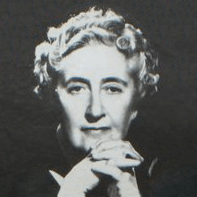 Agatha Christie, via Wikimedia Commons

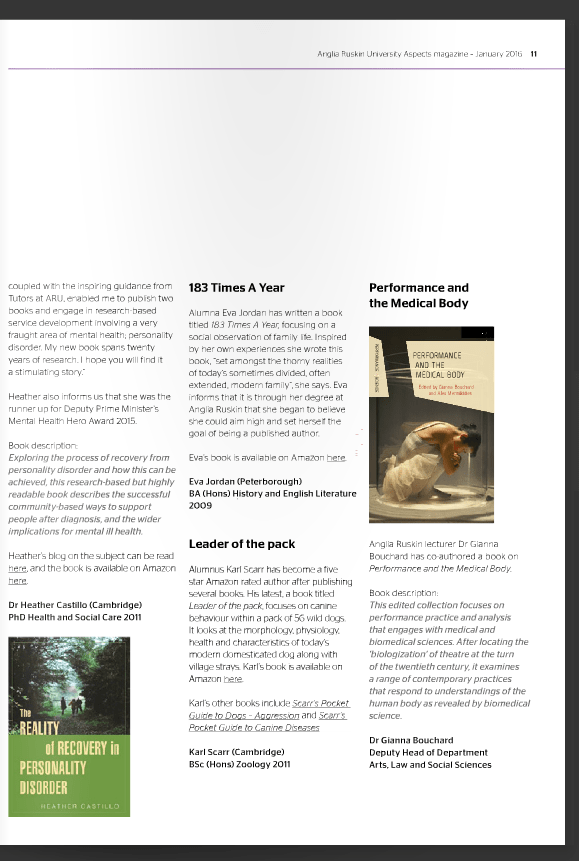



 Eva Jordan