Write Your First Novel – In A Month!


machine-writing-1035292_960_720

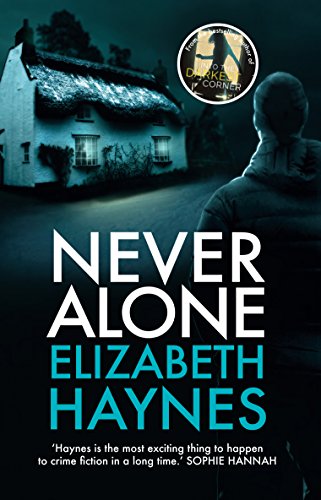
A couple of months ago I had the pleasure of attending an author event to hear crime writer, Elizabeth Haynes, talk about her writing career. I also had the honour of meeting and chatting with Elizabeth afterwards, who proved to be both lovely and very gracious with her time. After then going home and devouring her current novel, Never Alone (a great read and one I’d highly recommend if you like crime thrillers) which I read and reviewed last month (and you can read again here), I decided to write a post about the event, and pass on some of Elizabeth’s writerly wisdom

Elizabeth, a former police intelligence analyst, hasn’t always been an author but, like me, she did always aspire to be such, one-day. Her first novel, Into The Darkest Corner was published in 2011 and won Amazon’s Book of the Year and Amazon’s Rising Star Award. During the course of the evening the author discussed her previous career and where she gets her ideas and inspiration from to write her novels. The idea of Never Alone came to Elizabeth when she was thinking of moving house and found herself spending far too much time browsing through the houses of various property websites. She came across a grey stone house nestling in a remote country hillside providing the inspiration for the house in the novel, Four Winds Farm, which plays a pivotal role in the setting of Never Alone.

The author also discussed, despite juggling a family and a full time job, how she eventually came to write her first novel. She became, and continues to be, a participant in the National Novel Writing Month, otherwise referred to as NaNoWriMo – an annual challenge to write 50,000 words in the month of November (approximately 1667 words a day, or roughly four sides of typed A4 paper). So, this is my challenge to all you would be writers out there, you have a couple months to prepare yourself before the start of November and possibly the start of your first novel. It may mean getting up a couple of hours earlier every day, or going to bed a couple of hours later each night. It may also mean you let the housework slide for a couple of weeks, get someone else to do the cooking, walk the dog, whatever – but it is only for one month.

However, Elizabeth did also point out that 50,000 words is not a novel (most novels are anything from 60,000 to 100,000 words, much more in some cases), but what you will have is the bare bones of a novel, a good start and something you can build on. Why not take a look at the official NaNoWriMo website nanowrimo.org and sign up now. You’ll find lots of help and inspiration, including pep talks and the chance to meet other authors online and in person. Good luck if you take part and please let me know how you get on!
Elizabeth Haynes

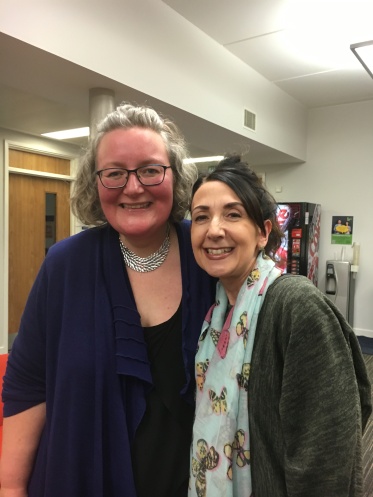
Me and Elizabeth Haynes!

Eva Jordan reviews… Never Alone by Elizabeth Haynes

Book Review510uL5rtumL

Publisher – Myriad Editions

My Review

This is the first novel I have read by crime writer Elizabeth Haynes and I can safely say it won’t be the last. Gripping, thrilling and wonderfully written, for me, it was a real page-turner.

Never Alone is a story about Sarah Carpenter, a middle-aged widow who lives with her two dogs in a remote farmhouse set in the North Yorkshire Moors. Sarah has two adult children, Kitty, her daughter, who is away at university most of the time and her son, Louis, who, although lives locally to Sarah is, for all intents and purpose, estranged from his mother. Still struggling to come to terms with the death of his father, Jim, it’s obvious Louis blames his mother for his father’s death despite the fact it was clearly an accident.

Sarah too is struggling, but her battle is more about isolation, what it means to live alone. ‘She has a house and debts, and, while she doesn’t need to worry about the children any longer, it’s a hard habit to break, worrying.’ Neither particularly happy nor unhappy she is presented as someone who, although on the surface appears to be reasonably calm and collected, is nonetheless floundering. When she first met her husband, Jim, as a young woman at university, although she didn’t love him, at first, ‘he promised to be there for her forever, and it was that permanence that attracted her. The idea that whatever lay ahead, she would have Jim.’ However, when Aiden, an old friend from university, also the ex-best friend of her deceased husband, turns up and agrees to rent the small cottage Sarah has at the back of her farmhouse, Sarah quickly realises she is not alone. And, as the story unfolds, she also realises there are worst things than being alone.

Narrated through two voices, namely Sarah and Aiden, as well as one unknown malevolent voice, it soon becomes apparent Aiden is hiding something from Sarah. The story starts off quite slow then gradually picks up pace culminating in a number of shocking twists and turns.

Easy to read, Never Alone, is a well-written psychological thriller that is as much about human relationships as it is about the human psyche. The characters are well rounded and believable and Haynes cleverly uses the weather (being snowed in), location (the isolation of the moors and the old farmhouse, Four Winds Farm) and animal instinct (the whines, low growls and body language of Sarah’s two dogs, Basil and Tess) to build atmosphere and tension that greatly add to the mounting suspense of this brilliant read. Definitely one I’d recommend.

Writing – The School of Hard Knocks.


“Hardships often prepare ordinary people for an extraordinary destiny.”

                                                                                   – C S Lewis

absorbed-2409314__340

“Writing – ain’t for the faint hearted.” Who said that? Oh yes, of course, me! And if you think it is, I suggest you give up now. It often involves long, solitary hours tapping away at a keyboard, in front of a computer screen, where emotions are apt to swing violently from belief your work is the next big thing to the worse piece of writing on the planet – ever. Then there are the edits and the rewrites and that’s long before you start submitting your work. And once you do, there’s every possibility it will be rejected. But if you are lucky enough to get a publisher, or indeed as many brilliant writers now do, successfully self-publish, you’re still putting your work ‘out there’ for public scrutiny. Reviews are vital to a writer and sometimes they’ll be great, at others, brutal. So without doubt, the one thing you open yourself up to, as a writer, is rejection and criticism. In fact, that’s probably a given for most things in life, especially those that catapult you, one way or another, into the public arena, which of course writing most definitely does.

However, how can you become known as a writer unless you take a chance? Luckily, reading is subjective. There will always be those (hopefully!) who love your work and sadly those who don’t. Never let rejection or bad reviews sway you from pursuing your writing dream though. Rejection is a strong test of character. Nonetheless, I do accept there will be days when it’s not always possible to remain so philosophical. So, for all the writers and would be writers reading this and suffering a crisis of confidence, here is a list of famous writers whose novels were initially rejected.

  • A publisher rejects H.G. Wells The War Of The Worlds, describing it as “an endless nightmare.” Eventually published in 1898, it has been in print ever since.

41t5FlQEplL._SX331_BO1,204,203,200_

  • Louisa May Alcott is told to “stick to teaching.” She doesn’t give up on her dream to become a published writer and later Little Women goes on to sell millions. Some 140 years later it is still in print.

31Ior5+qNCL._SX304_BO1,204,203,200_

  • Agatha Christie experiences 5 years of continual rejection before landing a publishing deal. Her book sales are now in excess of £2 billion.

41WctdQZYhL._SX259_BO1,204,203,200_

  • In 1968 Ursula K. Le Guin receives a letter from an editor suggesting her book, The Left Hand of Darkness is “Hopelessly bogged down and unreadable.” It goes on to become one of her many best-sellers, regularly voted as the second best fantasy novel of all time, next to The Lord of the Rings.
  • Stephen King was told, “We are not interested in science fiction which deals with negative utopias. They do not sell.” Carrie sold over one million copies in the first year alone.
  • Initially rejected by 16 literary agencies and 12 publishers, the modest print run of 5000 copies for John Grisham’s, A Time To Kill,  quickly sells out and goes on to become a best seller. He now has combined sales of 250 million.

513Dzz-wfWL._SX322_BO1,204,203,200_

  • The Christopher Little Literary Agency takes on a new client. Her novel is rejected by 12 publishers. Eventually picked up by an editor at Bloomsbury, the company agree to publish but tell the writer to get a day job as she has little chance of making money from children’s books. Yet Harry Potter and the Philosopher’s Stone by J.K. Rowling generates a series of such books, setting records as the fastest-selling books in history, with combined sales of £450 million.
  • Small publishers in San Francisco, Macadam/Cage, fall in love with and agree to publish a debut novel sent to them. Prior to this, 25 literary agents rejected it. Translated into 33 languages and adapted as a movie, Audrey Niffenegger’s, The Time Traveller’s Wife sells 7 million copies.
  • Only selling 800 copies on its limited first release, the author finds a new publisher and Paulo Coelho’s, The Alchemist, sells 75 million.


Eva Jordan reviews… Love and a Dozen Roast Potatoes by Simon Wan

Book Review51ZuEu4AZ4L

Publisher – Urbane Publications

You know the hero always gets the girl right? Well, what if the hero gets the girl but she’s not the right girl? Worse, what if the girl doesn’t actually want the hero?

Such is the life of our romantic hero as he negotiates the triple threat of trying to becoming a cheese ball superstar, finding his cartoon princess, and bringing her home for a perfect Christmas roast potato. It’s a life tale of comic disasters, sex (lots of weird sex), relationship nightmares and discovering your nakedness in a world full of people wearing the same old clothes.

Honest, warm, funny and very hip, this is David Nicholls with the tears, the pain and the naughty bits put brazenly on display for the world to see.

My Review

If you like the idea of reading something a little different then this is just the book. Honest and warm with lots of laugh out loud moments plus a couple of weird ones to boot (check out the acknowledgements to give you a bit of an idea), this is the story of one man’s quest to find true love.

As Shakespeare himself famously wrote, “the course of true love never did run smooth” and never has there been a more appropriate turn of phrase when it comes to the complicated love life of Mr Simon Wan. Beginning at the tender age of eight, the author takes us right back to the 1980s and the first girl he fell in love with, Claire. Having only been at his new school for a couple of days, Claire and her friend feel sorry for the half-Chinese boy being teased by the other boys. In a bid to make him feel better, the girls kiss him on the cheek. “The next playtime, the boys who called me ‘chinkychong pong face’ were a little more interested in being my friend…and that probably set the precedent [for my life] for the next thirty-two years.”

With an obvious zest for life and an honest love and appreciation of women (all kinds of women), as well as music and fashion, not forgetting the roast potatoes of course, the writer then proceeds to walk us through three colourful decades of his life and the never-ending story (and yes, that sentence is alluding to a friend of said author who gets a mention in this book – think eighties pop icon with spiky blonde hair) of his search for true love. And it’s all there, the long hot summers, public transport, the video player, mixtapes, skateboards, drink-fuelled fights and drug-fuelled raves – “we drove around the country lanes in the middle of the night searching for phone boxes that would lead us to hidden rave arenas and when we got there we danced until it was a different day. Life was fast. Life was about lasers and ecstasy, nothing could stop us. We had the keys to a brave new world. We were invincible.”

Snappy, fast-paced but easy to read, Wan is masterful at painting pictures with words. He is also brutally honest about himself and although, on the whole, the book remains upbeat and wonderfully witty throughout, Wan doesn’t sugar coat his faults or his mistakes, which in a way only makes him more endearing. He is human and doesn’t try and hide it. Written with great humour and sincerity, if you’re looking for something a little different then I’d definitely recommend Love and a Dozen Roast Potatoes. But be warned – be prepared to feel very worn out after reading it. 

Eva Jordan reviews… Jawbone Lake by Ray Robinson


41IBtyzY+DL._SX324_BO1,204,203,200_

Publisher – Windmill Books

Ravenstor, the Peak District. New Year’s Day.

A young woman stands on the shore of a frozen lake and watches a Land Rover crash off the bridge wall and into the ice. Two hundred miles away, a young man is woken by a devastating telephone call. The accident, and what it brings to the surface, will change both of their lives forever.

My Review

Set in a small town in Derbyshire’s Peak District, Jawbone Lake is a compelling and cleverly woven thriller about a young man’s search for the truth behind the disappearance of his father. However, it is also a heartfelt look at life after death and the impact of such on those left behind seen through the eyes of the story’s two main protagonists, Joe Arms and Rabbit.

Living in London, Joe is the successful owner of a thriving software company he set up from scratch after leaving university. However, Joe has had enough of London life and his manic work schedule. He decides to sell the business and leave London for a while. Early one morning Joe receives a phone call from his mother, Eileen, telling him there’s been an accident. His father’s Land Rover, which crashed into a frozen lake off a bridge, has been found but his father, CJ, is missing. With no idea if any other vehicles were involved and no apparent witnesses, the police are somewhat baffled by the circumstances surrounding the accident. Joe’s father is missing, presumed dead. Distraught, Joe sets out to find the reason behind his father’s disappearance only to uncover some unsettling truths along the way. This was the man Joe thought he knew but his quest leads him to a past that began in Hastings and another life in Andalusia in Spain, which throws up the age-old question – does anyone ever truly know someone?

The story’s second protagonist is Rabbit, a young woman who works in the local ice-cream factory who, unbeknown to anyone else, was standing by the lake when CJ’s car went into it. She also witnessed the presence of another car and a man with ‘a dark shape silhouetted in his hand.’ Hers is a mundane existence and one where she is still coming to terms with the loss of her baby son. ‘Sensing the vastness of the water out there, its pull, she was reminded how, towards the end of her labour last year, it felt as though her stomach had created its own field of gravity…And even though he was now gone from her world, she still felt him inside her, floating like a tiny underwater astronaut.’

Although Jaw Bone Lake delves into the murky dealings of the criminal underworld this is not a fast-paced action thriller but rather a look into the aftermath that crime and the loss of a loved one leave on those left behind. The characters are well rounded and the narrative moves along at a steady pace. Robinson’s use of language is beautifully evocative and his description of places and changing scenery simply breath-taking. Robinson is clearly a writer who understands the art of writing and this is definitely a book I’d recommend.

Boadicea – The Warrior Queen

moon-625450_960_720

Illustration courtesy of Pixabay

The Warrior Queen

During recent research for my second novel, due for release in autumn this year, I found myself gathering some interesting facts about Boadicea, or as she is recently referred to, Boudicca. On-going debate as to the correct pronunciation of her name still continues, my children having been taught at school that the latter was correct, and I the former. I personally prefer Boadicea so from hereon in will refer to her as such. And no, just for the record, in case anyone is wondering, I haven’t switched genre to write about historical fiction for my second novel. Like my debut, my second novel is also a work of contemporary fiction, I just happened to come across Boadicea in my search for inspirational women of history. Boadicea demonstrated strength of character and endurance at a time of great adversity, both for herself and her daughters, as well as the people of her kingdom. History teaches us that all did not end well for Boadicea but she did not take her humiliation lying down. And, more importantly, she reminds us that once upon a time, before the Roman invasion of Britain, women were part of a social structure that encouraged equal rights.

Not much is known of Boadicea’s early life and her birth date is not recorded but general consensus suggests she was born into a royal house as a member of the Iceni tribe, based in the area now known as Norfolk. Manda Scott’s modern novel’s based on Boadicea’s life suggest it likely she was brought up in a largely peaceful environment where both sexes would have taken similar rolls in the running of the lives of the Iceni tribe, including mastering the skills necessary to defend themselves. This way of life was then threatened after the Roman invasion of Britain around 43CE. Boadicea and her husband Prasutagus, King of the Iceni, found ownership of their land and wealth threatened. A deal was struck and Prastuagus was allowed to remain in control of his land and money, but only with the status of ‘Client King.’ However, Prasutagus drew up a will leaving half of everything to his wife Boadicea, and their daughters, and the other half to the Roman Emperor. This did not sit well with the Romans because women in Roman society had no rights of ownership or inheritance. After the death of Prastuagus in 60CE the Romans refused to honour his will and Boadicea’s attempts to claim her rights were viciously denied. She was whipped, her estates confiscated, and her two daughters raped. The Romans may have left us with a rich legacy of innovation and invention including straight roads, sewers and sanitation, hot baths and bound books, but they also destroyed a social structure that had been so important to the women of the tribes of Britain, namely equality.

During Victorian times a memorial of Boadicea was commissioned and still stands today. Somewhat overshadowed by the London Eye on the opposite bank of the Thames, she can be found on the north-east corner of Westminster Bridge. Next time you are visiting London why not take a look at the statue of the ‘Warrior Queen.’ Driving her carriage, arms aloft, defiantly holding a spear with her daughters standing behind her, she looks very formidable. She also serves as a reminder that there was a time in bygone history when men and women in Britain had equal rights to property, power and inheritance. This does leave me wondering what recent historical relations between British men and women would have been like had we inherited the sexual politics of the Celtic tribes rather than those preferred by the Romans.


Eva Jordan reviews… The Vanishing by Sophia Tobin

51CL1Gao1pL._SX325_BO1,204,203,200_

Published by Simon & Schuster

When runaway Annaleigh first meets the Twentymans, their offer of employment and lodgings seems a blessing. Only later does she discover the truth. But by then she is already in the middle of a web of darkness and intrigue, where murder seems the only possible means of escape…

My Review

I love historical fiction, Dickens, Conrad, Austen, Eliot, Gaskell and Shelley, not forgetting the brilliant Brontë sisters and yet, I have to admit, it’s been a while since I last read a book in this particular genre. However, after reading Sophie Tobin’s The vanishing, I had to ask myself why?

Beautifully written, this dark tale of intrigue and deception is set against the backdrop of England’s nineteenth-century eerie Yorkshire Moors. Add a brooding Byronic villain who (in the words of Lady Caroline Lamb when referring to Lord Byron) could be best described as “mad, bad and dangerous to know,” a persecuted heroine and a remote setting alluding to aristocratic decay and madness, this atmospheric tale of mystery also bears all the hallmarks of good gothic fiction.

Annaleigh Calvert leaves behind the hustle and bustle of her London life, including her beloved adoptive father, and heads for Yorkshire to take up the position of housekeeper at White Windows, a somewhat decaying mansion nestled among the remote Yorkshire Moors. Annaleigh is also fleeing heartache; only White Windows is not the sanctuary she hoped for. “I felt disappointed,” she said. “I had come here to escape from sadness, and yet the house in that moment seemed the opposite of a place where one could be happy. It seemed to crouch in the rugged landscape, as though cowering from the rain.”

Her employers, the Twentyman’s, are a somewhat aloof brother and sister, Marcus and Hester. They appear pleasant enough however all is not as it seems. Hester, slightly melancholic and “colourless, like a watercolour executed with too much water” relies on opiates to help her constant headaches. Her brother Marcus, at times arrogant and at others troubled, is a contradictory character yet Annaleigh finds herself strangely drawn to her broody proprietor. “He looked at me, and the keenness of his gaze, needle-sharp and perceptive, startled me anew.”

Nonetheless, Annaleigh struggles with the isolation of her new home. And why is she warned by the other two resident servants not to get too close to her employers? And, more importantly, where did the previous housekeeper Kate; disappear to – apparently without a trace?

Although well paced, I did find The Vanishing somewhat slow, to begin with. However, it quickly picked up pace keeping me gripped to the very end. Tobin’s characters are well drawn and her descriptive use of language while both beautiful and haunting is also, at times, amazingly brutal. Through Annaleigh, Tobin explores the historical entrapment of women within domestic space as well as their subjection to patriarchal authority.

However, although subservient, as Annaleigh’s position would have dictated at the time, Annaleigh does discover a strong will and strength of character within herself that is refreshingly at odds with her place in society. The Vanishing is a story of love, betrayal and revenge and the perfect read for a cold day in front of a warm fire.

International Women’s Day 2017 – #BeBoldForChange

man-2013447_960_720

Today, Wednesday 8th March is International Women’s Day 2017. With its humble beginnings going as far back as 1911, International Women’s Day is regarded by most as a way to celebrate the economic, social and political achievements of women. And, although the world has made great strides toward gender equality, especially during the last several decades, major disparities between men and women still exist. Women from all walks of life still face disadvantages. Around the world women will earn on average only 60 to 75 per cent of men’s wages and are 65 per cent more likely to work in informal, and often unpaid, work. And for some this still appears to be perfectly acceptable, the idea of gender parity preposterous, proven several days ago during a discussion with members of the European Parliament. Politicians were debating the pay gap when Polish nationalist MEP Janusz Korwin-Mikke shared his thoughts on the subject. He stated that,

“Of course, women must earn less than men, because they are weaker, they are smaller, they are less intelligent. They must earn less, that’s all.”

This is shocking to say the least and until this conscious and unconscious bias is challenged and completely eradicated, women still have some way to go before they can truly observe a gender balanced society.

However, although there is still some way to go, women in more developed countries, in general, have come a long way. Sadly this is not the case for those living in countries still developing. Activists for women in developing countries tend to focus on more basic issues like combating violence against women and providing equal access to vaccines, basic healthcare, and primary education.businesswoman-453487_960_720

Therefore, as both a woman and mother of daughters, I feel compelled to acknowledge such an important day. I hope this post will help draw attention to some of the ongoing issues still experienced by women and eventually lead to a change in attitudes that find us living in a more gender-inclusive world. Unfortunately, the World Economic Forum predicts that the gender gap won’t close entirely until 2186 and I for one don’t believe this is acceptable. I implore anyone who wishes to help bring about change to mark this day. It doesn’t necessarily have to be anything big or grand, we all live busy lives but even the smallest gesture or acknowledgement can make a difference. You may even be rather surprised as to who takes note – like I was last year.

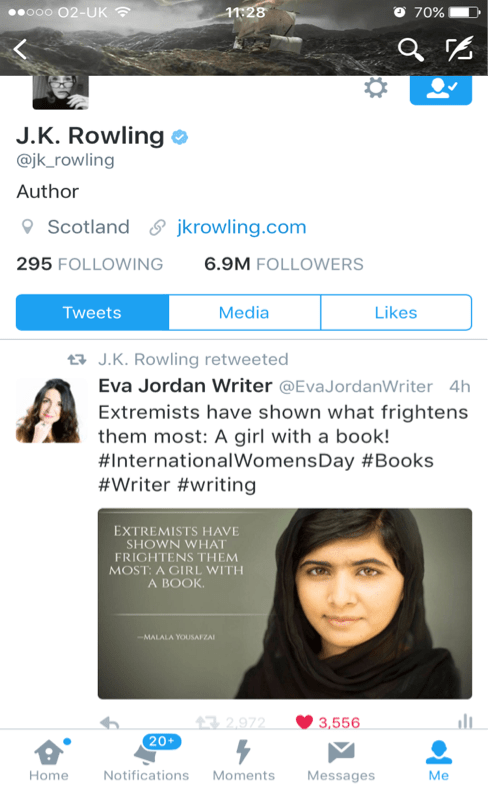
To mark IWD in 2016 I posted a tweet on my Twitter account of a quote by Malala Yousafzai:

“Extremists have shown what frightens them most: A girl with a book.”

Malala was shot in the neck and head by the Taliban in October 2012 in the Swat Valley of Pakistan. She was attacked because she advocated a girl’s right to an education; an idea that the Taliban fervently opposed. Malala was only 14-years-old at the time and amazingly, Malala survived. The extraordinary thing about my story though is how quickly my tweet was retweeted. I’d like to say it was all down to me for posting such a poignant message but the brilliant truth is it was mostly due to J.K. Rowling – and yes I do mean the writer! J.K Rowling retweeted my tweet and thanks to her that particular tweet now has 8,363 likes and has had 6,159 retweets, which only goes to show that sometimes even the smallest contribution or support towards change can have a far greater reach than you’d ever imagined.  

J K Rowling

If you do tweet some words of inspiration today, don’t forget to use the hashtag campaign theme #BeBoldForChange and if you’d like some more information about IWD you can take a look at their website here.

If you’d like to take a look at the video footage of Janusz Korwin-Mikke you can visit the BBC News (World) Twitter account here where you can also see the brilliant response to his statement by the Spanish Socialist member Iratxe Garcia Perez – go girl!

team-spirit-437512_960_720


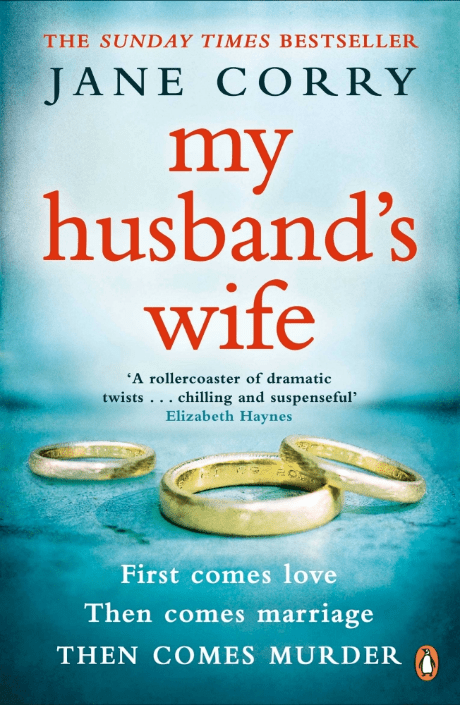
Eva Jordan reviews… My Husband’s Wife by Jane Corry


cover-jpg-rendition-460-707

Published by Penguin

What if your life was built on a lie?

When lawyer Lily marries Ed, she’s determined to make a fresh start. To leave the secrets of the past behind.

But when she takes on her first criminal case, she starts to find herself strangely drawn to her client. A man who’s accused of murder. A man she will soon be willing to risk everything for.

But is he really innocent?

And who is she to judge?

MY HUSBAND’S WIFE is a thriller with so many twists you won’t be able to put it down, perfect for fans of Liane Moriarty, Clare Mackintosh and C. L. Taylor.

My Review

An intense psychological thriller, My Husband’s Wife, will keep you gripped to the very end. As with most good thrillers, the short prologue teases the reader by beginning with the end of the story:

Flash of metal. Thunder in my ears…My head is killing me…The pain in my chest is scary. So, too, is the blood…Can a marriage end in murder?… So it’s true what they say about dying. The past comes back to go with you.

This is then followed by several sentences of a newspaper article reporting the death of the artist Ed Macdonald. Stating he has been found stabbed to death, we are left in no doubt that this a tale of murder…or could it simply a case of self-defence? Full of suspense, including chilling insights into the human psyche, Corry skilfully leads the reader down a slippery path littered with intrigue and dramatic twists. We are told from the outset that this story ends with the death of one of its characters but by whom and most importantly – why?

A tale of two halves the story then begins fifteen years prior to the prologue where we are introduced to the two central characters, namely Lily, a fledgling solicitor and Carla, a young school girl and only child of her Italian single mother. Lily, narrated in the first person, is newly married to Ed, an artist, but it is immediately apparent, despite having recently returned from honeymoon, there are problems within the marriage. Lily, having recently been consigned to criminal law is then assigned with the management of an appeal case of a convicted murderer, where Lily, despite her better judgement, finds herself strangely drawn to her client. In the meantime, acting as well-meaning neighbours, Lily and Ed befriend Carla, written in the third person, and her mother. The young married couple agree to babysit Carla from time to time when her mother has to work and Carla finds herself becoming Ed’s muse for his artwork. The story then jumps forward twelve years. Lily is a successful solicitor specialising in criminal law, Ed is the efficacious artist of the painting of The Italian Girl and Lily, now a young woman studying law is hell-bent on revenge. However, as with all good thrillers, all is not as it seems.

This is a classic whodunit with many surprising twists and turns. Corry’s characters are well rounded and believable. At times I found myself liking and disliking them all in equal measure, despite their flaws and bad deeds, because, they are all typically human and as we all know, given the right circumstances, good people are capable of bad deeds just as bad people are capable of good ones. Corry also provides some well-researched insight into autism as well as some thought-provoking observations of suicide, adultery, unknown paternity, and adoption and, of course, murder. Definitely one I’d recommend.

Love Is In The Air!

love-560783__340

Love Is In The Air!

Celebrated on 14th February each year, the cynics among us could be forgiven for viewing upcoming Valentine’s Day in its current incarnation as a colossal commercial venture seized upon by big businesses to drive huge sales.

Flowers – red roses are by far the most popular, with estimates of around 110 million sold 2-3 days leading up to February 14th.

rose-2019689__340

Chocolates – more than 35 million heart-shaped boxes of chocolate will be sold.

valentines-day-2040960__340

Jewellery – estimates suggest us Brits alone will spend 58 million on jewellery.

heart-257458__340

Cards – then, of course, there are Valentines Cards where an estimated one billion will be sent worldwide making Valentine’s Day the second largest seasonal card-sending celebration after Christmas.

heart-2006059__340

However, the writer and romantic in me prefer to believe there is more to it than that. So, straight from the heart, and in the true spirit of love and romance, here are a few declarations of love taken from several famous love letters.

Zelda Fitzgerald to F Scott Fitzgerald

Darling – I love these velvet nights. I’ve never been able to decide … whether I love you most in the eternal classic half-lights where it blends with day or in the full religious fan-fare of mid-night or perhaps in the lux of noon.

Vita Sackville-West to Virginia Woolf

I am reduced to a thing that wants Virginia. I composed a beautiful letter to you in the sleepless nightmare hours of the night, and it has all gone: I just miss you, in a quite simple desperate human way.

Katherine Mansfield to John Middleton Murry

My darling,

Do not imagine, because you find these lines in your private book that I have been trespassing. You know I have not – and where else shall I leave a love letter? For I long to write you a love letter tonight. You are all about me – I seem to breathe you – hear you – feel you in me and of me … 

John Keats to Fanny Brawne

My love has made me selfish. I cannot exist without you — I am forgetful of everything but seeing you again — my Life seems to stop there — I see no further.

Johnny Cash to June Carter Cash

We get old and get used to each other. We think alike. We read each other’s minds. We know what the other one wants without asking. Sometimes we irritate each other a little bit. Maybe sometimes take each other for granted.

But once in a while, like today, I meditate on it and realize how lucky I am to share my life with the greatest woman I ever met.