They’re Here!!!!

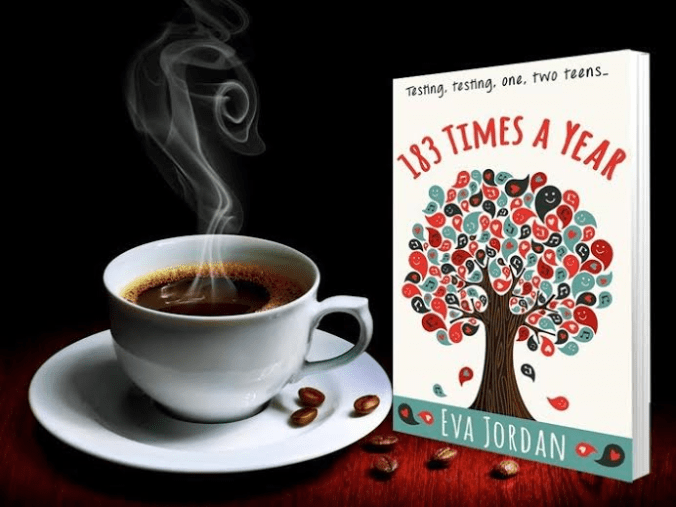
I was thoroughly delighted when a rather large truck turned up yesterday morning containing paperback copies of my debut novel 183 Times A Year. To actually hold and see my book in the flesh – so to speak – is actually quite wonderful.

Many heartfelt thanks to my publisher, Matthew Smith at Urbane Publications, for giving me the opportunity to work with him and for doing such a wonderful job of the book cover.

183 Times A Year in paperback version is not officially due for release until April 28th 2016, however you can pre-order a copy through most book outlets including Amazon here and here, directly with Urban Publications here, or you can contact me directly at evajordanwriter@gmail.com for a signed copy!

Another 5* star review for 183 Times A Year!

Buy this book! 

Buy this book, tell all your friends to buy this book, you won’t be disappointed, it’s funny endearing emotional & beautifully written, I feel I know this family so well and want to knock on their door to catch up on their crazy wonderful life, well done Eva and I really hope there’s another book soon?

– Debbie Jordan, Amazon, 6 April 2016

More about 183 Times A Year.’

Moggy, Moggy, Moggy…

img_0803

As a writer I find, when commitments and teenage children permit, I like to work in solitude. However, as certain members of my family don’t always consider that I am actually “working” when I’m writing I find my valued time to sit alone and stare at a blank computer screen is constantly considered worthy of interruption. Those that continue do so are now discovering they do so at their own peril, at best greeted with my version of the death stare, at worst a full-on rant. However, there is one family member who is always welcome – or should I say, makes himself welcome – regardless. Please let me introduce you to Simba, my 7-year-old moggy and muse for the tabby cat Romeow, in my debut novel.

Ocassional editor and reviewer of my work, Simba is my constant writing companion. More than happy to encroach upon my workspace and disrupt my train of thought he is a law unto himself. Dan Greenberg said,”Cats are dangerous companions for writers because cat watching is a near-perfect method of writing avoidance.” He is not far wrong.

A mere flick of his tail or twitch of an ear is enough for Simba to assert his presence. A nudge of his cheek against mine, gracefully weaving between my legs when hunger calls, he is full of affection when it suits him, pure disdain when it doesn’t. According to a 2009 study, cats know exactly how to get what they want from their owners by mimicking babies crying. Cats that are hungry will make an urgent cry or meowing sound in the 220 to 520-hertz frequency range while purring at a lower frequency. Babies also cry in this frequency range (usually between 300 and 600 hertz), and humans find it difficult to ignore.

And yet, despite his show of conditional affection and marked indifference, I love my old moggy dearly. Mark Twain summed cats up perfectly when he said, “I simply can’t resist a cat, particularly a purring one. They are the cleanest, cunningest, and most intelligent things I know, outside of the girl you love, of course.” And Jean Cocteau declared, “I love cats because I enjoy my home; and little by little, they become its visible soul.”

Ernest Hemmingway also loved cats and William S. Burroughs was a devout cat lover, calling them his “psychic companions,” describing them as “natural enemies of the state.” He transcribed a book, The Cat Inside, where he wrote lovingly of his companions such as Calico Jane, Fletch, Rooski, Wimpy, and Ed.

Cats, like dogs, as our trusted companions have been around for some time. However, the history of the domesticated cat is a little unclear. While it is commonly thought that the ancient Egyptians were the first to domesticate cats, the oldest known pet cat was recently found in a 9,500-year-old grave on the Mediterranean island of Cyprus. This grave predates early Egyptian art depicting cats by 4,000 years or more.

egypt-140372_960_720

Nonetheless, the status of cats as pets has waxed and waned over the centuries. Revered and worshiped by the ancient Egyptians they were also persecuted at later times. During the Spanish Inquisition, Pope Innocent VIII condemned cats as evil and thousands were burned. Unfortunately, the widespread killing of cats led to an explosion of the rat population, which exacerbated the effects of the Black Death.

Here are a few more amusing facts about cats.

  • On average, cats spend 2/3 of every day sleeping. That means a nine-year-old cat has been awake for only three years of its life. 
  • The technical term for a cat’s hairball is a “bezoar.”
  • A group of cats is called a “clowder.”
  • Female cats tend to be right pawed, while male cats are more often left pawed. Interestingly, while 90% of humans are right handed, the remaining 10% of lefties also tend to be male. 
  • Some cats have survived falls of over 65 feet (20 meters), due largely to their “righting reflex.” The eyes and balance organs in the inner ear tell it where it is in space so the cat can land on its feet. Even cats without a tail have this ability.
  • The ability of a cat to find its way home is called “psi-traveling.” Experts think cats either use the angle of the sunlight to find their way or that cats have magnetized cells in their brains that act as compasses.
  • Isaac Newton invented the cat flap. Newton was experimenting in a pitch-black room. Spithead, one of his cats, kept opening the door and wrecking his experiment. The cat flap kept both Newton and Spithead happy.
  • Cats love to sit on computers, probably because it’s warm. But computers love cats, too: Google’s artificial “Brain,” a computer that contains 16,000 processors and can learn whatever it wants from the Internet, is really into cat videos.

img_1636

  • And on a final note – it’s official – cats (like a lot of pets) are good for us. Studies suggest that cats are actually beneficial to human health, and may even reduce our risk for cancer and other diseases. How true this is I’m not entirely sure, but I do know Simba has been a great comfort to me during various illnesses and recovery from unpleasant surgery over the last couple of years.

Simba definitely makes a difference to my life and at times I am chastised by my teenage children for talking to him like a baby. “You never tell him off like you do us” is one of the common place phrases recited among the walls of our home when Simba has dared to interrupt me once again. It’s mock disapproval though, as they love him as dearly as I do. Even if he does only come to us when he feels like it. After all, everyone knows a cats’ hearing  is  made in such a way as to allow the human voice to easily go in one ear and straight out the other. Neil Gaiman said, “I would like to see anyone, prophet, king or God, convince a thousand cats to do the same thing at the same time.”

As well as critiquing my work in progress, Simba loves to,

img_1708

help me sort the washing,


help pack my suitcase and hide among my book shelves.

He also loves to give me early morning wake up calls, and is often compelled to disperse my sweets and papers across the floor at will.

And then of course there’s the look – the one that asks, “Really? You dared to interrupt me to tell me that…?” It is a look of pure scorn and you just know he has filed it for reference. Revenge will most likely come in the form of a paw on the face at 3am in the morning or as a continual meowing next to my ear reminding me it’s time for breakfast – his not mine – despite the fact it’s 6am on a Sunday morning!

cat-667909_960_720

I can forgive it all though, even the mad moments that find me waking from a blissful sleep in a blind panic, convinced someone has broken into the house or the kids are throwing a party that has got out of hand; but does in fact turn out to be Simba, taken by the urge to tear around the house like something possessed at some ungodly hour of the morning. Because with Simba, I am never alone. Even as I finish editing this piece he is curled up on a chair next to me. He is my  5th child and the 7th member of our little collective. He loves me on his terms but it is a constant love nonetheless.

He is also considers himself (he thinks) the boss! He knows it and secretly, so do we!

img_0951

J. K. Rowling is my new best friend!

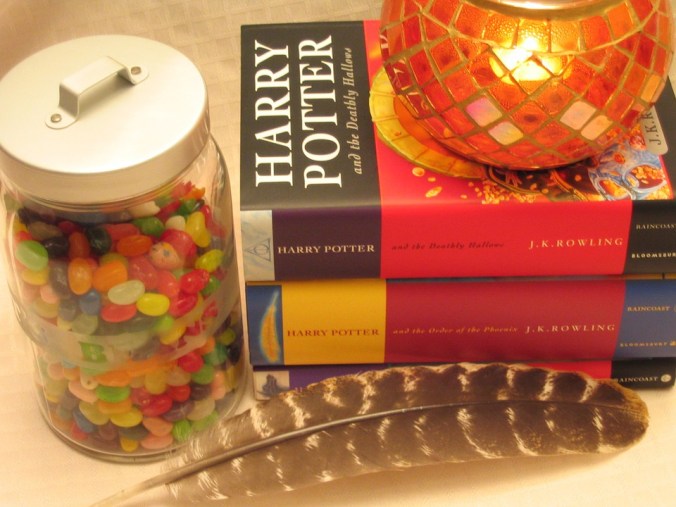
harry-potter-418108_960_720

J.K. Rowling Is My New Best Friend!

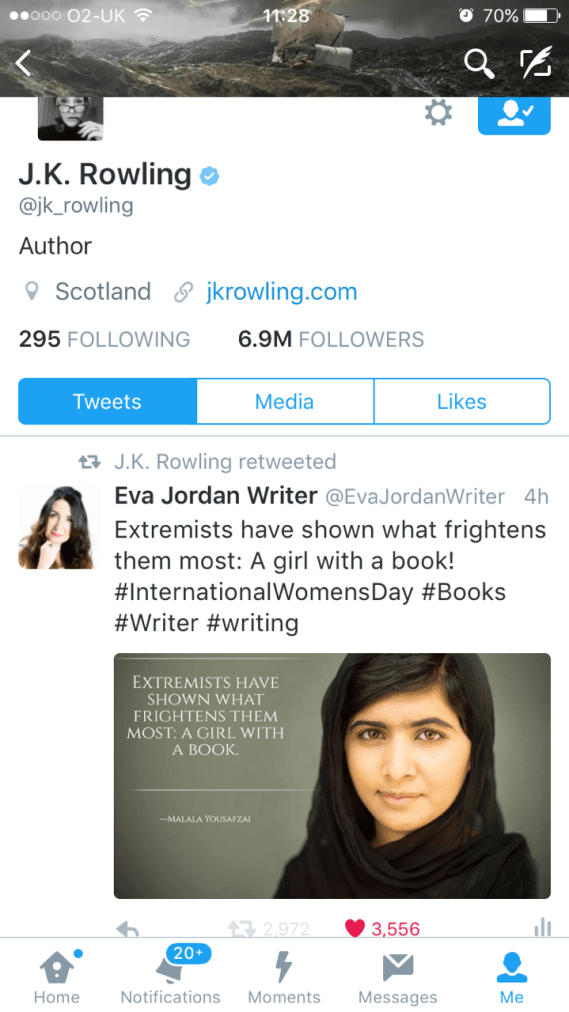
Something extraordinary happened to me a couple of weeks ago. Tuesday 8th March 2016 was International Women’s Day and being both a woman and a mother, I felt compelled to mark and acknowledge it. With its humble beginnings going as far back as 1911, International Women’s Day is regarded by most as a way to celebrate the economic, social and political achievements of women.  And, although the world has made great strides toward gender equality, especially during the last several decades, major disparities between men and women still exist.  Women from all walks of life still face disadvantages. The United States, is still yet to see a female president, and among the United Kingdom, Germany, and Australia, the tally remains at one.

Women around the world earn on average only 60 to 75 percent of men’s wages and are 65 percent more likely to work in informal, and often unpaid, work. However, although there is still some way to go, women in more developed countries have come a long way. Sadly, this is not the case for those living in countries still developing.

Activists for women in developing countries tend to focus on more basic issues like combating violence against women and providing equal access to vaccines, basic healthcare, and primary education. This led me to remember Malala Yousafzai who was shot in the neck and head by the Taliban in October 2012 in the Swat Valley of Pakistan. Malala was attacked because she advocated a girl’s right to an education; an idea that the Taliban fervently opposed. She was only 14-years-old at the time and amazingly, Malala survived. Therefore, as a woman and a writer and as she is also mentioned in my debut novel, what better way to mark International Women’s Day than with the following quote from Malala,

“Extremists have shown what frightens them most: A girl with a book”

So, just a little before 8am on that said Tuesday morning with a half-eaten piece of toast hanging from my mouth and phone in hand, I gave a final shout to my 17-year-old son reminding him that we really needed to leave if we were going to make his dental appointment on time. I hovered impatiently by the front door, hoping and praying that the banging and crashing sounds on the ceiling above my head, intermingled with some unintelligible mumblings of teenage speak, were a strong indication that my son had understood the urgency in my voice on this, my third (and final) call, and was finally getting ready to depart the floordrobe he calls a bedroom.

As I waited, I quickly found and posted the said quote from my mobile phone, to both my Twitter and Facebook accounts. Tapping various icons on my phone, I pressed send just as my son (or the grunt in the hood as my Dad calls him), made an appearance at the top of the stairs. Shoulders slumped as if bearing the weight of the world upon them, and, with much cajoling from me, my son slowly made his way down the stairs. Hoping I’d get at least a couple of likes or a couple of retweets for my recently published posts, as is the usual for me, I thought no more about them and we left the house and drove to the dentist.

My phone, although set to silent, was also on vibrate and ensconced somewhere in the black hole of Calcutta, otherwise known as my handbag, which was sat in the passenger foot-well of my car. Slowing my car down as I approached the red flashing lights of the railway level crossing on the way to my son’s dental appointment I heard my phone make a familiar buzzing sound. This is usually indicative of a text message or, as is often the case, someone has liked or retweeted something I’ve posted on Twitter. I felt sure it was my recent post concerning International Women’s Day and again thought no more about it. However, rather unusually my phone continued to vibrate all the way to the Dentist. When we finally arrived at our destination I quickly checked my phone and as suspected I had received likes and retweets for my Malala tweet. Hers were simple but brilliant words so I wasn’t surprised. However, what was surprising was that the bright screen of my phone informed me I already had 150 retweets – an all-time record for me.

“Wow,” I said rather proudly to my son, “see – look at the power of words.” He grunted something I didn’t quite comprehend and then climbed back into the car. We made a quick pit stop at the local supermarket – and still my phone kept buzzing. By the time we got to the supermarket I had approximately 350 retweets and by the time we left and made our way home I was up to 550 retweets. I was chuffed to bits but becoming more and more suspicious. By the time we got home I was up to 850 retweets and when both my son and I had unloaded the shopping I’d had another couple of hundred. Within the space of two hours I had had nearly 1000 retweets. My son, who couldn’t quite believe that me, his old mum, could get so many retweets investigated and discovered something I hadn’t noticed.

“You know why you are getting so many retweets don’t you?” my son asked. “No,” I replied somewhat perplexed. And then my son showed me – J. K. Rowling had retweeted my tweet. Finally, I understood why my phone had not stopped buzzing and why my tweet was so popular. J.K. Rowling has over 7 million followers so it’s hardly surprising my tweet for International Women’s Day was far more reaching than I could have ever hoped for.

My son looked on in mild amusement as his forty something year old mother morphed into someone that resembled an excitable 10-year-old – just for a few minutes (maybe hours!). I am a huge fan of J.K. Rowling and read all the Harry Potter books to my children when they were small and these days, putting the Harry Potter movies on is one of the only times I can actually get my teenage children to sit in the same room as me. I’ve also read most of the other books written by J.K. Rowling.

My phone continued to buzz throughout the day and night and still the likes and retweets kept coming. It is almost 2 weeks ago since that happened and I am still getting (although they are far less) likes and retweets for this post. It currently stands at 8300 likes and 6227 retweets. Unlike the title of this post and, sadly, J.K Rowling is not my new best friend but it was a wonderful privilege and fangirl moment for me to see my face on J.K Rowling’s twitter account. I’ve experienced a tiny taste of the kind of following she has and have realised how powerful social media is. J.K Rowling is not my new best friend but like me she is a writer and a woman and a mother. I am so very proud that J.K Rowling chose Malala Yousafzai’s words and my tweet to mark International Women’s Day.

IMG_1603

HAPPY MOTHER’S DAY!!!

beach-323453_960_720

“A Mother Is She Who Can Take the Place Of All Others But Whose Place No One Else Can Take”     Cardinal Mermillod

Happy Mother’s Day! 

Today is Mothering Sunday or, as it is often referred to, Mother’s Day and this post is dedicated to my wonderful Mum. Her’s has not been an easy journey. Born in 1950 she came from a place where things were done very differently and attitudes towards women, although beginning to change once she became a young woman, were a far cry from where they are today. Don’t get me wrong, we still have a long way to go if men and women are going to be looked upon and treated as equals, but it still begs belief that less than fifty years ago my Mum earned half the wage of a man doing the same job – merely because she was a woman. Also, when he was 19 years old my mother lost her beloved older brother in a motorcycle accident and when he was 26 years old my mother also lost her second oldest brother in a car accident. My mothers life, like many I’m sure, has been filled with up’s and downs ever since and just three years ago she was diagnosed with breast cancer. Fortunately she kicked cancer’s arse and is in remission. However, for as long as I can remember, my Mum has remained upbeat and positive. She has always been there for me through my own troubled times and, of course; she is (and I suspect will always remain so) my number one fan of my writing. Thank you Mum for your never-ending supply of love and support and words of wisdom. Thank you too, for believing in me, encouraging me and thank you for being my inspiration.

unnamed

Mum and I (more years ago than I care to remember!)

Mother’s Day or as it is traditionally known, Mothering Sunday, is celebrated throughout the world. Each year on the fourth Sunday in Lent, people show their appreciation to their mothers, usually with gifts and cards. This is a tradition believed to have started approximately 400 years ago in the UK when young people, who worked long hours, usually away from home, were given a day off by their employers so they could return to their ‘mother church’ where they had been baptised. This enabled them to spend time with their families and they would often arrive bearing small gifts such as flowers for the celebration.

Mothering Sunday is sometimes confused with Mother’s Day, which is held in the USA on the second Sunday of May. Ultimately, both days are in similar in their celebration of Mothers but their origins are different. In the USA, Mother’s Day came about as a result of Anna Jarvis ­­who was a social activist and founder of Mothers’ Day Work Clubs. She also played a significant unifying role within her community during the American Civil War. Jarvis campaigned relentlessly for a national holiday in honour of mothers and succeeded in 1909 and is now known as the founder of the Mother’s Day holiday.

However, regardless of it’s title – Mother’s Day or Mothering Sunday – today is the day we reflect upon and (hopefully) give thanks to our Mums, often for all the good they do and continue to do – like my own Mum who has been an absolute rock throughout my life. The relationship between a woman and her Mother is extremely important. It has even been suggested that the mother-daughter relationship is so powerful it affects everything from a woman’s health to her self-esteem. Dr Christiane Northrup, author of the book Mother-Daughter Wisdom (Hay House), says: “The mother-daughter relationship is the most powerful bond in the world, for better or for worse. It sets the stage for all other relationships.”

Notable mother-daughter relationships include:

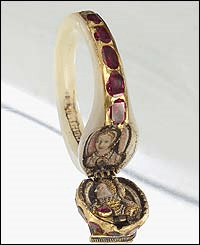
Anne Boleyn and  Queen Elizabeth I  – Although Anne (the second wife of Henry VIII and the first English Queen to be executed for treason) died when her daughter was very young, it has been suggested that Elizabeth carried a locket ring with a picture of her mother Anne, on one side and herself the other. She is supposed to have carried this ring with her, all her life.
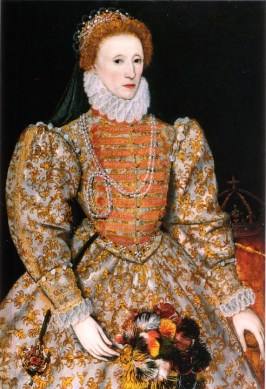
queen-62969_960_720Queen Elizabeth I ring

(the photo of the locket ring is via the BBC News website here)

“I would rather be a beggar and single than a queen and married.” – Queen Elizabeth (to the Ambassador of the Duke of Wurtemberg).

  • Mary Wollstonecraft and Mary Shelley.

“Strengthen the female mind by enlarging it, and there will be an end to blind obedience.” – Mary Wollstonecraft.

  • Marie Curie and Iréne Joliot-Curie.

“That one must do some work seriously and must be independent and not merely amuse oneself in life — this our mother has told us always, but never that science was the only career worth following.” – Irène Joliot-Curie.

  • Laura Ingalls Wilder and Rose Wilder Lane.

The author of the Little House series, Laura Ingalls Wilder says she couldn’t have written the books without the support and resilience from her daughter, Rose Wilder Lane.

“Happiness is something that comes into our lives through doors we don’t even remember leaving open.” – Rose Wilder Lane.

  • Janet Leigh and Jamie Lee Curtis

    tony-curtis-402605_960_720

    Janet Leigh with Tony Curtis (father of Jamie Lee Curtis)

“My mother was the most beautiful woman I have ever seen. There are moments when I remember her beauty, unadorned, unposed, not in some artificial place like a set or a photo call but rather captured outdoors in nature, where she took my breath away. When those moments surface, I miss her the most.” – Jamie Lee Curtis.

The mother-daughter relationship (partly based on my own experiences) is of course a theme explored at great length with much humour throughout my debut novel 183 TIMES A YEAR.

Lizzie is the exasperated Mother of Cassie, Connor and stepdaughter Maisy and the frustrated voice of reason to her daughters’ teenage angst. She gets by with good friends, cheap wine and is often found talking to herself – out loud. Below is an early extract of Lizzie reflecting on her relationship with her 16-year-old daughter Cassie, after enquiring as to how her English exam went.

Lizzie 

Where did it all go so wrong? I’m standing midway on the stairs, stunned at the sudden eruption that has just taken place. I merely asked Cassie how her English exam went. Forgetting to ask about her Maths exam had resulted in accusations of failing to take an interest in her life so I was pretty confident remembering this one would surely score me a few brownie points. How wrong could I be? I’m still not entirely sure what I said—or did—that was so wrong. Maybe I shouldn’t have corrected her when she said Shakespeare wrote in Islamic pentameter instead of iambic pentameter. Or perhaps it was when the conversation turned to Chelsea and her “undivorced” parents. It doesn’t seem to matter that Scott left me for another woman and had another child—side lining ours—it’s my fault anyway. Everything’s always my fault.

I stare at the photo of Cassie hanging on the hallway wall. She’s about 6 years old, her hair is in pigtails and her nose is wrinkled from smiling. No actually—she’s laughing. I feel sad. She loved me then. Maybe Scott leaving us was my fault and my teenage daughter’s malaise is entrenched in me?

How had I failed to notice Scott’s avarice and ambition? I don’t remember him being like that when we first met. The house, the cars, the golf club, the other women—all took priority over us. I—we—were never going to be good enough for him. God only knows why he married me? I feel wretched. Right now the only emotion I can remember from our marriage is worthlessness. What the hell was it all about Scott?

I look at a photo of Simon—I know Cassie calls him “Simple Simon”—on the same wall and smile. The irony is—he is far simpler than Scott. He doesn’t buy into all that status shit. He loves me for me and he loves the kids—all three of them—and that’s certainly not easy at times. I was burned and frightened when I met Simon but he promised me he was in for the long haul. He didn’t lie.

I run my fingers along the collection of framed snapshots of times past—ephemeral moments gone but not forgotten. I look at a smiley, fat cheeked Connor held, almost in a vice like grip, by an equally smiley but toothless Cassie. My thorax tightens and my vision blurs. It was shortly after that photo was taken, Scott left us. I still don’t get it though. Can’t get my head around his complete lack of interest in Cassie and Connor. I understand his apathy towards me but not the kids? Why Scott? Why?

I use my hand to reach up behind me and rub the back of my neck—twisting my head from side to side in a bid to banish the stresses of the day. It’s not really working so I perch on the stairs for a moment—staring into space. An unwelcome feeling washes over me. The black dog has made an appearance and looms at my feet. I shake my head, suddenly angry. I use my hands now resting on my knees to push myself to a standing position again. I will not give in to this ridiculous melancholy threatening to descend upon me. Yes, Scott is a fully-fledged, first class arse-hole but as far as I’m concerned it’s his loss if he chooses to miss out with Cassie and Connor. And besides, the bottom line is simple, teenagers—whether you are married or divorced, single or co-habiting, straight or gay, rich or poor—simply don’t like their parents. And that’s official. Every parenting book I’ve ever read clearly states that any parent hoping to be liked by their teenage children is on a damned path of discovery.

Looks like I’m f****d then. 

unnamed

If you wish to read more of my debut novel, ‘183 Times A Year,’ it is currently available to download for just 99p for the next two day on Amazon here and here. And for all those suffering Mum’s of teens out there, just remember, although at times the mother/(teenage) daughter relationship is a road fraught with diverse and complex emotions, it can also be – like many strong, female friendships – very enriching and rewarding. 183 TIMES A YEAR is a poignant, heartfelt look at the complex and diverse relationship between a mother and daughter set amongst the thorny realities of today’s modern family.

So you want to write a Novel?

Keep calm mug

So you want to write a novel? You’ve had an idea rolling around in your head for months, perhaps even years, and now you’re just itching to get it down on paper and have the world read your story. Having recently written and published my first novel and now working on the second, I learned quite a few things along the way. Here are 10 of my top tips.

  1. Have an outline. Write a plan, a rough guide, for what your story is going to be about, where it takes place, who your main characters are and a chronological order of events. You won’t stick to it but it helps to start with some structure.
  2. Word Count. Start small – many of you writing your first novel will perhaps be working full-time or you may be a busy parent or carer. Whatever your situation, it’s highly unlikely you can spend all the hours of your day totally devoted to writing – so have a goal. I aim for 1000 words every day. Sometimes I manage 2000 words in one day, on other days I only manage 500 words. It’s fine if you don’t always hit your daily target but if you have one it helps to keep you motivated. John Grisham began his writing career as a lawyer. He got up early every morning and wrote one page – we can all manage that. And Jodi Picoult said, “You might not write well every day, but you can always edit a bad page. You can’t edit a blank page.”
  3. Give yourself a weekly deadline. It can be a word count, percentage of progress, number of pages, whatever. Have something to aim for, and someone who will hold you accountable.
  4. Have a set time to write. Be strict with this and try and stick to it. After a bit of experimenting I’ve discovered that writing in the morning works best for me. Work out what’s best for you and don’t let yourself off!
  5. Choose a place to write. It doesn’t really matter where it is, your spare bedroom, the kitchen, your study (if you’re lucky enough to have one), wherever, just make it unique to your writing. I personally need to work without interruption. However, some of my family members think if I’m writing it’s okay for them to keep disturbing me. As a consequence, I now carry out a lot of my writing in the spare bedroom at my parent’s house.
  6. Get early feedback. As soon as I had finished my manuscript I had several copies made and kindly asked likeminded friends and colleagues to read my novel and provide me with honest feedback. I was lucky in that some of my first reviewers included journalists, writers and editors.
  7. Accept constructive criticism. Reject destructive criticism. Not everyone will like your story or style of writing but there will always be those who do. Study the constructive criticism and see if there is anything you agree with or had niggling doubts about and decide if you need to make changes.
  8. Re-write. Accept that you will have to re-write your novel several times before you can honestly say it is finished. Early feedback will help highlight any weak points or indicate any links that can be strengthened within the story or between the characters.
  9. Proofread. Get someone to proofread your finished manuscript – I can’t stress how important this is. It doesn’t matter how good you are at proofreading the work of others, you are too close to your own work and you need fresh, expert eyes to pick up what you will miss.
  10. Don’t give up. Get your first novel out there. Send it to a publisher or self-publish if you prefer. Accept it may not be a masterpiece and it may not be your best work. Some authors are embarrassed by their first book. But without that first novel, they never would have learned the lessons they did. So get it out there and move on to your next project. This is the only way you get good. You practice. Edgar Rice Burroughs said “If you write one story, it may be bad; if you write a hundred, you have the odds in your favour.”

Night, Night, Sleep Tight!

Shakespeare 2.png

The birthplace of William Shakespeare

Last weekend I went to visit the birthplace of the Bard – William Shakespeare 26 April 1564  – 23 April 1616 – English poet, playwright and actor during the English Renaissance, Elizabethan Era. He was born in Stratford-Upon-Avon, Warwickshire and widely regarded as the greatest writer in the English language. His works have been translated into 80 languages – including Star Trek’s Klingon – apparently!

Whilst wandering around the beautiful house of his birth on Henley Street I got talking to one of the volunteers about the reproduction beds on display. The mattresses were quite clearly supported by ropes which, I was advised, would have needed to be pulled tight to provide a well-sprung bed. There were wooden turning posts placed along the sides of the bed, connected to the ropes, and it would have been the action of turning and twisting these posts that would have enabled the ropes to be pulled tight. This is something William and his brothers would have been expected to do.

Hence the saying “Night, night, sleep tight.” If the ropes were not pulled tight and one then slept badly as a consequence, one would then state that they had had a “Ropey night’s sleep.”

How true this actually is I’m not entirely certain but it got me thinking about other popular sayings and their origins. Although we’re not always aware of it we probably all quote history on a daily basis. The English language is filled with common sayings, bits of slang and idioms often derived from historical events and legends. Sometimes the connections are obvious, whereas other phrases have become so commonplace that most speakers probably never stop to consider their source. So, just for a bit of historical fun I’ve listed a few more for you to peruse at your leisure including some coined or popularised by the Bard himself.

Turn A Blind Eye

The phrase “turn a blind eye” usually used to refer to a deliberate refusal to acknowledge a particular reality is said to date back to a legendary chapter in the career of the British naval hero Horatio Nelson. During the 1801 Battle of Copenhagen, Nelson’s ships were pitted against a large Danish-Norwegian fleet. When Nelson’s superior officer flagged for him to withdraw, the one-eyed Nelson supposedly brought his telescope to his bad eye proclaiming, “I really do not see the signal.” He went on to score a momentous victory. Some historians have dismissed Nelson’s famous quip as battlefield myth, but the phrase “turn a blind eye” persists to this day.

A Foregone Conclusion

A decision made before the evidence for it is known. An inevitable conclusion.This originates from Shakespeare’s 1604 play Othello: But this donated a foregone conclusion: ‘Tis a shrewd doubt, though it be but a dream.’ This is a response to Iago who says that what he was telling Othello was “just a dream” of Cassio’s, who was supposedly dreaming of Desdemona. It is important to know that Iago is the villain of the play, though, so this could be a trick. 

Crocodile tears

The phrase “crocodile tears” is used to describe a display of superficial or false sorrow, but the saying actually derives from a medieval belief that crocodiles shed tears of sadness while they killed and consumed their prey. This myth dates back to the 14th century and comes from a book called “The Travels of Sir John Mandeville.” Extremely popular upon its release, the book tells the stories of a brave knight’s adventures during his travels through Asia. Among its many inventions, the book includes a description of crocodiles that notes, “These serpents sley men, and eate them weeping, and they have no tongue.” While factually inaccurate, the account of weeping reptiles later found its way into the works of Shakespeare, and “crocodile tears” became an idiom as early as the 16th century.

Tow Rag

The phrase Tow-rag comes from the pad of teased out old rope that Royal Navy sailors of the 18th and 19th century used to use when they visited ‘the head’ (toilet on the bow of the ship). Paper was far too expensive to use, so old rope, known as tow, was used and was then washed out and kept in one’s pocket until needed again. Hence the derisory term to call someone a tow-rag.

Running amok

Originally beginning its life as a medical term “Running amok” is commonly used to describe wild or erratic behavior. The saying became popular during the 18th and 19th centuries, when European visitors to Malaysia learned of a peculiar mental affliction that caused otherwise normal tribesmen to go on brutal and what appeared to be random killing sprees. Amok – derived from the “Amuco,” a band of Javanese and Malay warriors who were known for their penchant for indiscriminate violence – was initially a source of macabre fascination for Westerners. Writing in 1772, the famed explorer Captain James Cook noted that “to run amok is to … sally forth from the house, kill the person or persons supposed to have injured the Amock, and any other person that attempts to impede his passage.” Once thought to be the result of possession by evil spirits, the phenomenon later found its way into psychiatric manuals.

What A Piece of Work is Man

Man is a supreme creature. This originates from Shakespeare’s Hamlet, 1602:

“What a piece of work is a man! how noble in reason! how infinite in faculty! in form and moving how express and admirable! in action how like an angel! in apprehension how like a god! the beauty of the world! the paragon of animals! And yet, to me, what is this quintessence of dust? man delights not me: no, nor woman neither, though by your smiling you seem to say so.”

More recently, the phrase ‘a real piece of work’ has been coined to mean ‘a bad character, lacking morality and scruples’. This goes further than Shakespeare’s usage which, while appearing to glorify man, is ironic in suggesting that man is very far from a masterpiece.