Eva Jordan in conversation with… Sue Moorcroft

Sue Moorcroft Hats

I’m very pleased to introduce the lovely Sue Moorcroft as my guest author today. A prolific writer of women’s contemporary fiction, Sue was born in Germany, the daughter of two soldiers, then lived in Cyprus, Malta and the UK. She’s worked in a bank, as a bookkeeper (probably a mistake), as a copytaker for Motor Cycle News and for a typesetter, but is pleased to have wriggled out of all ‘proper jobs’.

Here, Sue talks about the inspiration for her latest book The Christmas Promise.

What inspired The Christmas Promise?

When people ask about inspiration I feel they must anticipate tales of poignant life experiences or points I’m bursting to make to the wide world. Some of my books do have their origins in life experiences and, like most writers, I always have several points I want to make, but, fundamentally, I like to write about things I want to write about.

How The Christmas Promise came into being went something like this:

  • I was asked for a Christmas novella because they sell well and Christmas is always a promotable subject in the UK.
  • I don’t care for Christmas. I decided it would be more bearable to write about a heroine who doesn’t like Christmas, either.
  • On BBC Radio Cambridgeshire’s afternoon arts and culture programme I met a fellow guest, Abigail Crampton, who was a milliner. Making fabulous hats by hand seemed exactly the kind of occupation for one of my heroines, so I asked Abigail if she’d advise me.
  • Books have to have conflicts to drive the story so it seemed natural that Ava’s millinery business wasn’t too successful. (This changes as the book develops, partly owing to a WAG called Booby Ruby.) Not having much dosh at Christmas added to Ava’s challenges.
  • I wanted my hero to have a more serious beef with Christmas, so I put Sam’s mum, Wendy, in the elapse between surgery and chemotherapy, making him resolve to give the best Christmas he possibly could, cancer being such a life changer for the loved ones as well as the patient.
  • I began to suspect Sam and Ava’s story deserved a bigger stage and should be a novel rather than a novella.
  • My agent agreed, and so Ava needed a greater conflict than a Grinch-like dislike of the festive season. By happenstance, I read an article about ‘revenge porn’, ie an ex circulating intimate images of someone as revenge for being dumped. I was so annoyed on behalf of the victims that I immediately created Ava’s ex-boyfriend Harvey to illuminate the despicable crime.
  • A contemporary career for Sam, ways in which Ava’s goals and conflicts would impact upon Sam’s goals and conflicts, and I had assembled the elements I needed to begin planning back stories and seeing where the issues in the book would take me.

I’m not sure if the above process comes under the heading of ‘inspiration’ so much as ‘plotty idea-storming sessions with a significant dash of commercialism’, but it’s where the roots of this particular book lie.

Award-winning author Sue Moorcroft writes contemporary women’s fiction with occasionally unexpected themes. The Wedding Proposal, Dream a Little Dream and Is this Love? were all nominated for Readers’ Best Romantic Read Awards and Darcie’s Dilemma for Readers’ Best Short Romance. Love & Freedom won the Best Romantic Read Award 2011 and Dream a Little Dream was nominated for an RNA in 2013. Sue’s a Katie Fforde Bursary Award winner, a past vice chair of the RNA and editor of its two anthologies.

Sue also writes short stories, serials, articles, writing ‘how to’ and is a creative writing tutor.

Sue’s next book (available for pre-order now): The Christmas Promise 

Website
Blog 
Facebook
Twitter
Instagram
GoodReads
Take Five Authors

Sue Moorcroft

Eva Jordan in conversation with… Amanda Prowse

06396212c06d09721c0e7a2e88df6b70

I’m very pleased and honoured to introduce the lovely Amanda Prowse as my guest author today. Although Amanda didn’t start writing full time until she was forty she is a prolific writer with many published novels and novellas to her name, including her most recent novella Miss Potterton’s Birthday Tea.

Amanda states that her ambition has always been to create stories that keep people from turning the bedside lamp off at night, great characters that ensure you take every step with them and tales that fill your head so you can’t possibly read another book until the memory fades…

Here Amanda talks about her love of reading and explains the ideas behind her new novella.

Eva. thank you so much for having me as a guest on your wonderful blog, I am very happy to be here among friends.

Books are a huge part of my life. Reading for me is akin to breathing. I simply cannot imagine a life where this is not one of my major habits. I would rather be reading than just about anything else. We have a standard joke in our house, having visited some amazing places, sites, venues, I have very often done so with my nose in a good story only half-present, I can’t help it! What was I supposed to do? NOT find out what happened? As if.

The recent celebration of World Book Night has opened my eyes to the fact that so many people don’t read, yes I know, unbelievable, but true. My immediate thoughts are, what do they DO with all that spare time, all those hours reclaimed by not sitting with your nose in a book and secondly, what do they THINK about? As my head is largely consumed with three things;

  1. The book I am currently reading.
  2. The book I am currently writing.
  3. Is it time for another coffee yet?

Throughout my life, books have been my salvation, my educators, my friends and my escape. I grew up in a loving, busy, noisy, chaotic house without books in it. My wonderful Mum and Dad were too busy working and caring for their large brood and apart from reading on holiday (I picture my dad with the latest John Le Carré and my mum with anything by VC Andrews – Flowers In The Attic etc.) they didn’t make or have the time to read. Interestingly, once we had flown the coop and the burden of life was lifted a little, they both became and continue to be voracious readers! Kindles are now on their checklist when they leave the house, whereas it used to be simply, ‘keys, wallet, phone…’

I was born in Stepney and grew up in East London and remember very clearly my first ever visit to East Ham library and being given a little cardboard library card. It changed my life. Someone trusted me with the most precious thing: a book! And not only was it completely free, but when I finished, they let me choose another and another… that was it. I was hooked!

I used to curl up among the noise of my brother’s running around the room, yelling and playing ‘He-Man Master of the Universe!’ and read. This skill now serves me very well. I can write anywhere! Planes, trains, even in the TV room with a computer game blaring and boys yelling I am able to disappear into my own little world and create…

When my boys were little, I took so much joy in reading to them. Working our way through weighty classics like Moby Dick and the whole series of Lemony Snicket A Series of Unfortunate Events (LOVE LOVE LOVE THESE BOOKS!) and I hoped they would, like me, become book worms. It hasn’t quite worked out that way, my eldest would rather be watching or kicking a football, but this makes him happy and that is the goal (every pun intended!) My youngest is dyslexic and as a scientist is happier with his head in some grisly scientific tome than anything more frivolous!

So I do understand that books are not everyone’s bag but nothing gladdens my heart quite as much, as receiving a message from someone to say that they have read one of my books and it has re-ignited their love of reading! I know that this is so much more than them enjoying my stories; it is about them discovering the alternate worlds that lay in wait! How wonderful!

I also think that with the sweeping epidemic of loneliness in this modern age, not only would books provide companionship and escape for those affected, but a trip to the library would be the best tonic!

My latest novella “Miss Potterton’s Birthday Tea” looks at the loneliness of three seemingly very different people who all have that one simple desire, to switch off the light at the end of the day with someone by their side who cares about them. I think the best comment I have had about from a critic was “It made me go Aaaaaaah!” what more could I ask for?

Well, Eva, a deadline is looming and so I must get back to my edit – thank you so much for letting me hang out with you and your lovely readers and if anyone has any questions or wants to chat – they can always contact me at; askamanda@amandaprowse.com

With love

Amanda xx
a-note-mandy-photo(2)


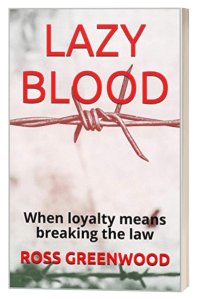
Eva Jordan in conversation with… Ross Greenwood – Author of Lazy Blood

I’m extremely pleased to introduce fellow local author to me, Ross Greenwood. Ross is the author of his recently released debut novel Lazy Blood.

Are your friends to die for?

Did you make friends at school?
Are they still your friends now?
Do you trust them?
Will is on his way to prison. His life is a mess, but who is to blame?

Here, Ross talks about what inspired him to write and he also gives us a brief idea of what to expect from his second upcoming novel The Boy Inside.

‘Lazy Blood.’

By Ross Greenwood

I never wanted to go to prison. It was certainly not one of my choices at school when asked. Doctor, postman maybe, radiographer (obviously later on), never prison. I had passed my A-levels but was so unfocused I just decided to get a job. As the years went by I seem to find myself working in a variety of call centres. First, as a phone jockey and then as a manager. Good money, as I was good at it, but hardly inspiring stuff. I found myself never staying in one job for long. Even now, at 42, the last job at 4 years’ service is over twice as long as anything I had achieved before.

I found myself travelling to get my thrills. The usual holidays when I was young, 18-30 etc., European capitals, then later 3 months in Asia and a year in Australia. More obscure capitals followed, living in Spain and then a month in Indonesia and 3 months in South America, before unexpectedly (how did that happen) children arrived. It was at that point, as I was trying buy-to-let and being a landlord, that the need to write a book was becoming very difficult to put aside. I had met such a range of people and had participated in so many amusing, mad events that I hoped I had a book people would be interested in.

I began what eventually became Lazy Blood. Life gets in the way and soon the need to get a job outweighed the urge to finish the book. I was stuck anyway. I had managed to mould many different attributes of hundreds of different people into four likeable and flawed characters, but I was struggling for a start and a beginning; the bite that would make the book interesting and exciting.

I wanted a career change though. No more insurance companies and depressing Mondays, I wanted something exciting. I was going to get it. I actually wanted to join the Police but, as you can imagine, my CV wasn’t going to stand any kind of investigation. The prison service wasn’t so fussy. As government cuts bite it is even less so now, the staff are leaving in droves.

After the training, how I got through those first few weeks I will never know. Only a commitment to myself to finish what I started got me through that period. HMP Peterborough is a B-category local jail. The hardest type to work in. We were constantly understaffed, sometimes running 80 man wings on your own for hours at a time. It is a revolving door for some, the drug addicts and shoplifters, but it takes all the prisoners from Cambridge, Huntingdon and Peterborough Crown and Magistrates Courts.

So there were murderers, rapists and psychopaths merged in with dangerous drivers, embezzlers and drug dealers. All of them meshed together in a crazy world of violence, depression, suicide, anxiety, drug abuse, self-harm and disorganisation that they weren’t allowed to escape from.

Obviously after a little while, I had more ideas and stories than I could ever imagine. I was desperate to get back to writing my book. All the time the book was percolating and composting in my head. I think that was one of my coping mechanisms. When they wanted volunteers to put riot gear on and break up a barricade, I would be there, sometimes just for the experience. When you work in that environment, you certainly know you are alive. Then another child came along and the book went back on the shelf.

By that time I had got to grips with the job. I found consistency, professionalism and politeness with a certain amount of apathy was generally the best way to get the job done. Aggression and arguing generally led to assaults and rage. The prisoners get to know you too. They know which officers will help them and they are also fully aware what a tough job it is.

Another year went by and I took child-friendly hours and started to work in Resettlement. The idea behind it was that you assisted them when they arrived in prison. For example, ringing the bank for them, finishing tenancies and then when it was time to leave you set about making sure people had somewhere to go. Unfortunately, that wasn’t always achievable.

This job still had its difficulties as some people were almost impossible to help. There are many charities out there and Peterborough Council do a brilliant job in housing people, but If you have been made to sign the sex offenders register or, worse, are an arsonist, then it is very hard to find somewhere for you to live as there is a duty of care to existing residents.

I got to chat to a lot of people and got much more material! I still wanted to finish my book and my boy gave me the opportunity. He was waking for his four a.m. feed and with a sense of determination that this was my time, I completed it in the early morning hours. Lazy Blood is available on Amazon and has been well received. Just £1.99 until the 1st of May.

Prison is a crazy place, not for the faint-hearted. It is an unnatural environment but not what people expect. Prison for most is Bad Girls, Shawshank, Prison Break and Porridge. A British jail is none of these things. Most people there are not ‘bad’ people. Sure there are career criminals and obviously, these figure strongly in the book too. That’s why we love crime books, but many have just done something stupid. Perhaps used their phone whilst driving and killed someone. Silly things with terrible consequences. Got involved with drugs and had to steal to service their habit. Maybe borrowed a few quid from work and things have got out of hand, or had a few beers and got in a fight. These things could happen to most of us. This is their story too. The list is endless and so are the ideas for characters.

I finally left the job after nearly four years to get my first book published and take a year out to do some more writing. I will look back fondly on my time there though. By far and away it was the worst job I ever had, but it was also the best job. I worked with some amazing people as well. The money wasn’t great, but the commitment had to be. I’m nearly six foot tall, mature (ish) and fourteen stone so I walked on those wings armed with physical presence and life experience. You had to bow your head to small school leavers on their first day in the job, whose nervous hands fumbled with confusing keys, as they entered the abyss.

What I wanted to focus on for my second book, ‘The Boy Inside,’ was one of the more depressing and sad parts of prison society. The young. Before you judge these boys in hoodies you should really have walked a mile in their shoes. I know that is a little cliché but many of them never stood a chance. Parents who were drug dealers for example, or no parents at all.

Once you are in the police and prison system, especially as a juvenile, it is hard to get out. The people in it often do not have the skills, knowledge or finances to climb out of the hole they are in. They become careless, chaotic and have no expectation of any kind of future. They are a burden to society and there seems to be little appetite to deal with these issues. There are many who work tirelessly with young people and try to get them back on track, often without being paid, but it is hard work and often unsuccessful.

Ironically to paraphrase The Shawshank Redemption, a life without hope is a terrible thing. Many of these issues are brought up in ‘Lazy Blood’ and the ‘The Boy Inside,’ but they are also books about persistence, determination and luck. In some ways they are also modern love stories. I hope to change your perception of those who end up in prison, but after reading these novels there is one thing I can be sure of. You will never want to go there yourself.

Lazy Blood is out at Amazon now, read the reviews and you decide.

www.rossgreenwoodauthor.com

After you have finished the book you can visit the website and see if you can match the locations in the story to those on the site. Some of the names have been changed for obvious reasons. All the best, Ross.

Thank you for such an interesting post, Ross. If you want to connect with Ross on social media you can find him on Facebook and on Twitter.

ross


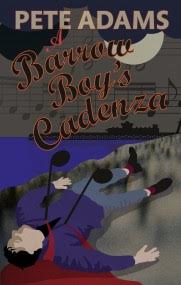
Eva Jordan in conversation with… Pete Adams – Author of A Barrow Boy’s Cadenza

unnamed

I’m extremely pleased to introduce fellow Urbane published author Pete Adams as my guest author today. Pete is the author of A Barrow Boy’s Cadenza (released by Urbane Publications in June 2015), the third novel in the Kind Hearts and Martinets trilogy with the fourth in the series, Ghost and Ragman Roll, due for release on the 1st November 2016. Although a crime thriller, A Barrow Boy’s Cadenza is also infused with Pete’s wicked sense of humour as you can see from the following hilarious book description;

DCI Jack Austin – Jane to his friends and the not so friendly – knew he shouldn’t have come in to work. Following a terrorist bomb, an incident with a tutu and a hangover that would fell an elephant, investigating dead dogs, dodging bullets and being pulled sopping wet from a naval harbour is not conducive to a sunny disposition. But when the Head of Armed Forces and a City Banker are brutally murdered what is a dashing DCI to do? FORCE, a powerful Star Chamber, is under threat and Jack will need to go deep undercover to get to the bottom of the sinister plot. As revelations and rocket attacks threaten to turn his world upside down (and ruin his best pair of trousers), Jack will need courage, skill and a huge dose of lady luck if he is to bring the perpetrators of a nefarious plot that goes all the way to the Prime Minister’s office to justice. As the trail leads to a showdown at the Albert Hall, Jack Austin, quintessential jumped up barrow boy and Portsmouth’s very own self-styled national icon, must fight to save his reputation, the country, and the lives of those who matter most. And work out just what a dead dog has to do with it allIt is a fine line between genius and madness, or so they say, and so, with just a little trepidation, I asked Pete Adams, author of the Kind Hearts and Martinets trilogy in eight books, and the self illustrated nonsense books Whopping Tales, are you mad, and do you have to be at least a little mad to be a writer?

Now, read my interview with Pete, with a straight face if possible, and learn how, amongst many other weird and wonderful things, he became a writer. Oh, and don’t forget to take a quick look at his wonderful self-portrait at the end!

So Pete, are you Mad? 

My mum used to say to me as a kid, and then, using the word loosely, as a grownup, “You’re mad, M U D, mad”. I think she meant it kindly, but I have always taken on challenges that I am generally perceived as incapable of doing, but I did, have, and still do, and likely always will. But success in all that I have tried, well that would be another matter, and it is the varying degrees of achievement, or not, that drives me MUD.

So frustration at lack of achievement, or people’s faith in your ability to succeed, is it this that drives you? And does this make you mad? 

I became an architect after I was advised to stick with being a draughtsman; I qualified with distinction. I set up my practice within six months of getting my professional papers, against all advice, because I couldn’t handle being told what to do. That was in 1977 and my practice still goes, not always thriving, as I am want to tell the clients where they may be going wrong, nicely, if a tad forcefully sometimes, but, we are good designers and I am proud of our ability, my ability. So, a successful practice, you will need to define success; I can hold my head up, though we are sometimes called MUD.

So that is success surely, or is it arrogance that troubles you? 

No, never ref.

It’s about self belief then?

Maybe, or it just could be that success is not as important to me as the doing, and that drives the people around me MUD.

So it is audacity? 

Who knows; I have done, and failed in various degrees, many other things from a total and complete failure at DIY for instance, my partner, she says “Destroy it Yourself”, and anything else practical with only partial success; I garden using the scorched earth policy, never could stand pottering.

Nerve then, like a sportsman when he goes onto the field? 

Hmmm, sport, I was okay at cricket except the ball kept hitting the wicket, shite at rugby, but loved it and stayed on the team because I was a laugh on the pitch; I have the rare distinction in my club as being the only player told by the ref, “One more joke and you’re off.” The team and I were proud of that, but it drove the ref MUD.

Brass, would that be it? 

Yeah, maybe, I was good at the after rugby stuff, and became MC Mariner, a post that was retired when I retired from the club; I MC’d the Annual Mariner Charity dinners for more than seventy five years, it was actually twenty, maybe a few more, but I was so bad at rugby, and my head, being particularly oval shaped, was often mistaken for the ball, so the memory…and anyway, dinners would be an exaggeration as we cooked them ourselves, a national theme every year and David Duckham, celebrated England winger, still talks to this day of his invitation to the Russian dinner, referring especially to the beetroot soup, beetroot starter, beetroot main course and beetroot ice cream, for a hundred guests or more – still they kept coming back, on the condition I stuck to MC’ing and not cooking.

Sigh – Impudence, temerity? 

Who you calling Temerity, that’s a girl’s name. Yes, my daughter says that at my funeral she will say in her eulogy, “He tried everything, and with such enthusiasm, he became a leg end, but it drove everybody else MUD”.

Audaciousness?

Hmmm, maybe, and oh how they laughed when I said I’m gonna write.

So, imperiousness? 

Oi, I’m a socialist and proud of the fact.

Sorry, 

         S’alright sweet’art, just pulling yer leg.

So, I started one evening, after settling myself under the stairs, set the washing machine and tumble drier going, and began; it was a summer and so the boiler remained still.

Brazenness?

(Are you getting fed up Eva?)

Shusssh, answer the questions please, you’re starting to drive me MUD

(Ooh err missus) 

I have often argued I could have been a sturgeon, even if I did have Bowyer fingers and not fish fingers, but I resisted that branch of a challenge as I never could stand the sight of blood, or Tartar sauce for that matter. However, I managed the handwriting, though the College of Sturgeons (collective noun for caviar producers) say I am not known for my delicate touch, and my clumsy one finger typing commenced that balmy summer’s evening, barmy being the operative word, and the novels rattled out with a keyboard replaced every six months; “For Gawds sake type softly”, calls from around the house; seems my typing drove everyone MUD.

Gutsiness, spunk? 

I’ll have none of that language please and yes, I do like Guinness, there’s eatin’ and drinkin’ in it.

So, my huge family conspired, “He’s writing books now…”

“What?”

“Feckin’ books” (My missus is Irish)

“Dad, didn’t you fail English?”

“What’s that got to do with the price of fish?” I replied quoting Abraham Lincoln. I failed GCE English ‘O’ level, twice; well, it was hard; they’ve dumbed it down a bit since then.

But you got a degree and a post graduate Distinction in Diploma for Architecture, what was that, brashness, gall, backbone, brass neck or cockiness? 

It was schtummness?

That’s not a word.

Could be, I’ve applied to my mate Colin who is thinking of starting a dictionary.

I kept schtumm and got all the way through School of Architecture, degree and post grad, and had the interview for my post grad distinction when they picked up the fact that I did not have the necessary qualifications to get onto the course. Well, they never asked, just presumed, and who am I to presume to tell them, and this drove them MUD.

So audacity? 

Maybe, but immediately after I submitted my first, first year design report, the tutor called me in and seemed surprised that I was not a Johnny Foreigner, which drove me MUD. I was so MUD, I made it my business to learn English, and steadily my reports improved and by the time I was in my post graduate years (Janet and John standard), I was getting plaudits for my writing; “Look Janet, see Peter writing, isn’t he dead good an that”, and it helped in their decision to award the Distinction; anyway what could they do?

I told them life was like a bowl of cherries and I think that was the clincher.

So hubris? 

Yes my books are thought to be humorous, although I prefer to think of them as serious but make you laugh. I’ve written eight novels and three illustrated nonsense books since settling into my sous-escalier utility room to write, (for those of you who need illuminating, escalier is like a small onion-shaped like a staircase, and Sous is the girl next door, a right sweet’art)

Phew – Tenacious, would that describe you? You have an adventurous spirit, you have guts? 

Yes, I would say I have an intestinal fortitude that can defy the meanest Jalfrezi, and in the world of books and an immense Mickey taking family, you need pertinacity and a dogged determination.

Oh I see and that involved hiding away under the stairs in the utility room, sorry writer’s den / study, because you lacked a certain loftiness, bluster, braggadocio when writing, did it? 

Listen mate, I’m actually tall and I love all things Italian, I even have a picture of the Eyeful Tower in the utility room, writing den (it has the top bit bent over as it wouldn’t fit because of the stairs), and if you must know I am probably the most modest person you are ever likely to meet and would probably win the Booker Prize for Modesty, if there was one.

Alright, I give up, what is it that best describes you and your approach to writing, and life really? 

Chutzpah. 

Chutzpah?

Yes Chutzpah, I think he was the brother of Ghunga Din? That’s me; except I don’t play the bugle, but I do blow my own trumpet.


**************

Pete chose the subject of madness himself as he is currently writing his ninth novel, Larkin’s barkin’, sub titled, ‘Where’s me chutzpah?’ And he tells me that his writing career really took off after kissing the Barmy Stone.

Thankyou Pete, most illuminating, and please take that smirk off your face, it is driving me MUD.


Take a look at the following links if you want to find out more about Pete and his books.

Facebook – Book Page – reviews, interviews, I review other books, and for those who would ordinarily sit at the back of the class tittering, some funnies:

Facebook here

Book One – Cause and Effect – self-published here
Book Two – Irony in the Soul – self-published here
Book 3 – A Barrow Boy’s Cadenza – Urbane Publications here
All of the 8 books in the Kind Hearts and Martinets trilogy are written:
Book 4 – Ghost and Ragman Roll – will be published by Urbane out on the 1st Nov 2016
Book 5 – Merde and Mandarins
Book 6 – The Duchess of Friesian Tun
Book 7 – Rhubarb in the mammon
Book 8 – Umble Pie


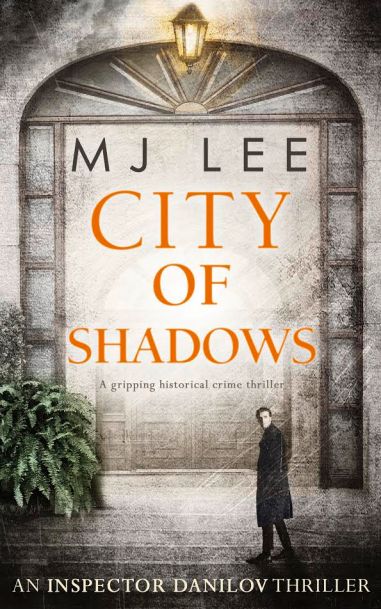
Eva Jordan in conversation with… M.J. Lee – Author of City Of Shadows

unnamed

It is my great pleasure to introduce Martin (M.J.) Lee as my guest author today. Martin is the author of the Inspector Danilov novels and the recently published City Of Shadows is the second book in the series. Martin is also the author of the recently released Samuel Pepys and the Stolen Diary.  Martin has spent most of his adult life writing in one form or another and here he talks about how his love of history and travel merged one evening during a stroll in Shanghai, sparking the idea for the Inspector Danilov novels.

City Of Shadows is described as,

A family has been found murdered in the heart of 1920s Shanghai. But what could have compelled them to open the door to their killer?

Thanks, Eva for this opportunity to talk about myself and the Danilov novels. It’s something I love doing almost as much as I love writing the books.

You see, I had two passions growing up. I fell in love with history when I was very young. I have a vague memory of sitting up in bed one summer’s evening, I must have been five or six years old, reading a book my mother had given me with pictures of the Kings and Queens of England in it. We weren’t a big book reading family and besides, we were Irish, so why we would have this particular book? I haven’t the foggiest. But I do know with absolute clarity that was the moment I fell in love with history.

The other passion was crime novels. Agatha Christie, Ngaio Marsh, Dashiell Hammett, Mickey Spillane and Ed McBain all graced my sticky little fingers. I still have many of the copies of the books with their wonderfully lurid covers at home.

Well, a few years have passed since then. I did a degree and postgraduate degree in history, but never became a criminal, having no opportunity to put into practise the methods of murder so beautifully described by Ms Christie. I spent most of my working life in advertising (it was the only place that would pay me to have ideas), taking a couple of sabbaticals to write. I still have the rotten evidence of those sabbatical years on my computer – three books that have no hope of ever getting published.

A couple of years ago I became a freelance Creative Director, writing novels in the mornings and doing my freelance work in the afternoons.

Finally, I had achieved the sort of balance I wanted in my life ( a book in each hand). I remember very clearly when the idea for writing a novel set in the Shanghai of the 1920s and 1930s came to me.

I was out strolling one evening in Shanghai (we were living in the city at that time). It was around dusk in October, one of the best times of the year in the city. Perfect walking weather. I reached the crossroads at Jiangxi Middle Road and Fuzhou Road, just opposite the Metropole Hotel. A square where four Art Deco buildings built in the 1930s meet. For a moment, there was no traffic and no people, a strange occurrence in a city of over twenty million people. I closed my eyes and was suddenly transported back to the 1920s, imagining old Dodges, Packards and Chevrolets rolling up to the hotel, discharging carloads of flappers and elegant men wearing tuxedos. A lovely moment, trapped in time.

The Inspector Danilov books were born. And what a time to write about. Back then; the city of ‘joy, gin and jazz’ was an amazing melting pot of adventurers, spies, triads, opium smugglers, merchants, con-men, communists, criminals, fascists, Japanese militarists, gamblers and refugees. With such a witches cauldron of deceit and double-dealing, happiness and despair, wealth and poverty, it soon became obvious that only a crime novel, with its strong moral compass, could explore the depths of the abyss that was Shanghai.

The two main characters, Detective Inspector Danilov and Detective Sergeant Strachan, are both outsiders, in a society full of outsiders. They are employed by the Shanghai Municipal Police but distanced and separate from the rest of their colleagues, and from the society of the time. Mavericks are always so much more interesting to read about and to write. The choice of Danilov as the lead in the books actually came from a line in a policeman’s memoir of the time. He mentioned that when they had a problem, both the French and Shanghai police turned to White Russian members of their forces to solve it for them.

At last, my two passions, history and crime, can now both co-exist together. So far, two books in the series have been published, Death in Shanghai and City of Shadows, with a third on the way in October. Given the wonderful cesspit of characters who lived in the original ‘Pearl of the Orient,’ there’s no shortage of wonderful material for the future.

The Danilov series of historical crime thrillers is published by Carina, an imprint of Harper Collins. They are available at Amazon and other online bookstores.

unnamed

You can find M.J. Lee on social media:
Website
Facebook
Amazon Author Page
Twitter 

Eva Jordan in conversation with… Nell Peters – Author of Hostile Witness

Hostile Witness ver 2

I’m really pleased to introduce the lovely and very comical Nell Peters as my guest author today. Nell is a crime writer and the author of By Any Other Name and the recently released Hostile Witness – described as a “mesmerising new psychological thriller.”

Here Anne talks about cantankerous chickens studying for a degree as a mature student (like me and, as it also happens, at the same university as me) and her road to publication.

*********

Thanks for dropping by, especially on a Monday morning – and sincere apologies if you were expecting to read an entertaining blog from Eva. You’ve only got me today, but normal service will be resumed asap.

I have written several guest blogs recently – my publishers like their authors to get out and about online and elsewhere, to spread the word for new releases – and as my latest book, Hostile Witness, launched on 4th February, here I am, waving the chequered promo flag. Even if it is a little limp. Promise I’ll try not to repeat myself too much, in the unlikely event that anyone has read more than one of my posts.

My real name is Anne, with a double-barrelled surname that is quite a mouthful and so I use the pen name, Nell Peters. I didn’t have to look far for that, simply pinched my parents’ Christian names – draw own conclusions as to which is which. Don’t think I haven’t been asked – more than once.

I am currently a crime writer with Accent Press, but I self-published for a long time in a rather random manner, my efforts frequently interrupted by the usual trials and responsibilities that real life tends to throw at us. And with four sons, that’s trials aplenty! There were a good few near-misses at successfully placing various masterpieces over the years, only for the dreaded email to finally arrive, quoting one of those very well-worn rejection phrases that most writers could recite from memory, and print off to paper a largish wall; ‘It’s not quite right for our list at the moment,’ or ‘I just don’t love it enough.’ My favourite is the agent line, ‘Unfortunately, I don’t feel I could give your book the representation it deserves.’ Why not? Couldn’t you just try? Hey ho…

It was during this period spent in No Man’s Land that I took the plunge and went back to uni to read psychology, with a bit of sociology thrown in for good measure – I think I had a vague thought that knowledge of the subject would offer me insight to the criminal mind and perhaps give my writing an edge. Or alternatively send me over the edge … By coincidence, Eva went to the same uni, except I never actually set foot on the Cambridge campus – a local college offered an affiliated degree and child-friendly hours, so I went there. A no-brainer, as the youngest boy would say – hideous expression. Anything you want to know about terrorists, psychopaths in general or serial killers, I’m your man. Not Freud, though – I am so not a Freudian, which was slightly unfortunate, as two of my main psych lecturers most certainly were. ‘Sometimes a cigar is just a cigar,’ is possibly the most sensible thing SF ever said …

I managed to scrape a 2:1 Hons, with an additional, implied award for being the oldest student on campus – I also learned to swear a lot more and discovered microwave meals to save time in the kitchen (much to my family’s shock/horror). I passed on having a tattoo, though, even if I was the only undergrad there who hadn’t been inked (see, I have the lingo, just not the tat!) And yes, it is possible – though really not recommended – to write a 3K word assignment overnight to meet a deadline (pesky real-life being a nuisance again) including all that tedious Harvard Referencing stuff, and land a merit for it. The marker did observe, however, that my conclusion was weak compared to the main body of work – what did they expect? I was nodding off by then!

After the social culture and buzz of campus life, I snuggled back into my rather insular existence in front of the laptop to write. Taking my backlist by the scruff of the neck I edited ruthlessly, rewriting or deleting great swathes in some instances. I also rewrote and finished a book one of my sons had managed to delete from my system when it was half-finished, over a decade ago. That book was By Any Other Name and it was the first of mine to be published by Accent. Son survived, by the way – as I type this, he is flying to Thailand for work, but has tacked on a few leisure days. Lucky thing.

As soon as a book goes live, there comes the anticipation of a review – the first for BAON was an embarrassing 1*. Accent used to do free promotions of eBooks after a couple of weeks to boost interest, and following some detective work worthy of Inspector Morse on an off-day, I deduced the reviewer (‘Patsy’ – her name is ingrained in my memory forever) was a serial offender who’d grab any freebie going. She’d read just a few pages, post some poisonous prose and award a single star. If you already have some reviews you can weather a low rating, but when it’s your first it’s soul-destroying. However, that’s the risk you take when you raise your head above the parapet and say ‘Look at me, I’ve written a book!’ First World problems …

The head/parapet thing goes for social media too – whilst it’s great for spreading the word about your new release/whatever, it does leave the individual open to all sorts of missiles. I find self-promo excruciatingly awkward, with my mother’s words ringing in my ears along the lines of, ‘Stop that showing off immediately – who on earth do you think wants to hear what you have to say?’ Not hot on child psychology, my mother. But self-published authors and those – like me – with small, indie presses have to bite the bullet and advertise our wares.

And then come the stalkers … I used to protect both my FB and Twitter accounts on the highest notch, but that had to change to be practical. I’ve collected numerous stalkers on FB, one on Twitter and one by email (an old address). Because I’ve cornered the market in friending undesirables, my fellow authors openly despair at my naivety – but belatedly, I have come to recognise the dodgy profiles. They are always posing in some sort of military uniform (usually American), always widowers (sympathy vote?), have a very stunted timeline and we typically have only one or two friends in common. Quite often the Christian names they have adopted suffer in translation, for example a recent-ish Michaels and Simonn. The inevitable DMs are written in appalling English, telling me how pretty I am, yada, yada – so not only frauds, but so myopic they should be wielding a white stick. I am Grannie Annie to six, after all.

OK – time I wasn’t here. Pavlova the cantankerous chicken is making one hell of a racket at the back door – obviously it’s time for her third breakfast. Can’t get the staff, can you?

Huge thanks to Eva for inviting me, thereby risking her good blogging reputation.

Hostile Witness now has five 5* reviews (two on .com from when it was previously self-published), so if you’d care to take a look it can be found at mybook.to/hostilewitness. Here’s the blurb:

When her husband leaves her and their sons to shack up with a younger model, Callie Ashton thinks she’s hit rock bottom. She’s wrong. Already unemployed and struggling to hold everything together, her life goes into freefall when she stumbles across the murder of a neighbour. The killer soon becomes intent on despatching Callie too, wrongly assuming she can identify him. Despite her new man being the officer in charge of the investigation, Callie’s in great danger – and it soon becomes clear the murderer isn’t too worried whom he kills or maims in his quest to eliminate her. No one is safe and the killer seems to know her every movement. With no resolution in sight, Callie feels she has no choice but to take matters into her own hands … but at what cost to her safety – and sanity?’         

Toodles! NP

OLYMPUS DIGITAL CAMERA

You can purchase Hostile Witness here and here.


Eva Jordan in conversation with… Jeanette Hewitt – Author of Exclusion Zone

Exclusion Zone


I’m very pleased to introduce the lovely Jeanette Hewitt as my guest author today. Jeanette is the author of four novels including her latest, Exclusion Zone, described as “a gripping thriller that will keep readers hooked to the last page.”

A crime writer living in Suffolk, Jeanette has won the BritCrime Pitch Competition 2015 and was selected as a finalist in the Twisted 50 Short Story Horror Collection 2016. She is a member of the Crime Writers Association, the East Anglian Writers and is a regular at The Felixstowe Book Festival. Here, Jeanette gives us a fascinating insight into the importance of choosing the setting and location for her novels including Exclusion Zone.

Oh, and by the way Jeanette, I hope you will get round to publishing The Intelligence of Ravens – it sounds really intriguing!

The Setting of a Novel – Home or Away? 

I’ve never been able to write a novel that’s close to home – geographically speaking. It started with my first published novel, Freedom First Peace Later. Set during the Troubles in Northern Ireland in the eighties, I didn’t really have an option on the location! My second novel, Worlds Apart, was a whimsical journey from the South of France, through the African wilderness to the sweeping moors of Yorkshire and it incorporated all of the places that I’ve been to and loved, or want to visit. Next up came The Intelligence of Ravens, an as yet unpublished tale of a brother and sister separated upon the invasion of their Jewish ghetto in Poland, with one sibling sent to Ravensbruck, a camp in Germany and the other making their way to London’s Soho. I adored the research into post-war London, using the infamous Windmill Theatre as the pinnacle for my setting. Just yesterday I walked down Great Windmill Street, and the history is embedded there like it is in so many city landmarks, never to be forgotten.

Now, of course, we have Exclusion Zone, my debut crime fiction novel set in… Chernobyl! Although in Exclusion Zone I wanted it to be real and genuine so for the parts set in England I chose the location of Fitzrovia, a district of London that’s within easy reach of Oxford Street, Hyde Park, Soho and the West End. I’ve stayed here many times and it is familiar and dear, a point which hopefully comes across in the novel. At the time of Exclusion Zone’s release, I was reading Tuesday Falling, a brilliant debut novel by S Williams which is centred mainly in London’s underground. I found the book spellbinding, and the research that must have gone into it applaud-worthy. Sometimes the setting in a novel makes the book, and as I write this I’m scrolling back through some of the novels I read last year to see if subconsciously the location made a difference. The Ice Twins, by S.K Tremayne, set on a tiny Scottish island of which the Moorcraft’s are the only inhabitants. Would this book have worked so well set in busy Birmingham? No, definitely not. You, by Caroline Kepnes, is set in New York, and the characters are so hip and on point and up to date I don’t think any other location would have made so much sense. I understand her follow up, Hidden Bodies, is set on the west coast of U.S.A, so that will be interesting to see how that differs when I read it. Colleen McCullough’s The Thorn Birds would not have been the sweeping epic that it is without the desolate Australian sheep country setting.

So I am a fan of a setting but more than that, it seems to come naturally to me when I’m writing. I’m a third of the way through the sequel to Exclusion Zone and it’s set in the beachside resort of Scheveningen and The Hague. Again, I’ve visited these places and they are among my absolute favourites. On my last holiday there I’d not even started writing the book, but I knew it was going to be set there.

Who knows, one of these days I may decide to write something a little closer to home. After all, as history has taught us, murder and mayhem can happen in sleepy little Suffolk villages…

 Exclusion Zone on AmazonJeanette

Jeanette Hewitt on social media:
Website
Facebook
Twitter


Eva Jordan in conversation with… David Videcette – Author of The Theseus Paradox

THE THESEUS PARADOX KINDLE COVER

I’m very pleased to welcome David Videcette as my guest author today. David is a former Scotland Yard investigator who has worked on a wealth of infamous cases, including the 7 July London bombings in 2005.  Based on real events, The Theseus Paradox, which has had some great reviews, is a gritty thriller that asks,

Who masterminded London’s summer of terror?

Why can’t Flannagan make headway in the sprawling investigation?

Is Jake’s absent girlfriend really who she claims to be?

David, a former wannabe secret agent, explains what inspired him to write and how you should never judge a book by its cover…

Never judge a book by its cover…

First of all, I want to say thank you to the lovely Eva Jordan for inviting me over to her website and asking what inspired me to write.

It’s like those ‘About me’ sections on author’s websites, isn’t it? Write something about yourself – everyone uses the same format…

So here goes:

When I was a little boy I always dreamed of writing a book and being an author, I’ve always loved telling stories…My mum says I’ve had a pen in my hand ever since the age of four and I’ve never been able to put it down…

Hang on!

Stop!

For me, this just isn’t true, though.

Sorry.

I never dreamed of being an author. No.

I wanted to be a secret agent, maybe even become James Bond. Or go to the moon, or perhaps even Mars. I wanted to design something that could raise the Titanic, or perhaps even discover a hidden pyramid full of treasure in the Egyptian desert…

But I couldn’t do any of those things, could I? After all – I was just the son of a police officer and a cook who worked for the Ministry of Defence, and on top of all that, I went to a lowly, not so great, comprehensive school on an even less great, council estate.

I remember the careers officer telling me the year before I was due to leave school, ‘Keep your expectations realistic’. I guess he’d never had anyone tell him they wanted to be a secret agent or an astronaut? I told him I could do it. That he shouldn’t judge a book by its cover.

He basically laughed me out of his office.

Never judge a book by its cover…

At fifteen – I still hadn’t grown up. All I wanted to do was – anything any other kids couldn’t do – the longest wheelie on my bike; the biggest bunny hop over loads of kids laying on the ground; I wanted to run the fastest, swim the farthest.

I stayed on at school and bummed around a bit, but I didn’t see anything that grabbed my attention much – and nothing that I thought would put me on course to being a secret agent. So I went out and got a job…

A really glamorous one at that…

Now, working in Argos, picking items off the shelves was a far cry from being a secret agent or an astronaut, I know – but I learned lots of things at Argos.

Argos was different. It didn’t try to be like any of the other stores on the high street. Argos didn’t look very pretty from the outside. Inside it was simply a counter with tills. It had no products on display. There was no maze of stacked shelves to negotiate to try and find your way in or out of the store, no gimmicky products in the window to grab your attention. It looked rubbish from the outside. It did its own thing, doing what customers wanted. It was an incredibly successful store and customers queued out of our doors most days to buy products.

Never judge a book by its cover…

But the limited glamour of Argos eventually wore off. I tried many other jobs, but nothing captured my heart and soul.

So in the early nineties, I joined the police service. I worked hard at police training school and learned all the techniques and laws that I needed to know in order to become a uniformed officer.

On 9th February 1996, not long into my career as a police officer, I was inside a police building in south London, near to the Blackwall tunnel. At 7pm there was the loudest bang I had ever heard. It shook the windows and rattled the doors. I felt the vibrations through the ground.

Half a mile away, the IRA had bombed Canary Wharf with a huge lorry bomb. Two people were dead and £500 million pounds worth of damage had been caused. We rushed to assist our neighbouring police borough, just across the river and I had never witnessed a scene like it. Complete devastation. Gigantic tower blocks had been gutted by the blast, some of which had been moved off their foundations.

It was then, standing there, that I made up my mind. I wanted to join the Anti-Terrorist branch. I wanted to be part of the team that tracked down terrorists and prosecuted them.

But you had to be a detective to do that, so – I set about becoming a detective.

Twenty-two years after my hopeless meeting with the useless careers officer, having spent blood, sweat and tears working my way through borough policing, CID and organised crime, I was finally successful in being selected for the Anti-Terrorist branch – a highly trained, Specialist Operations unit of the Metropolitan police.

On 7th July 2005, the unimaginable happened. Four suicide bombers murdered fifty two people on London’s transport system. On 21st July, just two weeks later – another attempt was made to do the same.

As I desperately hunted for the answer of why this had happened and who had done it, I hunted down suspects, chased terrorists across continents, and had unprecedented access to the world of spies, secrets and foreign intelligence agencies.

Argos was but a distant memory.

I never made it to the moon, or Mars, or even to becoming a fully-fledged secret agent – but I came as close as a boy from a council estate could. On leaving the police, I realised that the careers officer had been wrong to tell me I couldn’t follow my dream.

I realised that I’d seen and done some very special things, things that you sometimes only see in films, and that I wanted to share these things – to share with others what it was really like and what happened behind the scenes. Not the made-up, fantasy Hollywood version, but the real, first-hand, British police account.

And now I share those experiences in hard-hitting, gritty, reality-based crime thrillers.

My books don’t follow the fashionable patterns of the publishing world. I don’t write for certain markets or platforms. I won’t change the story to fit what a marketer says will sell or what is politically correct. And that’s because I have to tell it how it happened. My books are what they are. Like me.

Never judge a book by its cover…

David’s debut thriller, The Theseus Paradox, set against the backdrop of the 7/7 London bombings, was voted in the top ten books of the year by five independent review websites. It became a number one bestseller in its Amazon category within a month of launch and the truth behind the fiction has since been investigated by The Sunday Telegraph, The Mirror, The Sun, Sky and ITV News.

 The Theseus Paradox is available to buy for Kindle or in paperback at Amazon, through Waterstones online or Blackwell’s Bookshop online or via The Book Depository.


unnamed

You can connect with David Videcette via:

Facebook
Twitter
David’s website

Eva Jordan in conversation with… Jackie McGregor – Author of The House That Built Me


12794629_485361474983626_7284258100388582694_n new cover (3)

Today I am very honoured to introduce Jackie McGregor as my Guest Author. Jackie is a journalist, columnist, poet, author and editor. Born in Northern Ireland she writes a weekly column for the Belfast News Letter. Here Jackie discusses her new charity book The House That Built Me, a unique anthology of memories from famous faces from the worlds of television, music, film and books. Jackie explains how, not long after losing her father, a ghost hunter came knocking at her door and provided her with the inspiration for the book. The book is dedicated to Jackie’s parents, both of whom have sadly passed away and both of whom suffered from Alzheimer’s. It is a charity book and 100% of the royalties will go to the Alzheimer’s Society. So read on everyone and dig deep for a very worthy cause.

GRIEF ENCOUNTER

My book, The House That Built Me, was inspired by an encounter with a ghost hunter.

I was coping with the recent loss of my father who had passed away from Alzheimer’s, when a knock came at my door and there stood a stranger. He smiled at me as though he was waiting for me to recognise him, but I had no idea who he was.

‘I’ve come back!’ he announced, ‘I used to live here’.

I looked at him thinking that perhaps he might have a form of dementia. I had become so used to strange behaviour whilst visiting my father in the nursing home, that I had begun to put down any odd antics exhibited by an elderly person as dementia. I had lived in the Alzheimer’s bubble for so long!

‘I think you must be mistaken I’ve lived here my entire life!’ I said eyeing him suspiciously. What on earth did he want?

‘I’ve been away. I’ve come back for my mother’s funeral. I’ve been living in New Zealand for over twenty-five years but this was my childhood home. I lived here from 1944-1964,’ he sighed sadly.

‘There was a beautiful tree here,’ he said pointing to where indeed, over thirty years ago, there had once stood a cherry blossom tree. No one else would have known that. He went on to describe how the house used to look. He recounted features from many years ago that had long since gone, like the little sun room and the rockery. I knew from those memories that he had once existed within those same walls. He had come in search of his past. He kept looking over my shoulder into the house as though he was trying to catch a glimpse of something or someone familiar. Perhaps he felt particles of his parents still remained there, maybe they do! I often sense a presence in my home, but it’s a calming, reassuring one. I love the house. I feel my late parents left whispers of their souls behind in the rooms, their invisible footprints cover the floors where they once walked.

I have always been fiercely protective of the house, having being born and raised there and now I am bringing up my own son in the same rooms where I grew up and where his father and I did our teenage courting.

I didn’t invite the man in. I didn’t feel comfortable enough to do so. His presence felt akin to my spouse’s former lover returning to try and rekindle their romance. The stranger’s visit aroused a feeling of possessiveness within me.

We spoke for over half an hour. He told me of how his mother had died just two weeks short of her hundredth birthday. I shared with him how both my parents battled with Alzheimer’s. He described how he used to catch the tram at the top of the street to school. I revealed the paw prints in the cement on the driveway belonged to my dog who died when I was eleven.   In all honesty we weren’t really listening to each other. We were caught up in memoires of yesteryear as we relived happy childhood moments in our minds whilst verbalising them into the air.

Eventually we parted. As he turned to walk away he said he had felt comforted from seeing the house again and asked me if it had been a happy home. I assured him that it had.

For days afterwards, I couldn’t get his melancholy pilgrimage out of my mind. Turning on the radio I heard a song called The House That Built Me by Miranda Lambert. I had never heard the tune before but oddly it described exactly the experience I had just had with the ghost hunting stranger. The lyrics described a woman going back to her childhood home because she felt she had lost her way in the world, she thought that perhaps revisiting where she was raised would help her heal. It was then that the idea came to me of putting a charity book together. Perhaps I could collect childhood memoires from celebrities to help those who have lost their memories through Alzheimer’s.

I received some wonderful stories from Hollywood actress Carey Mulligan, Lorraine Kelly, Alan Titchmarsh, Fearne Cotton, Ed Balls, Anne Widdecombe, Shane Richie, Bill Oddie, Cherie Blair and lots of other well-known people. Many wonderful authors kindly got involved too including Trisha Ashley, Lisa Jewell, Milly Johnson, Margaret James, Deborah Moggach, Christina Jones, Jill Mansell and more. Along with the memories I wrote about my own experience of being a carer twice over to two parents who took Alzheimer’s one after the other.

I constantly try to raise awareness about this disease through my newspaper column which I have been writing for the Belfast News Letter for the past eleven years.

Compiling and writing this book was incredibly therapeutic and sometimes extremely difficult.   I revisited those terrible days of isolation and hopelessness in my mind and recalled how my mother, whom hadn’t recognised my father for years, suddenly had a moment of clarity days before her death. Mum rose up from her hospital bed called dad by name, clung to him and told him that she loved him for the last time. As I pictured that precious moment and the delighted expression on my father’s face, tears ran down my cheeks and trickled into the keyboard.

The celebrity memory contributions are sometimes very revealing, making them a fascinating read as we glimpse into the writer’s past.  Bill Oddie wrote emotionally about his mother’s mental health problems, Rowan Coleman recounts the day she saw Jesus’s sandal in the sky and Jo Wood remembers her childhood home which had a vicar buried beneath the front door step!

I am very grateful to all of those who took the time to participate in this charity book of which 100% of my royalties will go to the Alzheimer’s Society.

The House That Built Me will be published by Accent Press on 19th May.

Jackie McGregor    Jackie McGregor byline (2)

The  House That Built Me can be pre-ordered here.

Jackie also wrote They Can’t Take That Away From Me described as  “a musical memory tour with the stars to a place where it is yesterday once more.” This book is also raising funds for Alzheimer’s. Available here.

Eva Jordan in conversation with… Jane E. James – Author of The Long Weekend

unnamed

I’m very pleased to welcome Jane E. James as my guest author today. Jane is the writer of the novel The Long Weekend, described on Amazon as exploring…

the theme of maternal love and how the ‘sins of the mother’ affect the daughters. It also focuses on how dysfunctional patterns repeat across generations. Jane E. James weaves gothic and supernatural elements through her novel to create a truly chilling read that will appeal particularly to fans of mystery novels.

Here, Jane gives a fascinating insight into how she became a writer, how The Long Weekend had originally been a screenplay and she also reveals some amusing lesser known facts about herself (Britain certainly has got talent!). I must admit, I love George Bernard Shaw and also share some of her guilty pleasures…and I’ll always bring the wine!

unnamed

‘If you can’t get rid of the skeleton in the closet, you’d best teach it to dance’ George Bernard Shaw

Thank you to Eva

First up, I want to say a huge thank you to Eva Jordan for having me. It’s an honour to be here. As well as being a fab writer and a busy mum, Eva works super hard promoting other authors on her blog. I don’t know where she gets her energy from. But I’d like some.

Introduction

My name is Jane E James and I am the author of ‘The Long Weekend’ which was published just over a year ago. I would describe my novel as a dark and disturbing mystery, full of secrets, with strong supernatural elements. It is set against the haunting backdrop of a wintry Norfolk coastline and a remote lighthouse that overlooks the bleak North Sea. The story follows Hazel Ladd, who has spent her life hiding the love she feels for one of her daughters and disguising the hatred she feels for the other. After fifteen years apart, they all meet up for a long weekend. Hazel’s guilty secret is finally torn from her and the long-anticipated reunion ends in disaster.

A Bit About Me

I’ve been married to Darren for ten years now and between us we have four grown up children. We live in the country and share our home with three dogs (used to be six). We couldn’t be more different but he makes me laugh… a lot. ‘The Long Weekend’ is the first novel he’s ever read all the way to the end. I have a day job, working as a Sales and Marketing Manager, but my writing comes before anything else. I guess that’s why I’m not terribly fussy about what I do – I’ve written obituaries for local newspapers; worked as an Estate Agent; handed out Fixed Penalty Notices for people who let their dogs’ poo in public places and driven a fork lift truck! When I’m not writing, I’m usually reading or walking the dogs. Saturday is my main writing day and I love to finish off by listening to classical music, cooking something a bit special and opening a bottle of red. I love Saturdays.

My Background

Born the youngest of six children to a straight talking Yorkshire man and a deeply superstitious Welsh mother, I was an outdoor country girl who loved ponies, milking goats and tramping the countryside with one dog or another. On my walks, I discovered a love of old abandoned houses and got a real thrill out of being alone in the woods. In short, I discovered that I loved being afraid. Being the tomboy of the family I would rather climb trees with my brothers than learn domestic skills (the same still applies today). Not coming from an academic background, my fish and chip shop owning parents viewed my obsession with books as suspicious. As far as they were concerned, paper was for wrapping chips in!

My Writing Experience

For as long as I can remember, I have always written. But I didn’t always know I wanted to be a “writer”. The two seemed distinctly different to me. At various stages of my adolescence I might have said I wanted to be an actress, a nun, a jockey, or even a stand-up-comedian – but I just couldn’t bring myself to say the word ‘author’ out loud, especially not to my family who already considered me prone to melodrama (which of course I was – for one day I would be an author of fiction). It wasn’t until I was in my forties with two grown up children of my own that I started to finally do what I’d always dreamed of. But even then I couldn’t imagine having the patience to sit down and write a whole novel; so I went back to night-school and completed a diploma in screenwriting instead. Even ‘The Long Weekend’ started out life as a screenplay, but I soon realised pitching to television companies and producers wasn’t for me. Truthfully, the idea terrified me. Deciding I was more suited to a solitary life in the country as an author, I sat down to write my first novel at the age of 49 and ‘The Long Weekend’ was born. I already had the screenplay. It was all the head start I needed. Back then I don’t think I would have been brave enough to take on a first novel from scratch.

What Inspires Me To Write

I have always been interested in dark, disturbing subjects and find damaged & dysfunctional people far more intriguing than ordinary, everyday characters, especially unreliable narrators who never let truth get in the way of a good story. But if anyone asks me ‘What inspires you to write?’ I always feel a little tongue-tied as if I should know the answer. The truth is… I don’t. But I do believe it’s a combination of many different things – books I’ve read; writers I’ve admired; films I’ve seen and places I’ve visited. But I also think dreams play a major part in forming ideas. I suffer from a condition known as sleep paralysis, which is a temporary inability to move or speak, that happens when you’re waking up, or less commonly, falling asleep. Although you’re awake, your body is briefly paralysed after which you can move or speak as normal. But with the paralysis come the night terrors when you experience horrific visual hallucinations of monstrous figures; of someone else being in the room with you (often at the foot of your bed) and of footsteps and voices all around you. And if you’re really unlucky, like me, you also get to sleep walk and talk to strangers in the corner of the bedroom. If anyone knows what it is like living in a ‘paranormal activity’ household, just ask my husband. He’s scared stiff by my night time activities but they do tend to give me ideas for my writing. And ‘Mr Naughty’, a fictional fiend from ‘The Long Weekend’, was bred out of these episodes. As for how and where I write – that can be anywhere at any time When I am in the process of writing I scribble notes everywhere – in the bath, on the loo and in bed. My memory isn’t what it used to be and I tend to forget things if I don’t write them down. As a new author, I don’t feel I have the experience to offer advice to anyone else at the moment, especially those who are in the process of writing their first novel or short story. But I will say this, say ‘yes’ to everything when opportunities come your way. I really struggle with public speaking but I still say ‘yes’ whenever anyone invites me along to give a talk on my book. I keep going; in the hope that I will one day get better at it.

Why I Wrote ‘The Long Weekend’

I hoped writing ‘The Long Weekend’ would be a cathartic experience and I spent many hours during the writing of it, thinking about my own children. Anyone who has visited my website or read the dedication in the book will understand why the emotions in the story felt real to me, as I know from personal experience what it is like to be estranged from one’s own children. I don’t deny that some of the scenes in the book are harrowing, disturbing even (it certainly isn’t for everyone), but the heart of this novel explores the theme of maternal love and how the ‘sins of the mother’ affect the daughters. It also focuses on how dysfunctional patterns repeat across generations. Motherhood is an extremely complex relationship and each of us has a different story to relate. I grew up in the knowledge that I was my mother’s least favourite child and I wanted to use this experience in my writing.

The Location for ‘The Long Weekend’

The novel is set in Hunstanton, where walks along the beach on cold winter days helped me gather my thoughts. The bleak, wintry atmosphere also suited my main character’s mood. I remember being intrigued by the Old Lighthouse and knew that I wanted my novel to be based there. But I never properly visited the building until after I’d finished the book because I wanted my imagination to run wild with its mysteriousness. Once it was published I went to stay for my very own ‘long weekend’ (alone, I might add) in the lighthouse. It was not at all as described in the book, although the tower really was quite spooky. Even so, it was easy to imagine the presence of Hazel and her daughters there with me.

The Ups and Downs

Writing and publishing my first book has been a real rollercoaster ride and I can honestly say I have learned loads from the experience; especially about myself. One of the most hurtful things I have seen written about me (as part of a review) is that I am ‘arrogant’. Honestly, this couldn’t be further from the truth. I cry at anything and suffer from terrible low-esteem. Ask my husband, who is always having to prop me up. Whilst writing can be an incredibly humbling experience, the highlight for me has been meeting readers who have shared their own personal stories with me. I much prefer chatting to people as friends rather than the formality of giving talks; a prospect that scares me to death. It’s taken a while, but I have finally come to accept that bad reviews are just part of the process of being a writer; but in the beginning they are crushing. There have been days when I have not wanted to get out of bed because of what somebody has written on Amazon. But I do get up and I do write some more and I thank my lucky stars for the positive reviews. They have meant so much to me. I wish I could hug each and every one of my readers who has enjoyed ‘The Long Weekend’. In general, the experience has been hugely rewarding; besides I can’t stop now, can I? So many people have put out a generous hand to help me along the way – my local Waterstone’s for one, who stocked the book and threw me a launch party; the townspeople of Hunstanton; local press; other authors (you have been inspiring), and many a local librarian and independent book shop. I am grateful that so many people wanted to help.

What’s Next?

I’m currently in the process of writing my second novel, ‘The Crying Boy’, which is another screenplay adaptation. I’m hoping to complete a first draft by the end of July 2016. For this one I’m counting on the support of Kelvin Mackenzie who once wrote nice things about me in his newspaper column, saying “It would be a crying shame if this story didn’t make it to the big screen”. The book, another mystery, is about a couple who have already lost one little boy only to gain another in the shape of a cursed ‘Crying Boy’ painting when they move into their new home on the Yorkshire moors. When the grieving mother learns that the boy in the painting was deaf, like her dead son, she uses sign language to communicate with his spirit and soon becomes lost in another ghostly world. Some of you may remember the ‘Crying Boy’ painting from the eighties; which would be found undamaged amid the ruins of houses burned down by fire. The subject is once again personal to me as my own parents inherited one of these portraits and as a child I can remember being fascinated by the myths and folklore that surrounded it. Being a superstitious type, my mother was one of the thousands of anxious owners who sent their copy to the “Sun” newspaper to be burned. I own several of these paintings myself and even have one hanging on my study wall. My husband may not be quite so keen on having the ‘Crying Boy around but he keeps me company while I write. Part of my research for the book involved going back to night school once again to complete a course in sign language; a genuinely worthwhile experience.

Silly Stuff

Here are a few silly facts about me you may not know. I’ve always wanted to be assigned hazardous duties (as in Charlie’s Angels). I once auditioned for Britain’s Got Talent with my performing Jack Russell Terrier, Fury. My guilty pleasures include The Nolan Sisters, Catherine Cookson, pickled onions and crisp sandwiches. I once had a phobia of street lights and had to cross the road to avoid them (I was convinced one would fall on me). My favourite things (other than reading or writing) are my dogs, hubby, log fires, red wine and Saturdays. I’m also partial to taking spooky selfies – evident by my picture. You can catch up with me on Facebook or Twitter (always happy to make new friends), but make sure you bring wine… or you can like my Facebook page if you prefer. Here is the link to my website .

If you wish to purchase a copy of The Long Weekend you can find it here and here.