Eva Jordan reviews… Fifty Years of Fear by Ross Greenwood

eva-jordan-reviews-fifty-years-of-fear-post-header

Fifty Years Of Fear is one of three novels in the Dark Minds Series written by Ross Greenwood, all of which are set in or around Peterborough. Sad but thought-provoking, this is a story about families, lies and secrets, brothers, loss and regret, and missed opportunities. It is also a reminder that we should never be too quick to judge others and cautionary tale that shows how a simple act of kindness can literally change your life – forever.

The opening of the book tells us that Vincent Roach was born in 1966, the same year as England won the World Cup – “When I look back, it sometimes feels as though it was downhill after that.” Chapter one begins fourteen years later. It’s 1980 and Vinnie, unlike his older brother Frank, who comes across as a bit of a thug, is both quiet and unassuming. Both brothers live with their parents and their father has just had a stroke. A bit of a book lover, bullied at school until Frank steps in, Vinnie is, for all intents and purposes, quite unremarkable. We are also made aware that a childhood accident at the age of seven has left Vinnie without much memory of his life prior to then. Chapter by chapter, we then follow Vinnie’s life for the next thirty-six years.

Through a series of flashbacks, Vinnie starts to remember his early childhood, although it will take years for him to understand that things are not always as they first appear. Vinnie matures into a young man. Happy for a while we see him get his first taste of independence and a holiday to Cromer where he falls in love. Then comes the loss of his father, followed a couple of years later by the death of his mother. Vinnie marries a girl he meets at work. He’s happy for a while but it’s short-lived. When the newlyweds move into a new home of their own, with new neighbours, life slowly descends in the wrong direction for Vinnie. However, although at times sporadic, and despite Vinnie’s concerns that trouble and violence appear to follow him around like a bad smell, it is older brother Frank that remains a strong presence in Vinnie’s life, a much valued constant. Which proves especially true when Vinnie finds himself behind bars. Is Vincent really guilty of the crime he is accused of?

Fifty Years Of Fear is a gripping tale about misfortune and redemption and a reminder of just how easily things can go wrong in life, despite our best intentions. It is also a story about self-discovery, that people are not always as they first appear, including how we think we come across to others. Vinnie, written in the first person, is the main protagonist and storyteller throughout and, like all the characters we are introduced to, is both extremely well drawn with plenty of emotional depth. The author has a distinctive writing style and covers some upsetting issues with great sensitivity. Despite being quite an emotional read at times it is also well paced with a few moments of humour. There is even a mention of the infamous ‘Crown to Town’ pub-crawl – if anyone reading this lived in Peterborough and is old enough to remember! A remarkable story, one I highly recommend and one that will stay with me for a very long time.
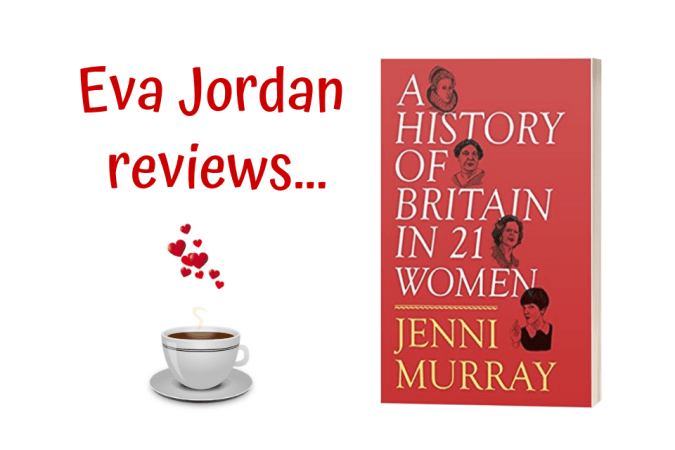
Eva Jordan reviews… A History of Britain in 21 Women by Jenni Murray ‏

Eva Jordan reviews A History of Britain in 21 Women - Post Header

Published by Oneworld Publications

This year marks the  100th anniversary of women gaining the right to vote in the UK.  Also, on March 8th, it was International Women’s Day, a global day celebrating the social, economic, cultural, and political achievements of women, observed annually since the early 1900s. I, therefore, thought it appropriate to review a book that was both fitting and relevant to both these historic events.

A History of Britain in 21 Women is written by Dame Jenni Murray; probably best known as Radio 4’s presenter of Women’s Hour and whom I had the very great pleasure of meeting last year. These short biographies are a personal selection chosen by Murray to present the history of Britain through the lives of twenty-one women, whose lives embodied hope and change, who refused to surrender to established laws of society, and, who still have the power to inspire us today.

In the introduction, Murray, born in 1950, states that growing up “the role of a woman was to learn how to be a good wife and mother, do the cooking and cleaning and nurture those her around her.” She quotes Thomas Carlyle, circa 1840, who said ‘The history of the world is but the biography of great men,’ and as a young girl growing up in Barnsley in the 1950s and ‘60s that’s pretty much what Murray believed. However, it was education that made her question the expectations placed on women, and after attending a wonderful girls’ school she began to discover many women that had influenced history and also challenged the assumption that a woman’s place was in the home.

Murray writes about, to name but a few; Boadicea, Queen of the Iceni tribe who fought bravely against the Romans to preserve a social structure that had been practised by, and was so important to the women of the tribes of Britain, namely equality; Aphra Behn, the first English woman playwright to earn her living by her pen; Astronomer Caroline Herschel, after whom a crater on the moon is named; And, computing pioneer Ada Lovelace. We are also given an insight into the courageous account of writer Fanny Burney (1752-1840) entitled ‘Account from Paris of a terrible Operation – 1812, who, when she discovered she had breast cancer and under the insistence of specialist surgeons, underwent one of the first recorded mastectomies at a time when there was no effective anaesthetic – ouch! She was 59 years old at the time and went on to live until the ripe old age of 88!

Written as biographies in small chunks, A History of Britain in 21 Women is well researched, informative and entertaining. Dedicated to “all the young people who need to know” it is an illuminating, easy read offering a great deal to both women and men of all ages. However some of Murray’s omissions were interesting and there was one woman in particular whom I felt wasn’t deserving of a place amongst such great individuals – but that’s purely politics. Nonetheless, a thought-provoking read finishing with a timely reminder that we still have a way to go and the fight for gender parity must continue.


#PressforProgress – Still A Long Way To Go


“I do not wish women to have power over men; but over themselves.”

–Mary Wollstonecraft

woman-2128020_960_720

Image: Pixabay

Today, Thursday 8th March 2018, is International Women’s Day, a global day celebrating the social, political, cultural, and economic achievements of women. It is also a day that marks a call to action for accelerating gender parity. The call to action this year is #PressforProgress and with global activism for women’s equality fuelled by movements such as #MeToo and #TimesUp momentum is particularly strong this year. 2018 also marks the 100th anniversary of women gaining the right to vote in the UK. So, a century on, how are we doing?

womens-march-2004278_960_720

Image: Pixabay

Sadly, the findings of the World Economic Forum’s 2017 Global Gender Gap Report (International Women’s Day website) suggest gender parity is still over 200 years away. Disheartening to say the least. Further research suggests that globally, one in three women suffer from gender-based violence, sixty-two million girls, annually, are denied access to education, and women in the workplace still suffer in terms of pay and representation. Much has also been written about the inequality female writers still face in the writing and publishing world. As a female writer myself, I wanted to explore this a bit further.

emancipate-1779119_960_720

Image: Pixabay

In terms of reviews, literary prizes, and senior positions within publishing houses, many are still being awarded to men above women. Even World Book Night (The Guardian) shows that the picks of the last 5 years have been made up of 64 male versus 36 female authors. And author Nicola Griffith shows gender bias in her study, published in May 2015, of prizewinning books both here and across the pond, broken down by the gender of their protagonists. Her findings suggest that in the last 15 years, 12 of the Booker-winning novels have had male protagonists, two have had female protagonists, and one has had both male and female protagonists. The Booker fared better than the Pulitzer, which has had no female protagonist among its 15 winning books. I was also disappointed to find in a study carried out by The Guardian in August 2016, articles written by women, irrespective of their content or subject matter, attract more abuse and dismissive trolling than those written by men.

men-1979261__340

Image: Pixabay

Aleesah Darlison (Writers Edit) attributes continued gender discrimination to “tradition and possibly even culture… It’s incredibly difficult to change centuries-old thinking, but women are continually striving to move forward.” 

Whereas some writers like Christine Piper (Writers Edit), author and winner of The Australian/Vogel Literary Award for After Darkness suggests that the confines of professional limitations based on gender are sometimes self-imposed and said “Like many women, I’ve been guilty of self-sabotage: doubting my ability, playing down my talents, taking rejections personally, and being shy about pursuing opportunities. Men are socialised to be confident and champion their abilities (but of course not all male writers are like this), while women are not – if a woman does do those things she’s often seen as arrogant or a ‘tall poppy’.”

However, it’s not all bad news, women are making advances. I only have to look at my daughter to see the opportunities available to her compared to my mother who, born in 1950, was paid half the wage of a man when she first started working. Nonetheless, let’s not get complacent, continue to unite, support one another and #PressforProgress for women.

emancipation-156066__340

Image: Pixabay


Plotter or Panster – What Type Of Writer Are You?

paper-3033204__340

Image Pixabay

Last month you may remember I interviewed writer, Heidi Swain, who sets most of her novels in fictional fenland towns. One of the questions I asked Heidi was, what one piece of advice would you offer any would be writers out there? Heidi’s response was simple but honest: “If you want to be a writer, write. If you put it off until you ‘have more time’ you’ll never put pen to paper. Stop procrastinating and make a start.” Wise words indeed. So, if your New Year’s resolution was to do just that, and assuming you’ve got that far, you probably know by now whether you are a plotter or a panster. However, if you haven’t heard these terms before and have no idea what plotting or pansting is, read on.

A plotter is someone who plans their novel before they write it. Famous writers generally regarded as plotters include, J.K. Rowling, R.L. Stein (of the famous Gossebumps books), Sylvia Plath and John Grisham.

Grisham states, “I don’t start a novel until I have lived with the story for a while to the point of actually writing an outline and after a number of books I’ve learned that the more time I spend on the outline the easier the book is to write. And if I cheat on the outline I get in trouble with the book.” (Source: Goodreads)

Pros: Having planned their novel beforehand, plotters know what’s going to happen before they write it. This makes it easier to bust writer’s block.

Cons: Plotters can become confined to their plans, and if they do get stuck or want to change something, it often means having to redo their whole outline.

A panster, like its name suggests, is usually someone who flies by the seat of his or her pants. They have some vague idea about a story, or a main character, or even just an opening line, but nothing comes to life for a panster until they actually sit down to write. Famous writers who regard themselves as pansters include Stephen King, Pierce Brown, Elizabeth Haynes and Margaret Atwood, to name but a few.

Atwood starts with “an image, scene, or voice…I couldn’t write the other way round with structure first. It would be too much like paint-by-numbers.” (Source: Goodreads)

 Pros: Pantsers have the freedom to take their novel in any direction they want. They have flexibility.

Cons: Having very little, or no plan, makes it easier to get stuck.

I generally regard myself as a “planster”, as I suspect most writers do, which basically means I’m a little of both. However, some writers tend to lean heavily towards one or the other, I definitely lean more towards panster than plotter.

Which one are you?

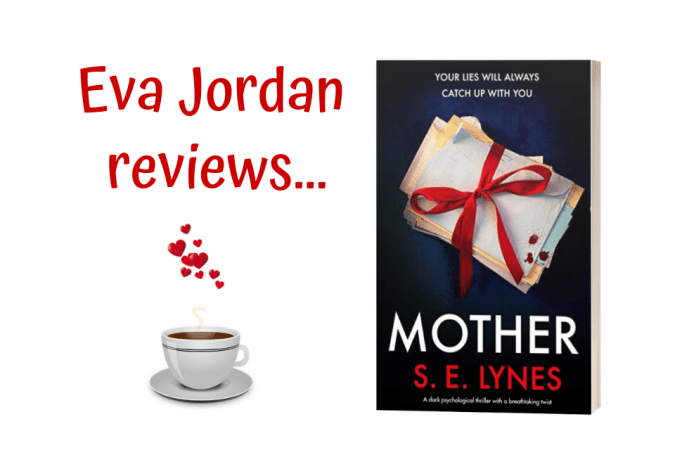
Eva Jordan reviews… Mother by S.E. Lynes

Eva Jordan reviews Mother - Post Header

Mother is a dark psychological thriller that takes place in Leeds in the UK during the late 70s, early 80s set against the backdrop of the true-life murders taking place in the area at that time by the serial killer, Peter Sutcliffe, dubbed by the press as the Yorkshire Ripper. Written in the third person by an unknown narrator, Mother tells the story of eighteen-year-old Christopher Harris just as he is about to leave home and set off for university. However, shortly before doing so, Christopher discovers a letter that sets off a chain of events that will change his life forever.

Christopher Harris is socially awkward, which may in part be attributed to his age, in part to his upbringing. It is obvious Christopher is loved and cared for by his parents but it also clear they are not particularly demonstrative and as a result, Christopher has always felt different, like a bit of an outsider. “Not that Jack and Margaret Harris were bad people. They were what you’d call traditional, but like all parents, they did their best.” So when Christopher discovers a letter in a battered old suitcase in the loft he is surprised but not necessarily perturbed to find that, unlike his younger brother and sister, as a baby, he was adopted.

The first half of the book then sees Christopher settling into student life at university alongside his search for his birth mother whom he discovers and makes contact with. Christopher has high expectations regarding his ‘real’ mother, hopes that through her he will discover his ‘real self’, and “for her, he would be everything she was hoping for in a son. He would be a boy she could not refuse. For Phyllis, he would be normal”. 

Initially quite slow to begin with, the story rapidly picks up pace in the second half. It would also be fair to say that the first couple of chapters, like some reviewers have stated, are also slightly confusing. However, I would implore readers to stick with it as all will be revealed as events and characters slot into place. Brilliantly written, this is a dark, coming of age story exploring the basic human need to assimilate, to somehow ‘fit in’ and belong – sometimes at any cost. It is also a story about obsession, both for the things we want in life and for the life we believe we are entitled to.

The characters are well developed and believable and although Christopher, at times best described as creepy, also proves to be extremely vulnerable, desperate, even. Lynes use of language is wonderfully descriptive and emotive and it was great to reminisce and be reminded of the music, fashion and culture of my own formative years. If you like creepy psychological thrillers with some dark twists and turns then this is a must read.

Eva Jordan reviews… Till The Dust Settles by Pat Young Published by @Bloodhoundbook

Pat Young’s debut novel, Till The Dust Settles, is an intriguing and cleverly woven thriller based around the fictitious life of downtrodden young wife, Lucie Young, and the terrible but real life September 11 attacks (usually referred to as 9/11), which most of us will remember were a series of coordinated alleged terrorist attacks that took place in 2001, resulting in the collapse of New York’s Twin Towers. Not to mention the death, serious injury and disappearance of thousands. 

After winning a much-coveted scholarship in the States, talented young athlete, Lucie Young, decides to leave her parents and native Scotland to pursue her running ambitions. There, she meets her rather charming track coach, Curtis Jardine, whom she falls in love with and marries. However, the opening chapters show Lucie caught in what at first appears to be some kind of snowstorm, “Lucie ran, stumbling and lurching blindly through the dust. Hoping she was heading north. Following the snowpeople up ahead till they melted into white and disappeared … White powder lay inches deep on car roofs and their parking meters wore peaked caps. The blacktop of the road was white, confusing as a negative photo”. This, of course, transpires to be the terrorist attack on the Twin Towers. 

As the story unravels we are soon made aware that Lucie had in fact been on her way to a job interview at one of the Twin Towers in a bid to earn some much-needed cash to escape her abusive marriage. However, when Lucie stumbles upon the dead body of successful businesswoman, Charlotte Gillespie, and mistakenly takes her handbag instead of her own, an idea begins to form. Lucie sees the opportunity to make a new life for herself, far away from her own browbeaten existence. Nonetheless, all is not as it first appears and Lucie’s life is about to change in more ways than she bargained for.

Set against the aftermath of 9/11, Till The Dust Settles is an easy read and a great debut. Written in the third person and seen from three perspectives, the characters are both well rounded and believable. The narrative moves along at a steady pace with plenty of intrigue to keep you turning the page. I also enjoyed the authors writing style, which at times was hauntingly evocative and wonderfully descriptive. A great thriller and definitely one I would recommend. 

Eva Jordan in conversation with… Heidi Swain

Eva Jordan in conversation with Heidi Swain - Post Header

Last month you may remember I read and reviewed Heidi Swain’s lovely Christmas story, Sleigh Rides and Silver Bells at The Christmas Fair, set in Wynbridge, a remote, fictional town in the Fens. So for my column in this month’s edition of The Fens it seemed very fitting to interview the author who sets most of her novels in the Fens.

Heidi, can you please tell our readers a bit about yourself? How long have you been writing and did you always want to be a writer?

Originally from the Fens, I have lived in East Anglia for most of my life. I have been a Norfolk resident for around 16 years now and can’t imagine living anywhere else. Yes, I always dreamt of being a writer and have the stack of notebooks dating back to the eighties to prove it! However, it took a long time to pluck up the courage to take my writing seriously. I’ve been ‘writing with purpose’ for over six years now and by next summer will have had six novels published in three years.

I really enjoyed Sleigh Rides and Silver Bells at the Christmas Fair but I must admit it is the first of your novels I’ve read, mainly because I’m a writer myself and my reading time is limited. However, from what I can gather, most of your novels are set in the Fens, can you tell us why? What is it about the Fens that inspires you?

Yes, the fictitious town of Wynbridge is entirely my own creation but very much inspired by my childhood. My family have farmed the flat Fenland landscape for generations and even though I moved away in my early twenties, when I began looking for the perfect setting my thoughts travelled back to the dramatic skies and far off horizon. I find the no-frills, raw beauty of the Fens both soothing and uncomplicated.

And finally, for any would-be writers out there, before they put pen to paper or fingers to keyboard, what one piece of advice would you offer them?

That’s simple – If you want to be a writer, write. If you put it off until you ‘have more time’ you’ll never put pen to paper. Stop procrastinating and make a start. You won’t regret it!

IMG_20170104_205312_291

Many thanks to Heidi for taking part in my Author Q&A and if you’d like some more information about the lovely lady herself, links to her are as follows:

Website
Twitter
Facebook
Amazon


It’s Not Always Fiction!

Happy New Year everyone! May 2018 bring you health, happiness and success (in whatever way you measure it) and if you get thrown a few curve balls along the way, may you have the strength to manage them. I would also like to wish all the book lovers out there many happy reading hours. May we all find the time to read lots of books this year, and hopefully put a dent in that ever growing TBR pile while we’re at it (pssst, we all know that will never happen and that TBR piles are only ever apt to grow!). And to all my writer friends, I wish you every success for the coming year, may you be blessed with the time and inspiration to do what we all love to do the most – write!

In the meantime, take a look at some of the beautiful gifts I received over the festive period and on my 50th birthday in November. There’s a diary with a difference, a toolbox for writers, a colourful book about some of  history’s amazing women and a treasury of unusual words. Each one is lovely or unique and just goes to prove, that when it comes to reading or writing, it’s not just about fiction!

41oQAhVIC1L._AC_US218_

First up is the Me.You. Diary by the lovely Dawn French. Bought for me by my OH, it is absolutely gorgeous and in the words of the lady herself:

This book is a way for us to tell the story of a year together. Feel free to write your appointments in it, lists, thoughts and reminders of, say, who to kill, and when, and in what order. But I’ve also written about age and life as I see it, through the seasons and the months, and I’ve added some places for you to join me in some fun and some thinking. By the end of the year, I am hoping you will have a fatter, scruffier book that is written by me but totally personalised by you.

51rbEoYob2L._SY365_BO1,204,203,200_

Secondly, bought for me by my lovely children is The Writer’s Toolbox, a fun approach to helping with writer’s block, getting past that difficult opening line, or simply rounding out characters. Developed by long time writing teacher Jamie Cat Callan, The Writer’s Toolbox is described as:

An innovative kit that includes a 64 page booklet with exercises and instructions that focus on a ‘right brain’ approach to writing. Sixty exercise sticks will get stories off the ground, 60 cards fuel creative descriptions and four spinner palettes will ignite unexpected plot twists. For an aspiring writer this kit is the perfect first step on the path to literary greatness!

61R+8JNHZkL._AC_US218_

Thirdly, if, like me, you’re bit of a history buff, then I highly recommend  this beautifully illustrated book by writer and artist, Ann Shen, again bought for me by my lovely children, which takes a look at 100 remarkable women that helped shape and change history. Great for young and old alike, it provides a perfect snapshot of each woman, alongside Shen’s lovely illustration of each.

The 100 revolutionary women highlighted in this gorgeously illustrated book were bad in the best sense of the word: they challenged the status quo and changed the rules for all who followed. From pirates to artists, warriors, daredevils, scientists, activists and spies, the accomplishments of these incredible women vary as much as the eras and places in which they effected change. Featuring bold watercolour portraits and illuminating essays by Ann Shen, Bad Girls Throughout History is a distinctive, gift-worthy tribute.

51D1GJtaNDL._SX295_BO1,204,203,200_

And finally, just for sheer amusement and the love of unusual words, I highly recommend Foyle’s Philavery, another wonderful gift from my other half. Written by Christopher Foyle (chairman of the world famous Foyles bookshop in London’s Charing Cross Road) this book is a collection of some the overlooked gems of the English language.

Some of these words appeal because of their aptness, some for their obscurity, some for their euphony, and some for their quirkiness. As a collection, they represent the fruits of a lifetime of reading and will delight all word lovers.

Eva Jordan reviews… Sleigh Rides and Silver Bells at the Christmas Fair by Heidi Swain

Book Review61fIo5QrxjL

Published by Simon & Schuster UK

I met author Heidi Swain earlier this year, albeit very briefly, at an author/blogger meet up. Sleigh Rides and Silver Bells at the Christmas Fair is the first of Heidi’s novels I’ve read and like the lady herself, it is absolutely charming. Whether you’re looking for something jovially celebratory to read in the run-up to Christmas, or something to curl up to with a mince pie and glass of your favourite tipple over the holidays, I can thoroughly recommend this festive, feel-good tale. 

Set in the fictional Fenland town of Wynbridge (with its very own Market Place not unlike my own home town) this is the story of Anna, who, for reasons not at first obvious, isn’t particularly fond of Christmas. A bit of a nomad, she pulls out all the stops to make sure she works every Christmas, preferably in a position that will keep her both busy, and as far away from the holiday festivities as possible. Anna spots and applies for what appears to be the perfect occupation, as companion to Catherine Connolly, convalescing after an operation. Catherine, along with her husband Angus, is the owner of the somewhat isolated Wynthorpe Hall, situated on the outskirts of Wynbridge, a remote town in the Fens, which sounds ideal to Anna. “Hunkering down in the barren and frosty Fenland landscape, without so much as a carol singer in sight, would be a much appreciated soothing balm to my troubled soul and I mulled it over with relish”. Only, as is often the case with most things in life, things are not quite as they seem.

When the Connolly’s youngest son, Jamie, arrives home just before Christmas, after spending time abroad, he finds himself faced with some difficult decisions. Ones that will no doubt affect his future and that of Wynthorpe Hall. Disillusioned with the family home, can Anna help Jamie fall in love with it again, and, more importantly, can Jamie help Anna, after years of refusing to celebrate it, help her fall in love with Christmas again?

Easy to read, the story is well paced, and, as one who lives in the Fens, the setting feels heart-warmingly familiar. The characters are well rounded and believable, although it is the rather eccentric, not to mention slightly mischievous, Angus, who really captured my heart. Full of festive cheer, love, laughter and hope, Sleigh Rides and Silver Bells at the Christmas Fair is a pure joy to read, providing some light relief and escapism from, what at times, feels like a very troubled world at the moment. Definitely one I’d recommend.

Remember, Remember the 5th of November!

star-2734968__340

So, it’s  November already, the shops are stocked for Christmas and in less than eight weeks time, those that do, will celebrating Christmas. However, before we all get too festive there is one more tradition many will be celebrating across the UK, mostly with a huge crackling bonfire and fireworks, which dates back to the 17th century, otherwise known as Bonfire Night. On 5th November every year, the effigy of Guy Fawkes is still burned on bonfires across England in recognition of his part in the failed ‘Gunpowder Plot’ of 1605. However, what’s interesting, and perhaps not widely known, is, Fawkes didn’t devise or lead the plot to assassinate James I, so why is he still singled out as one of British history’s greatest villains more than 400 years after his death?

Born in April 1570 in York, Guy Fawkes’s immediate family were Protestants, in keeping with the accepted religious practice in England at the time, however his maternal grandparents were ‘recusant’ Catholics, who refused to attend Protestant services. When Guy was 8-years-old, his father died and his widowed mother married a Catholic. It is suggested that it was these early influences that forged Fawkes’ convictions as an adult.

An imposing character, Fawkes is described by historian Antonia Fraser as, “a tall, powerfully built man, with thick reddish-brown hair, a flowing moustache in the tradition of the time, and a bushy reddish-brown beard”, while school friend, Oswald Tesimond, described him as “pleasant of approach and cheerful of manner, opposed to quarrels and strife and loyal to his friends”.

By the time he was 21 years old, Fawkes travelled to Europe to fight for Catholic Spain against the Protestant Dutch and his military career flourished. Later, when on campaign fighting for Spain in Flanders, Fawkes was approached by Thomas Wintour, one of a number plotting against the English Protestant King, James I, due to his extreme intolerance of Catholics. Wintour asked Fawkes to join what would become known as the ‘Gunpowder Plot’, under the leadership of Robert Catesby.  Fawkes was an expert with gunpowder, which gave him a key, and very dangerous role, in the conspiracy. However, despite months of careful planning, James’s I spymaster, Robert Cecil, foiled the plot with just hours to go, and Fawkes was arrested at midnight on 4 November 1605 beneath the House of Lords. Thirty-six barrels of gunpowder were found stacked in the cellar exactly below where the king would have been sitting for the opening of parliament the next day. 

Fawkes was tortured and withstood two days of excruciating pain before he confessed all. However, his fortitude throughout impressed James I, who said he admired Fawkes’ “Roman resolution”. Fawkes was sentenced to the traditional traitors’ death, which meant he would be hanged, drawn and quartered. However, he jumped from the gallows, breaking his own neck, thereby avoiding the horror of being cut down while still alive, having his testicles cut off and his stomach opened. His body was then hacked into quarters and his remains sent to “the four corners of the kingdom” as a warning to others. Ringleader Catesby, on the other hand, was killed evading capture, so never tried.

Guy Fawkes instantly became a national bogeyman and by the 19th Century it was his effigy that was being placed on the bonfires that were lit annually to commemorate the failure of the plot.